Hitler’s Eagle’s Nest fire in Bavaria 2026: 33‑year‑old German man detained after blaze at historic retreat
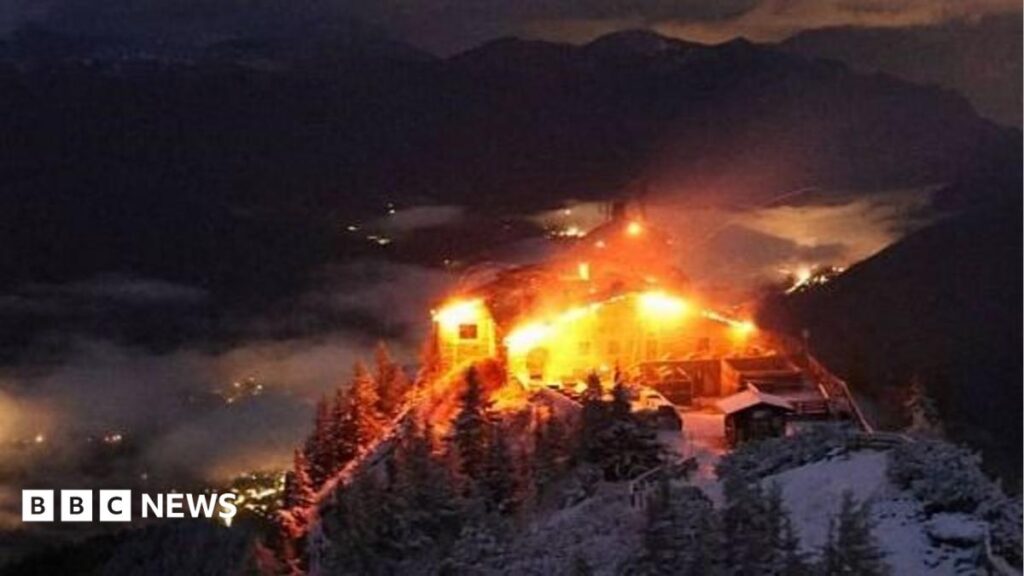
A haunting monument on the Bavarian Alps
Perched on the summit of the Kehlstein ridge near Berchtesgaden, the so‑called Eagle's Nest was built in 1938 as a gift to Adolf Hitler. Although never used as a private residence by the dictator, the site became a potent propaganda backdrop, offering sweeping views that were filmed for Nazi documentaries and used for high‑profile diplomatic receptions.
After World War II, the complex was seized by Allied forces, then handed over to the Bavarian government, which opened it to the public in 1952. Today, the Eagle's Nest is a major tourist attraction, drawing roughly half a million visitors each year who climb the steep road or take a shuttle to the former tea house turned restaurant.
The structure’s continued existence is controversial. While many Germans see it as a reminder of the past that should be preserved for educational purposes, far‑right groups occasionally attempt to co‑opt the site as a pilgrimage destination, a tension that has shaped security policies around the mountain for decades.
What sparked the 2026 blaze
On the afternoon of 23 October 2026, witnesses reported thick black smoke billowing from the roof of the Eagle's Nest restaurant. Firefighters from the Bavarian State Police arrived within minutes, but the steep, wind‑swept terrain hampered their efforts, allowing the fire to spread to the historic stone façade before it was fully contained.
Bavarian police later announced that a 33‑year‑old German man was detained on suspicion of arson. According to the police press release, the suspect was found near the scene with a partially burnt gasoline canister, and forensic analysis linked the accelerant to the origin point of the fire.
The fire caused extensive damage to the restaurant’s interior, the historic tea‑house windows, and a portion of the wooden decking that encircles the platform. Early estimates from the Bavarian heritage office suggest that restoration could cost upwards of €12 million, a figure that will likely be split between state funds and EU cultural‑heritage grants.
Why the blaze matters beyond the flames
The Eagle's Nest is more than a tourist site; it is a litmus test for how Germany confronts its Nazi legacy. Damage to the structure revives debates about whether such symbols should be preserved, repurposed, or removed altogether. Preservationists argue that the site serves as a tangible lesson on totalitarianism, while critics contend that its continued operation normalises a dark chapter of history.
The incident also highlights the vulnerability of heritage sites to extremist exploitation. In the past, the German domestic intelligence agency (BfV) warned that far‑right sympathisers sometimes scout historic Nazi locations for symbolic acts. Although authorities have not publicly linked the detained suspect to any extremist group, the timing of the arson—just weeks before the anniversary of the 1939 invasion of Poland—has raised eyebrows among security analysts.
From an economic standpoint, the fire threatens a key revenue stream for the local tourism economy. The Berchtesgaden region relies heavily on visitors to the Eagle's Nest, the nearby Königssee lake, and the historic salt mines. A prolonged closure could shave several hundred thousand euros off the area's annual tourism receipts, an impact that may ripple into hospitality businesses across Upper Bavaria.
Reactions from officials, scholars and the public
Bavarian Minister-President Markus Söder condemned the act as "an attack on our collective memory and on the people whose livelihoods depend on this landmark" during a press conference on 24 October. He pledged that the investigation would be swift and that the site would be rebuilt "in accordance with the highest standards of historical integrity."
Historians from the University of Munich, speaking to the Süddeutsche Zeitung, warned that the fire could be used by denialist narratives to argue that Nazi monuments are unsafe or obsolete. They called for a transparent restoration process that includes educational programming about the atrocities committed under Hitler's regime.
Social media reaction in Germany was mixed. While many users expressed sorrow for the loss of a cultural asset, a fringe of far‑right accounts posted cryptic messages praising the incident, prompting the BfV to increase monitoring of extremist chatter online. Internationally, travel blogs and heritage NGOs issued statements urging swift repairs and emphasizing the need to keep such sites accessible for historical education.
What lies ahead: security, restoration and legal fallout
The immediate priority for Bavarian authorities is to secure the site against further sabotage. Police have announced a temporary ban on all private vehicle access to the Kehlstein road, and a permanent CCTV system is slated for installation once the reconstruction begins. These measures echo similar steps taken after the 2019 vandalism of a memorial in Cologne.
Restoration work is expected to start in early 2027, pending the outcome of the criminal investigation. The Bavarian State Office for Monument Preservation has already commissioned a team of architects specializing in post‑war heritage to draft a reconstruction plan that respects the original 1938 design while incorporating modern fire‑safety standards.
Legal proceedings against the detained suspect are still in their infancy. If convicted of arson on a protected cultural monument, German law permits a prison sentence of up to ten years, along with hefty fines. The case will likely become a reference point for future prosecutions involving attacks on historical sites, especially those linked to extremist symbolism.
Quick Answers
Who was arrested for the Eagle's Nest fire in Bavaria?
A 33‑year‑old German man was detained by Bavarian police on suspicion of arson after the October 2026 blaze.
How much damage did the 2026 fire cause at Hitler's Eagle's Nest?
Preliminary estimates put the repair cost at around €12 million, covering the restaurant interior, historic windows and wooden decking.
Will the Eagle's Nest be reopened to tourists after the fire?
Restoration is planned for 2027, and the site is expected to reopen once safety upgrades and repairs are completed.
Source: www.bbc.co.uk




💬 Comments 0