Houthi missile strike on Yemen’s al-Maashiq Palace kills two, prime minister unharmed – implications for Red Sea trade and African security
Background: The al-Maashiq Palace and Yemen's turbulent politics
Al-Maashiq Palace, perched on the outskirts of Sana’a, has long served as the symbolic seat of Yemen’s executive power. Built in the 1970s, the compound houses the offices of the prime minister, the cabinet, and the president’s ceremonial functions, making it a frequent target during the country’s protracted civil war.
Since the Houthis seized the capital in 2014, the palace has been both a military outpost and a diplomatic hub. International observers note that control of such high‑profile sites signals legitimacy for whichever faction claims authority, a fact that fuels the Houthis’ willingness to strike it when they can.
Yemen’s political landscape remains fragmented, with the internationally recognised government operating from Aden while the Houthis maintain a de‑facto administration in the north. This division has turned the country into a proxy battleground for regional powers, especially Iran and Saudi Arabia, whose rivalry often manifests in missile exchanges.
The attack: What happened on October 15, 2026
On the evening of 15 October 2026, the Houthis launched a salvo of ballistic missiles that slammed into al‑Maashiq Palace. According to Yemen’s information minister, the missiles struck the western wing of the complex, killing two security personnel and wounding several others.
The prime minister, Ahmed Omar Al‑Saeed, and other senior ministers were reportedly inside a reinforced bunker at the time of the blast and escaped unharmed, the minister added. The rapid evacuation of officials was confirmed by a statement released on the government’s official website.
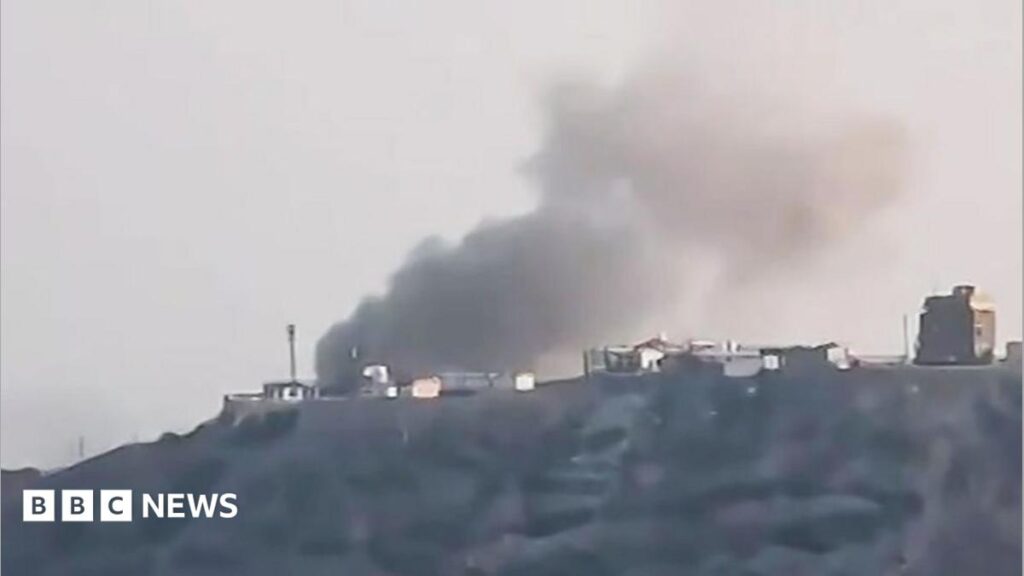
Local media, citing eyewitnesses, described a “large fireball” followed by a thick plume of smoke that lingered over the palace grounds for hours. Rescue teams, many of them drawn from the palace’s own security forces, worked through the night to clear debris and tend to the injured.
Why it matters: Regional security and Red Sea trade
The strike underscores the Houthis’ growing capacity to deliver precision strikes deep within government strongholds. Analysts say this marks a shift from the group’s earlier reliance on crude, indiscriminate rockets toward more sophisticated ballistic missiles supplied by Iran, a trend that has heightened tensions across the Red Sea corridor.
The Red Sea is a lifeline for global commerce, carrying roughly 10 percent of worldwide oil shipments and a similar share of container traffic. Any escalation in Yemen threatens the security of the Bab el‑Mandeb strait, a choke point that directly impacts the cost and speed of freight moving between Europe, Asia, and Africa.
Shipping firms have already begun rerouting vessels farther around the Cape of Good Hope, a move that adds days to voyages and raises fuel expenses. According to a recent report by the International Maritime Organization, such detours could increase global shipping costs by up to $150 billion annually if the conflict widens.
African stakes: How the strike could ripple across the Horn
East African economies, especially Ethiopia, Djibouti, and Kenya, rely heavily on Red Sea ports for imports of machinery, fertilizers, and consumer goods. A disruption in the Bab el‑Mandeb could force these countries to seek alternative, often more expensive, land routes through Sudan or South Sudan, straining already fragile supply chains.
Djibouti, home to the world’s busiest trans‑shipment hub, has warned that heightened missile activity could jeopardise its free‑zone operations. In a briefing last week, Djibouti’s port authority chief said that any interruption to ship traffic would directly affect the nation’s GDP, which grew by 6.5 percent in 2025 largely on the back of maritime trade.
For the Yemeni diaspora spread across Africa – from Somali‑born professionals in Nairobi to Yemeni merchants in Addis Ababa – the attack revives fears of family members being caught in renewed hostilities. Community leaders have called on humanitarian NGOs to expand evacuation corridors and medical assistance, noting that the last large‑scale displacement in 2022 left over 200,000 Yemenis stranded in refugee camps in eastern Africa.
Reactions and international response
The United Nations quickly condemned the strike, urging all parties to respect civilian infrastructure. A UN spokesperson in Geneva called the palace attack “a dangerous escalation that threatens the fragile cease‑fire framework brokered by the United Nations in 2024.”
The United States, which maintains a naval presence in the Gulf of Aden, announced a temporary increase in patrols near the Bab el‑Mandeb, citing “the need to protect commercial shipping from potential Houthi missile threats.” The Pentagon’s statement added that the U.S. would continue to provide “logistical support” to the Saudi‑led coalition, though no new air strikes were announced.
Iran denied any direct involvement in the missile launch, but a senior Iranian defence official, speaking to state media, suggested that “the Houthis are exercising the right to defend Yemeni sovereignty against aggression.” The comment was widely interpreted as tacit endorsement of the missile capability upgrade.
What comes next: Prospects for Yemen and neighboring states
In the short term, the Yemeni government is likely to tighten security around key ministries and accelerate repairs to the palace complex. Sources close to the prime minister’s office say that a “rapid response task force” is being assembled to monitor further Houthi missile activity.
Long‑term, experts warn that repeated high‑profile attacks could push regional actors to reconsider diplomatic overtures. A senior analyst at the African Centre for Strategic Studies noted that “if the Houthis continue to demonstrate missile reach, Gulf states may feel compelled to intensify their military backing of the Aden‑based government, risking a broader proxy war that would engulf the Horn of Africa.”
For African investors and policymakers, the key takeaway is the need to diversify trade routes and bolster maritime security cooperation. Initiatives such as the African Union’s Maritime Security Strategy, already in its third year, could gain urgency as nations seek to safeguard the economic lifelines that pass through the Red Sea.
Quick Answers
Did the Houthi missile attack on al‑Maashiq Palace injure the Yemeni prime minister?
No, Prime Minister Ahmed Omar Al‑Saeed was unharmed; he was in a reinforced bunker during the strike.
How could the palace attack affect shipping through the Red Sea?
The attack heightens fears of missile threats near the Bab el‑Mandeb, prompting some carriers to reroute around Africa, which can add days and increase global freight costs.
Why should African countries care about the Yemen missile strike?
Disruptions in the Red Sea can raise transport costs for East African imports and exports, and could force ports like Djibouti to adjust operations, impacting regional economies.
Source: www.bbc.co.uk




💬 Comments 0