Indian police accused of sexually harassing journalists at Delhi protest over election chief resignation, 2026
Background: Tension over voter‑roll changes
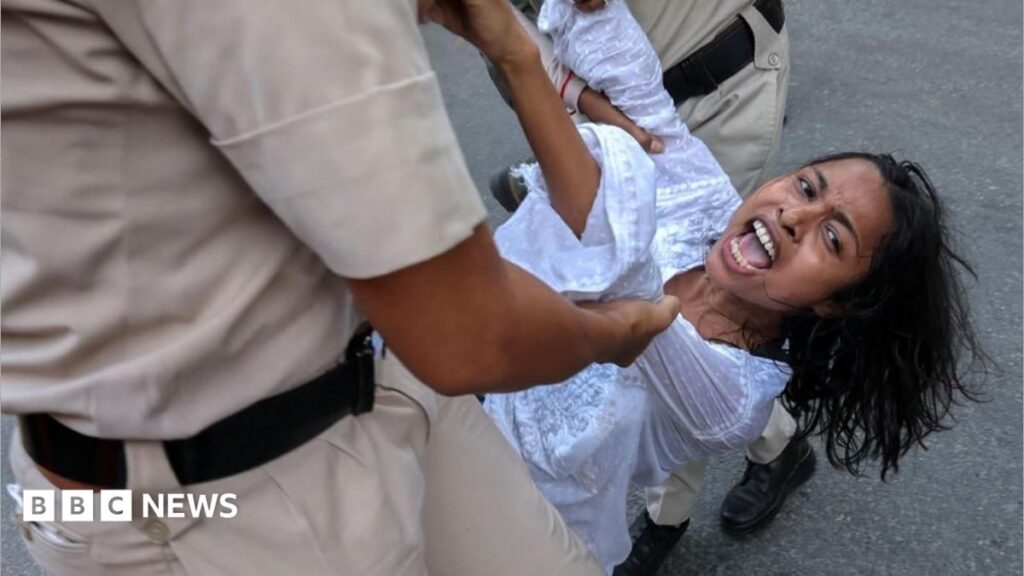
In early October 2026, thousands gathered outside the Election Commission’s headquarters in Delhi demanding the resignation of Chief Election Officer Arvind Kumar. Protesters argued that recent amendments to the voter‑roll database threatened the integrity of upcoming state elections, a concern echoed by opposition parties and civil‑society groups.
The demonstration was part of a wider wave of civic unrest across India, where electoral reforms have become a flashpoint for debates on democratic backsliding. Analysts note that similar protests in Maharashtra and West Bengal earlier this year were met with heavy police presence, setting a precedent for the confrontational approach seen in Delhi.
The incident: Alleged sexual harassment of journalists
During the Delhi protest, several journalists from both Indian and international outlets reported that police officers detained them and subjected them to unwanted physical contact, including groping and lewd remarks. The reporters, many of whom were covering the protest for Reuters, Al Jazeera, and local news channels, said the harassment was used to intimidate them and discourage live reporting.
According to a statement released by the Editors’ Guild of India, at least twelve journalists filed formal complaints with the Delhi Police Commissioner’s office. The police, in turn, claimed the allegations were “unsubstantiated” and suggested the journalists had misinterpreted routine crowd‑control measures. No senior officer has yet been suspended or placed under investigation.
Why it matters: Press freedom under strain
The episode adds to a growing catalog of incidents where Indian authorities have been accused of curbing media freedom. In the past three years, the Press Council of India recorded a 27 % rise in complaints of police intimidation, and the World Press Freedom Index dropped India’s ranking from 125 to 140 in 2025.
When law‑enforcement agencies target journalists with sexual harassment—a crime that carries severe stigma in Indian society—it sends a chilling signal that extends beyond the immediate protest. It discourages reporters from covering contentious political events, thereby limiting public access to independent information at a time when the country is preparing for several state elections.
Implications for African media and the diaspora
African journalists based in India, as well as those covering South‑Asia for African newsrooms, are directly affected by the hostile environment. The African Union’s media monitoring unit has warned that the safety of its correspondents in India is “under heightened risk,” noting that several African‑owned media houses have already postponed planned investigative pieces on India‑Africa trade agreements.
The incident also reverberates in the Indian diaspora community in Africa, especially in Kenya and South Africa, where business ties with Indian firms are strong. If Indian authorities continue to suppress critical reporting, African investors may lose a reliable source of on‑the‑ground analysis, potentially skewing risk assessments for cross‑border projects in sectors such as renewable energy and pharmaceuticals.
What comes next: Legal battles and international pressure
Human‑rights organisations, including Amnesty International, have called for an independent inquiry into the alleged harassment. The UN Special Rapporteur on the promotion and protection of the right to freedom of opinion and expression is expected to raise the case at the next Human Rights Council session in Geneva.
Domestically, the Editors’ Guild has threatened to file a petition in the Delhi High Court demanding the formation of a special investigative committee. If the court orders a probe, the case could become a benchmark for how Indian law enforcement is held accountable for violations against the press, potentially influencing future protest‑policing protocols.
Quick Answers
What did Indian police allegedly do to journalists at the Delhi protest?
Journalists say police detained them and engaged in unwanted physical contact, including groping, during a protest over voter‑roll changes.
Why is the incident significant for African journalists?
African correspondents in India face heightened risk, and the crackdown limits reliable coverage of India‑Africa trade and investment issues.
What actions are being taken after the allegations?
The Editors’ Guild plans a High Court petition, while international bodies like Amnesty International call for an independent inquiry.
Source: www.bbc.co.uk



💬 Comments 0