Indian tourist killed after two helicopters collide near Everest Base Camp, Nepal, 2026
Background: Everest’s soaring tourism industry
Everest Base Camp has become a magnet for adventure seekers from across the globe, with helicopter rides now a staple of the high‑altitude experience. In the past decade, the number of commercial helicopter flights in the Khumbu region has risen by roughly 30%, according to data from the Nepalese Ministry of Tourism. The growth is driven by affluent tourists who want a quick glimpse of the world’s highest peak without the weeks‑long trek.
India is the single largest source market for Everest tourism, sending an estimated 15,000 visitors each season, many of whom opt for aerial tours. The Indian diaspora in Nepal also contributes to the demand, as families often combine pilgrimages to Buddhist sites with the iconic mountain view. This surge has prompted the Nepalese Civil Aviation Authority (NCAA) to issue more permits, but safety oversight has struggled to keep pace with the rapid expansion.
The collision: What happened on the mountain
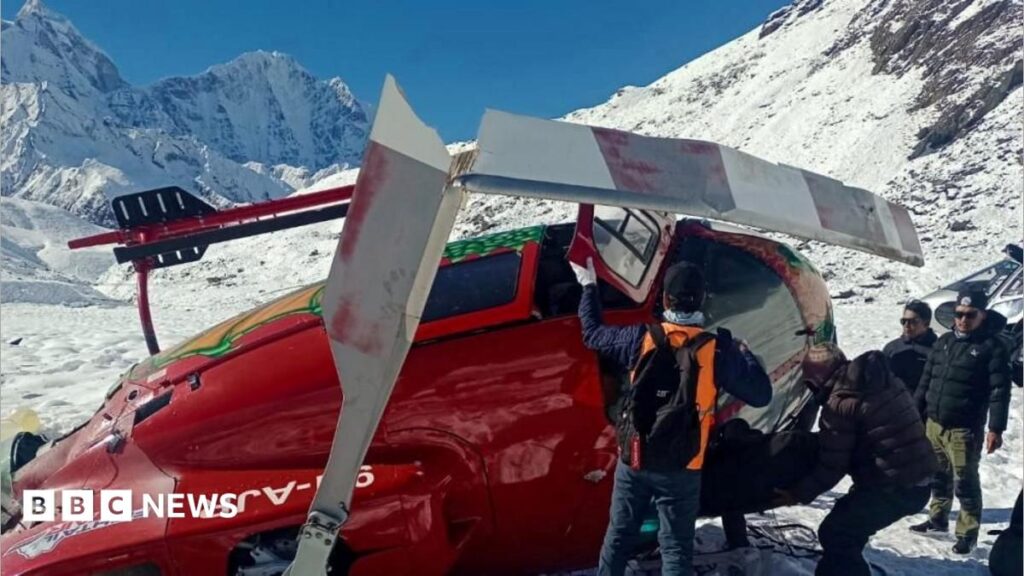
On the morning of 2 November 2026, two twin‑engine helicopters—one operated by a Nepal‑based charter service and the other by a foreign tour operator—attempted to land on the same helipad just metres from the snow‑covered ground at Everest Base Camp. Eyewitnesses say the pilots miscommunicated their approach vectors, causing the aircraft to intersect mid‑air before both crashed and slid a short distance down the slope.
Rescue teams recovered the bodies of two passengers, one of whom was identified as 34‑year‑old Indian tourist Arvind Singh Patel. The other fatality was a Nepalese guide. Several others sustained injuries ranging from minor cuts to serious fractures. The NCAA opened an investigation, and early statements from both operators indicated that they had not coordinated landing slots, a breach of standard operating procedures.
Why it matters: Safety, regulation and perception
The accident underscores a growing tension between commercial ambition and safety in one of the world’s most unforgiving environments. Helicopter operations at 5,300 metres face reduced engine performance, unpredictable wind gusts, and limited emergency landing options. When two aircraft vie for the same spot, the margin for error narrows dramatically.
For tourists, especially those from the Indian middle class who view the Everest experience as a status symbol, the incident could trigger a reassessment of risk. Travel insurers have already hinted at higher premiums for high‑altitude flights, a move that may deter price‑sensitive travellers and shift demand toward ground‑based trekking packages.
Ripple effects on African adventure tourism and the diaspora
African adventure‑travel operators have been watching the Himalayan market closely, hoping to replicate its success with high‑altitude safaris in the Atlas Mountains and Kilimanjaro. The crash serves as a cautionary tale: rapid scaling without robust safety frameworks can quickly erode consumer confidence. A recent report by the African Tourism Board noted a 12% dip in bookings for premium helicopter tours in South Africa after a separate accident in the Drakensberg region, suggesting a spill‑over effect of safety scares across continents.
The Indian diaspora in Africa also feels the reverberations. Community groups in Nairobi and Johannesburg, which often organize group trips to Nepal, are now re‑evaluating itineraries. Some are shifting toward longer trekking routes that minimise air travel, while others are demanding stricter vetting of charter operators. This could open a niche for African‑owned aviation firms that meet international safety standards, potentially reshaping the market dynamics.
Looking ahead: Policy reforms and market adaptation
In the wake of the crash, the NCAA announced plans to tighten helipad scheduling, requiring real‑time coordination via a central dispatch system. Officials also intend to introduce mandatory simulation training for pilots operating above 5,000 metres, a step that aligns with recommendations from the International Civil Aviation Organization (ICAO). Implementation is expected to take six months, but industry insiders warn that enforcement could be uneven in remote zones.
For the tourism sector, the incident may accelerate a shift toward hybrid experiences—combining short helicopter hops with extended trekking. Operators are already testing “fly‑and‑walk” packages that limit flight time to 15 minutes, thereby reducing exposure to high‑risk manoeuvres. If successful, such models could preserve the allure of aerial views while addressing safety concerns, a balance that could be attractive to African travellers seeking both thrill and reassurance.
Quick Answers
Who was the Indian tourist killed in the Everest helicopter crash?
The victim was identified as 34‑year‑old Arvind Singh Patel from India.
How many helicopters collided near Everest Base Camp in 2026?
Two commercial helicopters collided while attempting to land at the same helipad.
Will the crash affect travel insurance rates for high‑altitude flights?
Insurers have signalled higher premiums for Himalayan helicopter tours, reflecting the increased perceived risk.
Source: www.bbc.co.uk



💬 Comments 0