Indonesian orange haze blankets Palangka Raya in 2026, sparking health crisis
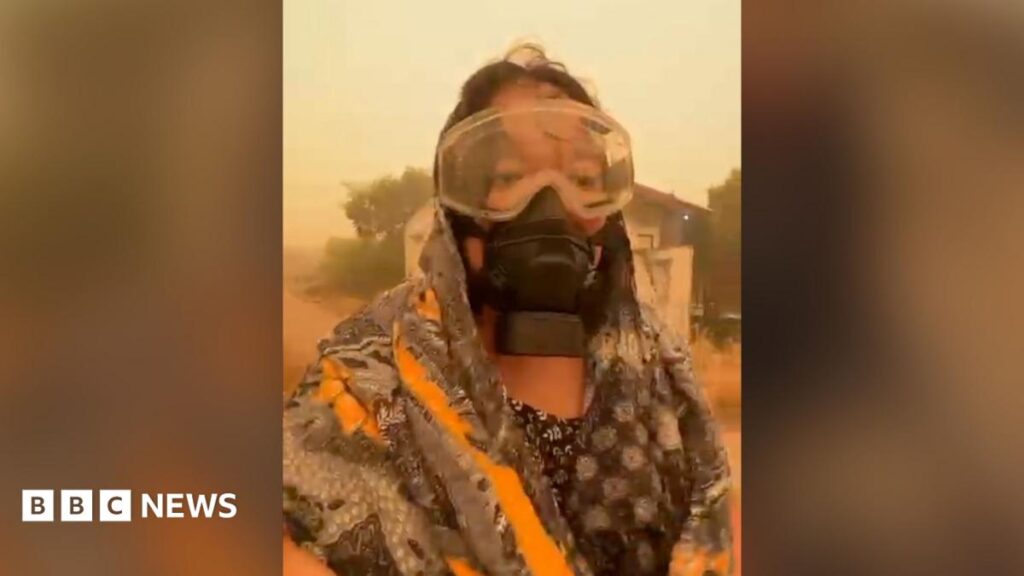
The haze event: how orange skies descended on Palangka Raya
On October 14, 2026, residents of Palangka Raya, the capital of Central Kalimantan, woke up to an unsettling orange veil that turned the city’s skyline into a surreal landscape. Satellite images captured a thick plume of smoke drifting from the surrounding peatlands, while locals posted videos of the eerie light on social media, describing it as a “wall of fire” that made it impossible to see the sun. The haze reduced visibility to under 200 metres in some districts, prompting schools to close and flights to be delayed at nearby airports.
The visual impact was matched by a sharp rise in air‑quality readings. The city’s Pollution Standards Index (PSI) spiked to 210, well above the “hazardous” threshold of 200 set by Indonesia’s Ministry of Environment and Forestry. Health clinics reported a surge in respiratory complaints, especially among children and the elderly, who are most vulnerable to fine particulate matter. The government declared a state of emergency for public health in the affected districts, urging citizens to stay indoors and wear masks.
While the orange haze dominated headlines in Indonesia, the phenomenon is part of a seasonal pattern that has plagued Southeast Asia for years. The 2026 episode, however, is notable for its intensity and the speed with which the smoke spread across the island of Borneo, reaching neighboring provinces within hours. Meteorologists attribute the rapid expansion to a combination of weak wind patterns and unusually dry conditions that have persisted since the start of the year.
Root causes: illegal peat fires, climate change and land‑use pressure
The immediate driver of the haze is a series of uncontrolled peatland fires that erupted in the dense forests surrounding Palangka Raya. According to the Indonesian National Disaster Management Agency (BNPB), more than 3,200 hectares have been burning for the past week, with many hotspots detected by NASA’s FIRMS satellite system. Most of these fires are believed to be set deliberately to clear land for palm‑oil plantations, a practice that has drawn criticism from environmental groups for decades.
Peat soils store vast quantities of carbon, and once ignited they release smoke that is far more persistent than that from typical forest fires. The World Bank estimates that a single peat fire can emit up to 1,000 times more carbon dioxide per hectare than a regular woodland blaze. Climate scientists say that rising temperatures and prolonged dry spells—linked to global warming—have made peatlands increasingly flammable, turning them into tinderboxes that can ignite with a single spark.
Compounding the problem is a weak enforcement framework. While Indonesia introduced the 2014 Peatland Restoration Agency (BRG) to curb illegal burning, budget cuts and corruption have hampered its effectiveness. Local officials often face pressure from powerful agribusiness interests, and the lack of clear land‑title documentation makes it difficult to hold perpetrators accountable. As a result, the cycle of slash‑and‑burn clearing continues, feeding the annual haze that drifts across the region.
Regional ripple effects: health, trade and diplomatic tension
The haze does not respect national borders. Within 24 hours of the Palangka Raya outbreak, neighboring provinces in West Kalimantan reported PSI levels above 150, while the Malaysian state of Sarawak saw its air quality dip into the “unhealthy” range. Airlines operating out of Kuala Lumpur International Airport have already cancelled several flights, citing reduced visibility and passenger safety concerns. The disruption adds a costly layer to an already fragile tourism sector that was recovering from the pandemic slump.
Health experts warn that prolonged exposure to the haze could exacerbate chronic diseases, increase hospital admissions, and strain already overstretched medical facilities. In Indonesia, the Ministry of Health has mobilised mobile clinics to distribute N‑95 masks and provide inhaler prescriptions, but supply chain bottlenecks have left many rural clinics under‑stocked. The World Health Organization (WHO) has urged ASEAN members to coordinate a joint response, emphasizing that the haze is a trans‑border public‑health emergency.
Diplomatically, the haze reignites old tensions between Indonesia and its neighbours. In 2015, a severe haze episode led to a high‑profile dispute at the ASEAN summit, prompting calls for a regional haze‑free pact. While Indonesia signed the ASEAN Agreement on Transboundary Haze Pollution in 2014, compliance has been uneven. The current crisis may force Jakarta to confront the issue more earnestly, especially as trade partners threaten to impose stricter import restrictions on commodities linked to illegal burning.
African relevance: climate parallels, investment risks and diaspora concerns
The Indonesian haze underscores a broader global challenge that African nations are also grappling with: the conversion of carbon‑rich peatlands and tropical forests into cash crops. Countries such as the Democratic Republic of Congo and Ghana face similar pressures from mining, cocoa, and palm‑oil expansion, where weak land governance can trigger fires that threaten air quality and climate goals. African climate activists cite the Indonesian example to argue for stronger safeguards against peat and forest degradation on the continent.
For African investors, the haze highlights an emerging risk factor in Southeast Asian agribusiness. Several Nigerian and Kenyan sovereign wealth funds have recently allocated capital to Indonesian palm‑oil producers, attracted by high yields. However, the reputational damage caused by repeated haze incidents could affect the profitability of these investments, especially as European buyers tighten sustainability criteria under the EU Green Deal. Investors are now demanding greater transparency on land‑use practices and fire‑prevention measures.
The Indonesian diaspora in Africa, though small, is watching the situation closely. Community groups in Johannesburg and Nairobi have organised awareness campaigns about the health impacts of particulate matter, drawing parallels with seasonal dust storms that affect Southern Africa each winter. These initiatives aim to foster cross‑continental solidarity on air‑quality policies, and they have prompted local NGOs to lobby their governments for stricter import standards on products linked to deforestation and peat fires.
What’s next: policy shifts, technology and regional cooperation
In the short term, the Indonesian government has pledged to deploy additional firefighting aircraft and to increase satellite monitoring of hot spots. President Joko Widodo, speaking at a press conference on October 15, announced a new “Zero‑Burn” task force that will coordinate police, military and environmental agencies. The task force is expected to impose heavier fines on companies caught using fire for land clearing, and to provide subsidies for farmers who adopt mechanised, low‑emission clearing methods.
Long‑term solutions will likely involve a blend of technology and community engagement. Researchers from the University of Indonesia are piloting a drone‑based early‑warning system that can detect smoldering peat before it ignites. Meanwhile, NGOs are training local villagers in fire‑break construction and sustainable agroforestry, offering an alternative livelihood that reduces reliance on slash‑and‑burn techniques. If scaled up, these initiatives could cut future haze events by a significant margin.
Regionally, the haze may catalyse a renewed push for an ASEAN‑wide haze‑free framework. Experts suggest that a binding emissions‑cap for peatland use, coupled with a shared emergency response fund, could address the current enforcement gaps. As climate change intensifies, the cost of inaction will become increasingly evident—not just for Indonesia, but for every country downwind of its smoke, including the African continent that shares the same vulnerability to forest‑fire induced air pollution.
Quick Answers
What caused the orange haze over Palangka Raya in October 2026?
The haze was triggered by large-scale peatland fires set to clear land for palm‑oil plantations, which released thick smoke that spread across Central Kalimantan.
How is the haze affecting neighboring countries?
Air‑quality indices in Malaysian states like Sarawak have risen to unhealthy levels, flights have been cancelled, and health officials warn of increased respiratory problems across the border.
What actions is the Indonesian government taking to stop the fires?
Jakarta has deployed extra firefighting aircraft, launched a “Zero‑Burn” task force, and announced stricter fines and subsidies to encourage fire‑free land clearing.
Source: www.bbc.co.uk




💬 Comments 0