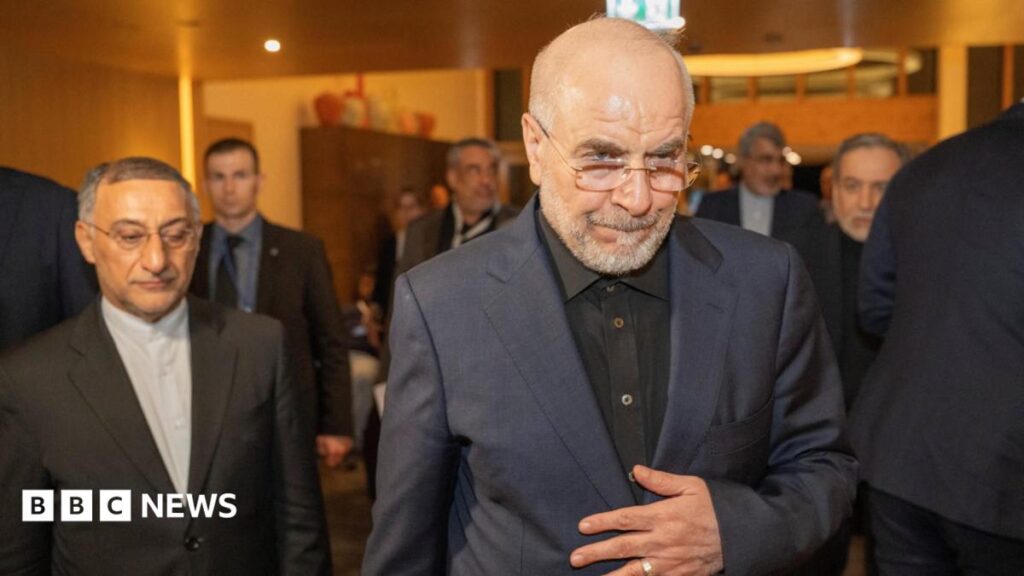
Iran chief negotiator Mohammed Bagher Ghalibaf says Americans voted ‘no to war’ after 2026 US midterms
Background: US elections, Iran talks and the ‘no‑to‑war’ narrative
The 2026 US midterm elections produced a surprising shift in the House of Representatives, with Democrats retaining a slim majority and several Republican incumbents losing their seats. Analysts linked the outcome to growing public fatigue over foreign entanglements, especially the lingering tension over Iran’s nuclear program and the spectre of a possible military strike that had hovered over the region since 2024.
In the weeks that followed, Iranian officials seized the moment to shape the diplomatic narrative. Mohammed Bagher Ghalibaf, Iran’s chief negotiator on the nuclear dossier, publicly declared that "Americans voted ‘no to war’" – a phrase that resonated with both Tehran’s domestic audience and its overseas supporters. The statement was framed as evidence that the United States was moving away from a confrontational stance toward a more diplomatic, multilateral approach.
Why Ghalibaf’s comment matters beyond Tehran
Ghalibaf’s remark is more than a rhetorical flourish; it signals a potential recalibration of US‑Iran policy that could affect global oil markets, regional security calculations, and the diplomatic space for African nations that rely on Iranian expertise in fields such as agriculture and construction. A de‑escalation could ease sanctions on Iran, allowing Iranian firms to re‑enter markets that were previously off‑limits, including several African countries that import Iranian fertilizers and petrochemicals at discounted rates.
Furthermore, the comment underscores a broader trend of emerging powers using US electoral outcomes to legitimize their own diplomatic positions. By tying America’s internal politics to Tehran’s strategic messaging, Iran is attempting to position itself as a victim of US hawkishness, thereby attracting sympathy from nations wary of Western pressure.
Implications for African economies and the diaspora
Many African states, especially in North and West Africa, have long sourced cheap fertilizer from Iran to boost staple crop yields. A thaw in relations could see a resurgence of these imports, lowering production costs for smallholder farmers and potentially stabilising food prices in countries such as Nigeria, Sudan and Kenya. According to a 2025 report by the African Development Bank, Iranian fertilizer accounted for roughly 12 % of the continent’s total imports, a share that fell sharply after 2022 sanctions.
The Iranian diaspora in Europe and North America also watches these developments closely. Community organisations in cities like London, Paris and New York have organised rallies urging Western governments to pursue diplomacy rather than military options. Their activism is part of a larger pattern where diaspora groups leverage electoral moments to influence foreign policy, a dynamic that African diaspora organisations have used in the past to lobby for trade concessions with their home countries.
Reactions from Washington and the wider Middle East
Former President Donald Trump, speaking at a Republican fundraiser, acknowledged that the “conflict’s role” in the party’s defeat was a factor in the midterm loss. While he stopped short of endorsing a full diplomatic pivot, his comments hinted at an internal reckoning within the GOP about the political cost of aggressive foreign policy. Sources close to the White House say senior advisers are now weighing a more cautious approach toward Iran, prioritising nuclear negotiations over military posturing.
In the Middle East, regional rivals such as Saudi Arabia and the United Arab Emirates have reacted with a mix of caution and optimism. Riyadh’s foreign ministry released a statement noting that “any reduction in US‑Iran tensions is welcome, provided it does not embolden Tehran’s regional ambitions.” Meanwhile, Israel’s defence establishment warned that a diplomatic opening could be exploited by Tehran to deepen its proxy networks, a concern that may shape future security dialogues in the region.
What comes next: diplomatic tracks and market signals
The next few months will likely see a flurry of back‑channel talks in Vienna and Geneva, where the Joint Comprehensive Plan of Action (JCPOA) framework is being revisited. If the United States signals a genuine willingness to lift certain sanctions, Tehran may reciprocate with incremental concessions on uranium enrichment levels. Analysts caution, however, that any agreement will be fragile and dependent on the political calculus of both Washington and Tehran’s hard‑line factions.
For African markets, the key indicator to watch will be the price of urea and ammonium nitrate on the global commodity exchanges. A modest easing of sanctions could shave 5‑10 % off the average price, a swing that would be felt in the cost structures of agribusinesses across the continent. Investors are already adjusting portfolios, with several African sovereign wealth funds increasing exposure to Iranian petrochemical stocks that were previously deemed too risky.
Quick Answers
What did Iran’s chief negotiator mean by saying Americans voted ‘no to war’?
He was referring to the 2026 US midterm results, which many analysts say reflected public opposition to further military action against Iran.
How could a US‑Iran de‑escalation affect African fertilizer imports?
If sanctions are eased, Iranian fertilizer could return to African markets at lower prices, potentially reducing food‑production costs in countries like Nigeria and Kenya.
Did former President Trump admit the US conflict with Iran hurt his party?
Yes, Trump acknowledged that the ongoing conflict was a factor in the Republican Party’s defeat in the 2026 midterms.
Source: www.bbc.co.uk



💬 Comments 0