Ireland public sector strike 2026: Hundreds of thousands walk out over pay dispute, impact on services and diaspora
Background: A simmering pay dispute in the Irish public sector
The Irish government has been negotiating new salary scales with public‑sector unions since early 2025, after a series of modest cost‑of‑living adjustments failed to keep pace with inflation that peaked at 9.1 % in 2023. Unions representing teachers, nurses, civil servants and transport workers argue that the proposed 2 % raise for 2026 does not reflect real‑term wage erosion, especially for lower‑paid staff who shoulder the brunt of rising housing and energy costs.
In December 2025, the Public Service Negotiating Committee (PSNC) presented a revised offer that bundled a modest wage increase with a new pension contribution scheme. The unions rejected the proposal, accusing the government of "inflation‑gaming" and of prioritising fiscal consolidation over workers’ wellbeing. The stalemate escalated when the Health Service Executive (HSE) announced plans to delay the rollout of a €1 billion digital health record system to cut expenses.
By early October 2026, the situation had reached a tipping point. The Irish Congress of Trade Unions (ICTU) gave a 48‑hour notice that, if talks stalled, a coordinated industrial action would be launched across multiple public services. The notice was taken seriously because previous sector‑wide strikes in 2015 and 2020 had caused significant disruption to schools, hospitals and public transport.
What happened: Hundreds of thousands of workers walk out
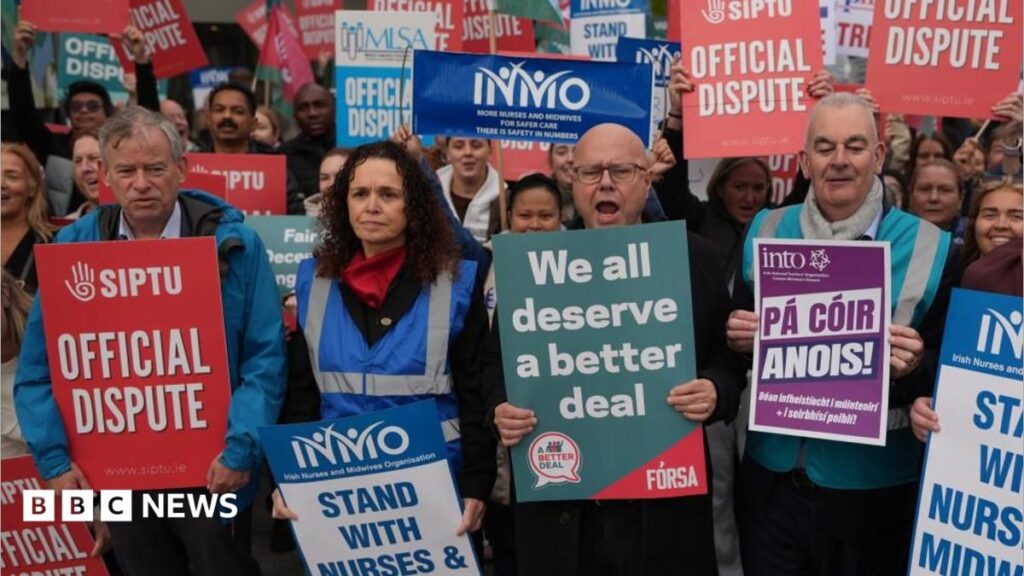
On 12 October 2026, roughly 350,000 public‑sector employees began a nationwide strike, the largest coordinated walkout in the Republic of Ireland since the 1970s. The strike involved teachers in primary and secondary schools, nurses and support staff in hospitals, civil servants in government offices, and workers in state‑run transport companies such as Irish Rail and Bus Éireann.
The immediate effect was the closure of over 1,200 schools, the cancellation of elective surgeries in major hospitals, and a near‑standstill of inter‑city rail services. Airports remained operational, but baggage handling staff joined the walkout, causing delays and longer queues for passengers. Grocery stores and retail outlets, largely run by private firms, stayed open, but many reported staffing shortages as workers in public‑sector‑owned logistics firms also participated.
Union leaders, including ICTU president Patricia McKenna, framed the action as a "defence of living standards" and urged the public to support the workers by respecting picket lines. The government, meanwhile, called the strike "irresponsible" and warned of legal action against any illegal blockades, especially those affecting emergency services.
Why it matters: Economic, political and social ripple effects
The strike hits the Irish economy at a delicate moment. The country is still recovering from a post‑pandemic slowdown and is aiming to attract foreign investment, particularly in technology and renewable energy. Disruption to public services threatens the perception of stability that multinational firms value, potentially delaying projects from Irish‑based tech start‑ups that have recently expanded into African markets such as Kenya and Nigeria.
Politically, the walkout puts pressure on Taoiseach Leo Varadkar's coalition government, which has been balancing a fiscal target of a 0.5 % primary surplus with social welfare commitments. A prolonged strike could force the coalition to reconsider its austerity‑leaning budget, especially if public opinion swings against the government’s handling of the dispute. Recent polls by the Irish Times indicate that 58 % of respondents view the strike favourably, seeing it as a legitimate response to wage stagnation.
Socially, the strike underscores growing inequality in Ireland, where a small segment of high‑earning tech workers enjoys rapid salary growth while many public‑sector employees face stagnant wages. This divide mirrors similar tensions in other advanced economies, but it also resonates with African nations where public‑sector pay reforms have sparked protests, such as the 2024 teachers’ strike in Ghana.
African connections: Diaspora, aid and business implications
Ireland hosts a vibrant African diaspora, with over 70,000 residents originating from Nigeria, Ghana, South Africa and Kenya. Many of these communities rely on public services for language courses, healthcare and children's education. The school closures directly affect African families, especially those whose children are enrolled in Irish‑state schools rather than private international schools.
Irish development aid, coordinated through the Department of Foreign Affairs, employs a sizable number of civil servants who are now on strike. Delays in processing grant applications could temporarily slow funding pipelines to projects in sub‑Saharan Africa, including agricultural development programmes in Ethiopia and renewable‑energy pilots in Tanzania.
On the corporate side, several Irish‑owned firms—such as pharmaceutical giant Pfizer Ireland and renewable‑energy company Mainstream Renewable Power—have subsidiaries or joint ventures in Africa. The strike raises concerns about the continuity of regulatory approvals and the ability of Irish expatriates to travel for business, as transport disruptions affect flights from Dublin to African hubs like Lagos and Nairobi.
Reactions: Government, unions and public sentiment
The government responded on 13 October with a revised offer that includes a 3.5 % wage increase for 2026 and a one‑off €500 bonus for low‑income staff. The proposal also promises a review of pension contributions after two years. Union leaders called the offer "an incremental step" but said it fell short of the 5 % real‑term raise they demanded.
Public reaction has been mixed. While many citizens sympathise with the workers' plight, especially in the health sector, others worry about the knock‑on effects on schoolchildren and vulnerable patients. Social media hashtags such as #IrelandStrikes2026 trended on Twitter, with both support and criticism echoing across the island.
International observers, including the European Trade Union Confederation, praised the peaceful nature of the protests but warned that a failure to reach an agreement could set a precedent for other EU countries facing similar wage disputes. African diaspora organisations in Dublin organised solidarity rallies, highlighting the shared struggle of public‑sector workers worldwide.
What’s next: Negotiations, possible fallout and longer‑term outlook
Negotiations are set to resume on 15 October, with a mediation panel appointed by the Labour Relations Commission. If a deal is reached before the end of the month, the strike could be called off, allowing schools and hospitals to reopen gradually. However, analysts at PwC Ireland warn that any compromise that does not address underlying inflation pressures could lead to recurring industrial action in 2027.
In the longer term, the strike may accelerate discussions about public‑sector financing reforms. The Treasury is reportedly exploring a modest increase in the value‑added tax (VAT) on luxury goods to fund higher public‑sector wages without breaching EU fiscal rules. Such a move would have indirect implications for African‑owned luxury importers in Ireland, potentially raising costs for goods sourced from African designers.
For the African diaspora, the outcome will shape their everyday lives—from school attendance for their children to access to health services. Moreover, the strike’s resolution could influence Ireland’s ability to maintain its reputation as a stable partner for African development projects and private‑sector investment. All eyes remain on the negotiation table as the country balances fiscal prudence with social equity.
Quick Answers
When did the public‑sector strike in Ireland begin?
The strike started on 12 October 2026 after unions gave a 48‑hour notice.
Which groups are participating in the Irish public‑sector walkout?
Teachers, nurses, civil servants, and state‑run transport workers are among the roughly 350,000 participants.
How might the strike affect African communities in Ireland?
School closures and health‑service disruptions directly impact African families, and delays in aid administration could temporarily affect projects funded for African nations.
Source: www.bbc.co.uk




💬 Comments 0