Israel Election Deadlock 2026: Four Scenarios to Break the Stalemate and Impact on Africa
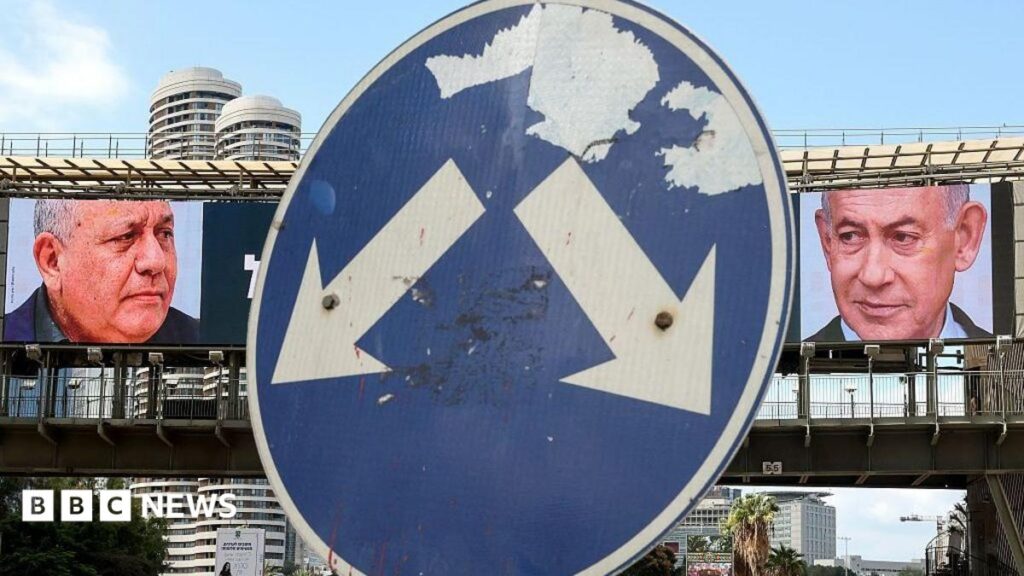
Background: Israel’s 2026 election and the emerging deadlock
Israel’s parliamentary election on 1 November 2026 has produced a classic impasse. With more than 85% of the votes counted, the two dominant blocs – the right‑leaning Likud‑National Union alliance and the centrist‑left coalition led by the Labor‑Blue and Yesh Atid parties – are locked at 61 seats each in the 120‑seat Knesset, one short of the 62‑seat majority needed to form a government.
The stalemate is amplified by Israel’s fragmented party system, where even small religious or Arab parties can become kingmakers. Over the past decade, Israel has seen three elections in four years, each time ending in fragile coalitions or caretaker governments, a pattern that has eroded public confidence and heightened the urgency for a clear resolution.
International observers, including the European Union’s election monitor team, warned that prolonged uncertainty could affect Israel’s ability to fulfil its diplomatic commitments, especially the recent Abraham Accords‑style normalization deals with several African nations that hinge on stable governance.
Four plausible routes out of the stalemate
The first scenario is a classic coalition‑building effort: one bloc could win over a small party – such as the ultra‑Orthodox United Torah Judaism or the Arab‑Israeli Ra’am – to cross the 62‑seat threshold. This would likely involve policy concessions on religious funding or security matters, a tactic that has succeeded in past Israeli governments.
A second, less optimistic route is the calling of fresh elections within 90 days, as mandated by Israeli law when no government can be formed. This would reset the political calculus, but history suggests that a repeat election often yields a similar distribution of seats, merely extending the period of caretaker rule.
The third possibility is a national unity government, where the two largest blocs agree to share power in a broad‑based cabinet. Such arrangements have emerged during wartime or severe crises, and could be framed as a way to preserve Israel’s strategic interests in the region, including its partnerships with African states on security and technology.
Finally, a minority government could be installed if the President accepts a candidate who can survive a confidence vote with external support, even without a formal coalition. This would be a fragile arrangement, reliant on issue‑by‑issue agreements, and could be destabilised by any major policy disagreement.
Why the outcome matters for Africa’s security and economies
Stability in Jerusalem directly influences the security architecture of the Horn of Africa and the Sahel, where Israel has been expanding military training and intelligence‑sharing programmes. Countries such as Ethiopia, Kenya, and Sudan have recently signed defence accords that depend on Israel’s ability to deliver consistent equipment and expertise.
Israel’s high‑tech sector is another critical link. African start‑ups, especially in fintech and agri‑tech, rely on Israeli venture capital and R&D partnerships. A pro‑business coalition could accelerate joint projects, while a caretaker or fragmented government might stall funding pipelines and delay cross‑border pilots that are already in the pipeline.
On the diplomatic front, the Abraham‑style normalisation with Sudan (2023) and the ongoing talks with the Republic of the Congo hinge on Israel’s credibility as a reliable partner. Any perception of political paralysis could embolden regional rivals, notably Iran, to deepen their own outreach to African nations, reshaping the continent’s geopolitical balance.
Reactions from African governments, investors and the diaspora
In Nairobi, the Kenyan Ministry of Foreign Affairs issued a brief statement urging “a swift and decisive resolution” to preserve the momentum of the Kenya‑Israel trade corridor, which last year recorded $1.2 billion in bilateral commerce, according to the Kenya Investment Authority.
African venture capital firms, such as Kenya’s Savannah Fund and South Africa’s Knife Capital, have privately expressed concern that a prolonged deadlock could delay scheduled funding rounds for joint Israeli‑African tech incubators. Sources close to the funds said they are reviewing contingency plans, including diversifying capital sources to Europe and the United States.
The Israeli diaspora in South Africa, estimated at 30,000, has organised a series of town‑hall meetings in Cape Town and Johannesburg, demanding that any future government prioritise the safety of Jews in Africa and maintain the existing security assistance programmes. Community leaders, citing a statement from the South African Jewish Board of Deputies, warned that “political uncertainty in Israel reverberates in our local communities”.
What could happen next: timelines and possible spill‑over effects
If coalition talks succeed, a new government could be sworn in within two weeks, allowing Israel to resume its regular diplomatic schedule, including a planned summit with African heads of state in Addis Ababa in early December. Such a summit would likely address joint counter‑terrorism initiatives and the expansion of renewable‑energy projects in the Sahel.
Should fresh elections be called, the campaign period will extend into January 2027, overlapping with the African Union’s 2027 General Assembly in Addis. The timing could force African leaders to juggle attendance, potentially diluting the focus on continent‑wide initiatives and giving rival powers a diplomatic opening.
In the worst‑case scenario of a minority or unity government that collapses within months, Israel may revert to a caretaker status, limiting its ability to sign new bilateral agreements. Analysts at the African Development Bank warn that this could delay the rollout of the “Smart Water” project in Tanzania, which relies on Israeli desalination technology and a $150 million loan contingent on stable bilateral ties.
Quick Answers
What are the four scenarios that could end Israel's 2026 election deadlock?
The four possibilities are: (1) forming a coalition with a small party, (2) calling new elections, (3) creating a national unity government, or (4) installing a minority government that survives a confidence vote.
How could Israel's election outcome affect African economies?
A stable Israeli government would keep defence, tech, and trade partnerships with African countries on track, while prolonged deadlock could stall joint projects, delay funding for start‑ups, and weaken security cooperation.
When is the next possible Israeli election if the deadlock persists?
If no coalition is formed, Israeli law requires fresh elections within 90 days, meaning a new vote could be scheduled for January 2027.
Source: www.bbc.co.uk



💬 Comments 0