Israel opens bids for West Bank settlement project, UK Foreign Secretary condemns – 2026
Background: Israel’s settlement strategy and the tender system
Since the early 2000s, Israel has used a competitive bidding process to allocate construction contracts for settlements in the occupied West Bank, a practice that has turned urban planning into a quasi‑business market. The system is overseen by the Israeli Ministry of Housing, which publishes tenders that attract Israeli firms, foreign contractors, and sometimes even multinational corporations.
The international community, including the United Nations and the European Union, has repeatedly declared these settlements illegal under international law, a stance reinforced by numerous Security Council resolutions. Yet Israel argues that the settlements serve security needs and demographic goals, framing the projects as essential for national resilience.
In recent years, the tender process has become more opaque, with reports of preferential treatment for firms linked to political elites. This has sparked criticism from human‑rights groups who say the model incentivises the expansion of settlements at the expense of Palestinian communities.
The latest round of tenders, announced in July 2026, marks a departure from previous practice because it targets a highly sensitive area near the Israeli‑Palestinian separation barrier, an area that has seen frequent clashes and is considered a flashpoint for future negotiations.
The new West Bank project: why it is especially controversial
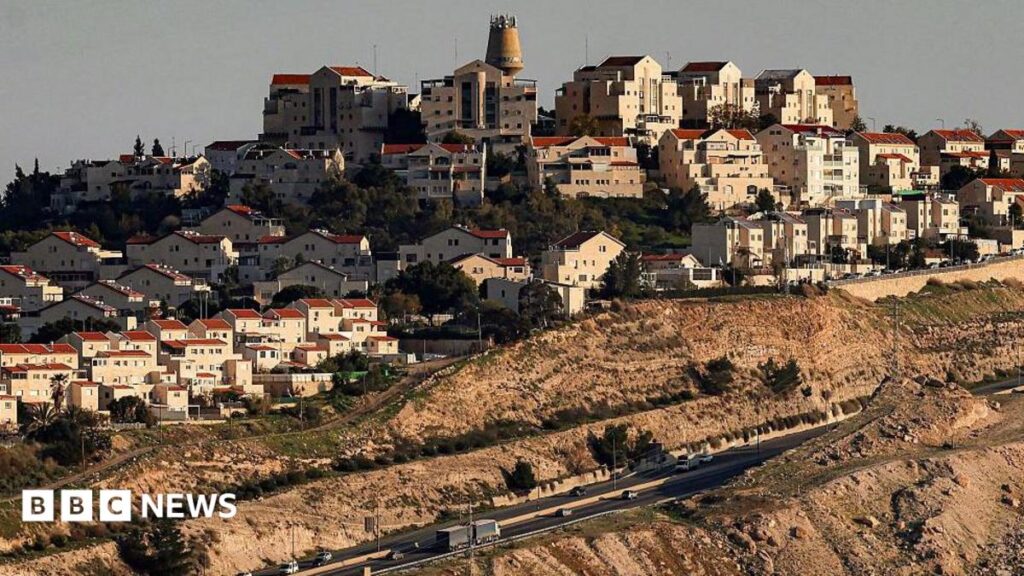
The project in question involves the construction of a mixed‑use complex—housing units, commercial space, and a new road network—on a hilltop that overlooks the town of Qalqilya. According to the Israeli Ministry of Housing, the development will house 1,200 new residents and create 300 jobs.
Human‑rights organisations argue that the location is strategically chosen to deepen Israeli control over the surrounding farmland, which Palestinian farmers rely on for their livelihoods. Satellite imagery released by B'Tselem shows that the proposed site would cut off existing irrigation channels, potentially jeopardising agricultural output for thousands of Palestinians.
The tender documents list a deadline of 31 October 2026 for firms to submit proposals, and the Ministry has already received interest from several large construction conglomerates, including some with subsidiaries in Europe and the United States. The involvement of foreign‑registered firms raises questions about the applicability of international sanctions regimes.
Critics also point out that the project violates the terms of the 2013 Oslo Accords, which stipulated that any new settlement activity must be mutually agreed upon. The lack of Palestinian consultation has been highlighted as a breach of both the letter and spirit of the agreements.
International backlash: the UK’s firm condemnation
On 12 August 2026, UK Foreign Secretary David Cameron issued a statement describing the tender as “an unacceptable and destructive act that undermines any realistic path to a two‑state solution.” He urged the Israeli government to halt the process immediately and called on the European Union to consider punitive measures.
Cameron’s remarks echo a broader shift in Western capitals, where growing public pressure has forced governments to take clearer stances on settlement expansion. The United States, while still maintaining strong bilateral ties with Israel, has refrained from a direct condemnation, opting instead for a diplomatic reminder of the “need for a negotiated outcome.”
European Union officials, speaking on condition of anonymity, reportedly discussed the possibility of tightening export controls on construction equipment destined for the West Bank. Such measures would echo the EU’s 2022 decision to ban the sale of certain surveillance technologies to Israeli security forces operating in occupied territories.
The condemnation also resonated within the United Nations, where the Security Council is expected to convene an emergency session later this month to discuss the legal ramifications of the tender. While a formal resolution is unlikely given the veto power of permanent members, the debate could shape future UN reporting on settlement activity.
African and diaspora dimensions: why the issue matters beyond the Middle East
African nations have historically taken a pro‑Palestinian stance in United Nations votes, with South Africa, Nigeria, and Kenya often leading calls for an end to settlement construction. The latest Israeli tender threatens to revive debates within the African Union (AU) about the bloc’s credibility on human‑rights advocacy.
The AU’s Peace and Security Council is slated to meet in Addis Ababa in September 2026, where member states are expected to draft a communiqué linking settlement expansion to broader concerns about illegal land grabs, a theme familiar to many African countries grappling with foreign‑owned mining concessions.
For the African diaspora in Europe and North America, the tender has sparked protests outside Israeli embassies in London, Paris, and Washington. Activist groups such as the African Palestinian Solidarity Network argue that the settlement project symbolizes a pattern of dispossession that mirrors colonial‑era land seizures on the continent.
Economically, several African construction firms have expressed interest in the Israeli tender, attracted by the lucrative contract terms. However, analysts warn that participation could expose these companies to reputational risk and potential sanctions, especially if the EU moves to restrict equipment sales. The dilemma highlights the tension between profit motives and ethical foreign‑policy considerations for African businesses.
What’s next: legal battles, market reactions, and diplomatic maneuvers
Legal experts predict that Palestinian NGOs will file an urgent petition with the International Court of Justice, seeking provisional measures to block the construction until a final ruling on its legality is rendered. Such a move would be unprecedented but not without precedent, as similar petitions were lodged during the 2014 Gaza conflict.
On the market front, Israeli construction stocks experienced a modest dip of 2.3 % after the tender announcement, while European firms with known ties to the project saw their share prices wobble amid investor concerns over potential EU sanctions. Bloomberg analysts note that the volatility could extend to commodity markets, particularly for cement and steel exports from Turkey and Egypt.
Diplomatically, the United Kingdom is expected to raise the issue in bilateral talks with Israel during the upcoming NATO summit in Washington. Sources within the Foreign Office say that London may consider conditioning future defense cooperation on Israel’s willingness to freeze settlement expansion.
In the longer term, the tender could become a litmus test for how the international community balances strategic alliances with adherence to international law. If the project proceeds despite widespread condemnation, it may embolden further settlement bids, complicating any future negotiations for a two‑state solution.
Quick Answers
What is the West Bank settlement project that Israel opened bids for in 2026?
It is a mixed‑use development near Qalqilya that would add 1,200 housing units, commercial space and a new road, slated for construction on contested West Bank land.
Why did the UK Foreign Secretary condemn the Israeli tender?
David Cameron called it “unacceptable and destructive” because it expands settlements deemed illegal under international law and undermines the two‑state solution.
How could the tender affect African companies and the diaspora?
African construction firms eyeing the contract risk reputational damage and possible EU sanctions, while diaspora activists are using the issue to highlight broader patterns of land dispossession.
Source: www.bbc.co.uk




💬 Comments 0