Israel targets paramedics in Nabatieh, Lebanon – 2026 strike raises concerns for African UNIFIL troops
Background: A fragile cease‑fire on the edge of collapse
Since the 2023 Gaza war, Israel’s northern border with Lebanon has been a tinderbox of skirmishes, artillery exchanges and occasional air raids. Hezbollah’s cross‑border fire and Israel’s retaliatory strikes have kept the 2006 cease‑fire line under constant stress, prompting both sides to accuse each other of violating United Nations Security Council resolutions that call for restraint.
In early September 2026, Israeli intelligence reported a surge in Hezbollah’s rocket‑launch activity from the southern districts of Nabatieh and Marjayoun. The Israeli Defense Forces (IDF) responded with a series of precision air strikes aimed at what they described as “military infrastructure” and “weapon storage sites” in the densely populated town of Nabatieh, a historic stronghold of the Shi’ite movement.
The strikes came just days after a United Nations‑mediated talks in Geneva failed to secure a temporary de‑escalation. International observers warned that any escalation in the north could spill over into the already volatile Lebanese political crisis, where the government’s ability to provide basic services remains crippled by economic collapse.
The ambulance attack: What happened on the ground
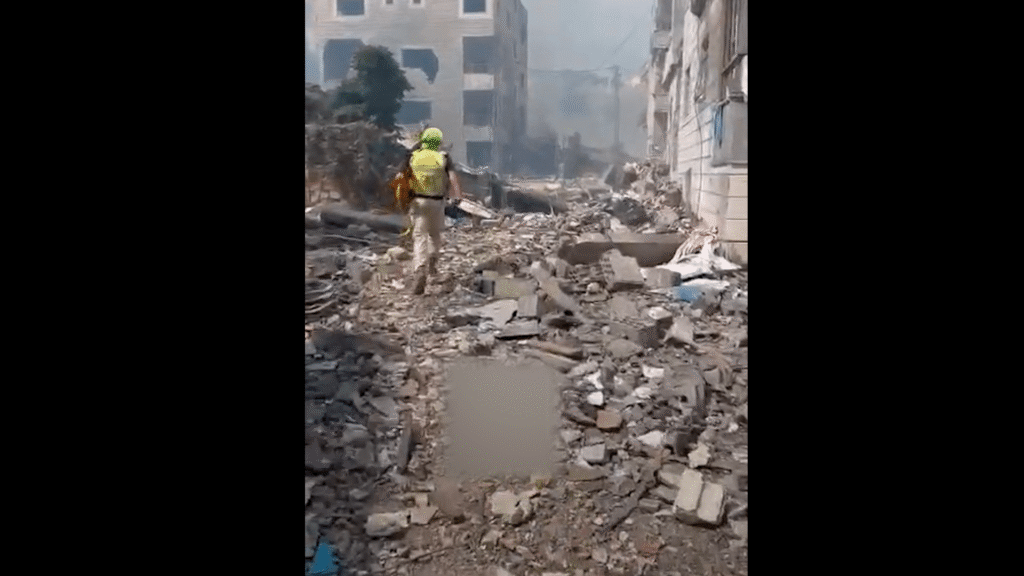
At approximately 14:30 local time on September 19, a third Israeli jet reportedly loitered over the outskirts of Nabatieh before releasing a single missile that struck a white‑painted ambulance parked near a makeshift field hospital. The vehicle was part of a Lebanese Red Cross convoy that had been responding to casualties from the earlier air strikes on residential neighborhoods.
Witnesses said the blast ripped through the ambulance’s side panel, igniting a fire that killed two paramedics and injured three others. Video footage shared on social media showed the wreckage surrounded by smoke, while nearby residents shouted for medical help that could not arrive because the ambulance was the only emergency response unit in the immediate vicinity.
The Lebanese Health Ministry condemned the strike as a “deliberate attack on medical personnel,” a charge echoed by the World Health Organization, which called the incident a “potential war crime” under the Geneva Conventions that protect medical staff in armed conflict.
Why it matters: Erosion of humanitarian norms
Targeting an ambulance marks a stark departure from the limited, albeit frequent, attacks on military targets that have characterized the north‑south border conflict. International humanitarian law expressly forbids attacks on medical vehicles unless they are being used to commit hostile acts, a threshold that has not been met in this case according to multiple NGOs.
The incident adds to a growing list of alleged violations by both Israel and Hezbollah, ranging from strikes on schools in Gaza to shelling of civilian neighborhoods in southern Lebanon. Each breach chips away at the credibility of the United Nations’ peacekeeping mandate in the region and fuels calls for stronger accountability mechanisms.
For the civilian population of southern Lebanon, the loss of an ambulance is more than a symbolic affront; it translates into longer response times for injuries, higher mortality rates, and a deepening mistrust of any authority that claims to protect them. In a country where the health system is already stretched thin by years of economic crisis, each medical asset is a lifeline.
African stakes: UNIFIL troops and diaspora ties
Since 1978, the United Nations Interim Force in Lebanon (UNIFIL) has included contingents from several African nations, notably Ghana, Nigeria, South Africa, and Senegal. These troops are tasked with monitoring the cease‑fire, supporting the Lebanese Armed Forces and facilitating humanitarian access. An attack on medical personnel raises immediate safety concerns for African peacekeepers who often collaborate with local health NGOs during emergencies.
Sources within the Ghanaian contingent told reporters that the recent strike prompted a review of movement protocols for UNIFIL medics, many of whom are drawn from the same African nations that supply infantry units. The review could lead to tighter restrictions on field operations, potentially limiting the force’s ability to aid civilians in real time.
Beyond the UN mission, there is a sizeable Lebanese diaspora in West Africa—particularly in Côte d’Ivoire, Senegal and Nigeria—where Lebanese families run import‑export businesses, construction firms and retail chains. Instability in Lebanon reverberates through these commercial networks, affecting credit flows, remittance streams and the profitability of enterprises that employ thousands of African workers.
Regional ripple effects: Markets, migration and aid
The escalation in Nabatieh has already nudged regional bond markets, with Lebanon’s sovereign debt spreads widening by 30 basis points on the day of the strike. African investors holding Lebanese sovereign bonds—primarily through pan‑African asset managers—are now reassessing risk exposure, especially given the country’s history of default and capital flight.
For African migrants already living in Lebanon, many of whom are Syrian refugees of African origin or West African nationals seeking work, the heightened violence exacerbates an already precarious existence. NGOs report a surge in inquiries about relocation assistance, and some African embassies in Beirut have begun issuing travel advisories for their citizens.
Humanitarian organizations based in Africa, such as Médecins Sans Frontières’ West African hub, are watching the incident closely. A breach of medical neutrality could force them to reconsider the deployment of field teams to the south, limiting the flow of essential supplies to communities that rely on cross‑border aid corridors.
What’s next: Diplomatic pressure and UN response
In the wake of the ambulance strike, the United Nations Security Council is expected to convene an emergency meeting to discuss possible sanctions or a renewed mandate for UNIFIL. African member states, led by South Africa and Ghana, are reportedly pushing for a resolution that would explicitly prohibit attacks on medical facilities and impose penalties for violations.
Israel, for its part, has defended the operation as a “necessary response to Hezbollah’s provocations,” while refusing to comment on the specific targeting of the ambulance. The Israeli Foreign Ministry has hinted at a possible diplomatic outreach to the United Nations to argue that the vehicle was being used to transport weapons—a claim that, if unsubstantiated, could further damage Israel’s standing in the international community.
For African peacekeepers and diaspora entrepreneurs, the next few weeks will be a litmus test of how quickly the UN can adapt its rules of engagement and whether regional diplomatic channels can de‑escalate a conflict that threatens to spill over into the broader Middle East and, by extension, African economic interests.
Quick Answers
Did Israel intentionally target the ambulance in Nabatieh?
Israel has not confirmed the intent, but the UN and health NGOs say the strike appears to violate the protection afforded to medical vehicles under international law.
How does the attack affect African UNIFIL troops?
The incident prompted African contingents to review safety protocols for medics, potentially limiting their ability to provide rapid medical assistance in the field.
Will the strike impact Lebanese diaspora businesses in Africa?
Yes, heightened instability can disrupt trade links, affect remittances and increase risk for Lebanese‑owned firms that employ African workers across West Africa.
Source: www.aljazeera.com


💬 Comments 0