Israeli settlers set al‑Tubasi family homes ablaze in West Bank village, Sep 2026
Background: Settler Violence in the West Bank
Since the 1990s, Israeli settler activity in the occupied West Bank has been punctuated by periodic spikes of violence against Palestinian civilians. Human‑rights monitors estimate that over 2,000 incidents of property damage, intimidation or physical attacks have been recorded in the past five years alone, a trend that accelerated after the 2024 Israeli election when right‑wing parties gained a larger share of the coalition.
The al‑Tubasi family lives in the village of Kafr al‑Labad, a community of roughly 3,500 people that sits near the Israeli settlement of Ariel. The village has previously been the target of settler raids, demolition orders and roadblocks, which have strained its limited access to water, electricity and medical services. Local NGOs say the pattern of attacks is designed to pressure residents into leaving, thereby expanding the buffer zone around nearby settlements.
International observers, including the United Nations Office for the Coordination of Humanitarian Affairs (OCHA), have warned that unchecked settler violence undermines the two‑state solution framework and fuels cycles of retaliation. The latest incident adds to a series of arson attacks reported in 2026, ranging from single‑family homes to agricultural fields, each eroding trust between the parties and complicating any diplomatic outreach.
The al‑Tubasi Home Arson: What Happened on September 29, 2026
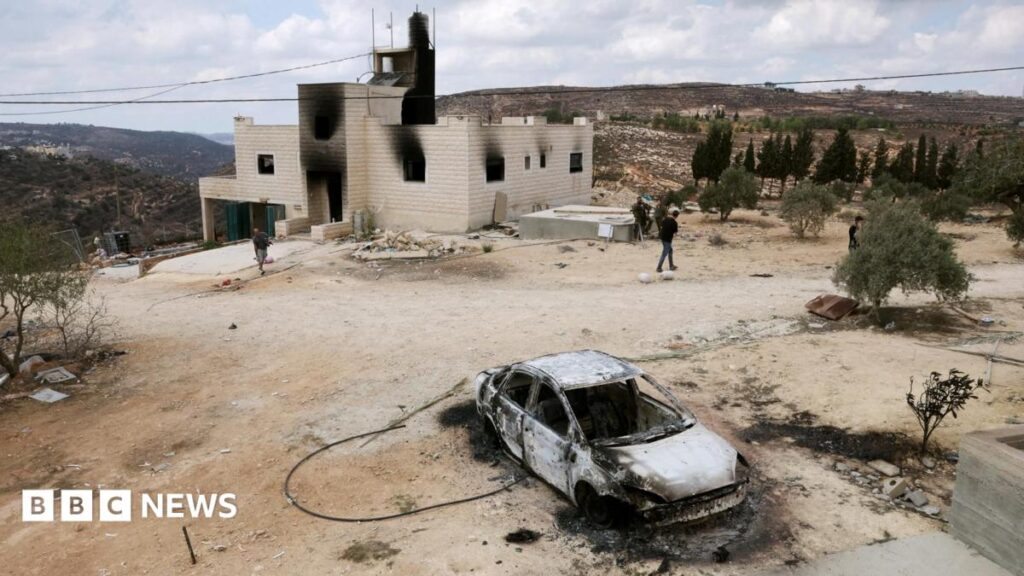
In the early hours of September 29, a group of Israeli settlers approached the al‑Tubasi compound, brandishing knives and shouting slogans that local witnesses identified as nationalist chants. According to a statement from the Palestinian Ministry of Health, the assailants set fire to two adjacent houses belonging to brothers Ahmad and Youssef al‑Tubasi, while also hurling stones at nearby Israeli security personnel who had arrived to "maintain order."
Security forces, stationed at a checkpoint a few hundred meters away, reported that they were targeted with rocks and improvised projectiles as the fire spread. The Israeli police released a brief video showing officers forming a cordon, but they did not intervene to extinguish the flames, a response that human‑rights groups describe as a tacit endorsement of the settlers' actions. The homes were reduced to charred shells, and the family was forced to evacuate with only a few belongings salvaged.
Local and international media captured the aftermath: smoke lingering over the village, children watching from a distance, and a handful of aid workers from the Red Crescent distributing blankets. The incident was quickly reported by Al Jazeera, Reuters and regional outlets, prompting calls for an investigation from the European Union’s diplomatic mission in Jerusalem.
Why This Incident Matters for the Israeli‑Palestinian Conflict
The al‑Tubasi arson illustrates a broader shift in the calculus of on‑the‑ground power dynamics. Settler groups, emboldened by political support and a perceived impunity, are increasingly using fire as a weapon of intimidation. Fire not only destroys property but also creates a psychological climate of fear that can accelerate population displacement, a factor that some analysts link to Israel’s long‑term settlement expansion strategy.
From a legal standpoint, the incident violates several provisions of international humanitarian law, including the protection of civilian property and the prohibition of collective punishment. Yet, the lack of immediate arrests or prosecutions fuels a narrative among settlers that the Israeli security apparatus is either unwilling or unable to curb extremist behavior. This perception can embolden further attacks, creating a feedback loop that destabilises the fragile security environment in the West Bank.
Politically, the timing is significant. The Israeli government is currently negotiating a new budget that includes increased funding for settlement infrastructure. At the same time, the United States is preparing to release its annual human‑rights report, which is expected to highlight the rise in settler violence. The al‑Tubasi case could become a litmus test for how both Jerusalem and Washington respond to mounting pressure from the international community.
African and Diaspora Perspectives: Solidarity, Diplomacy, and Aid
African nations have historically taken varied stances on the Israeli‑Palestinian dispute, with the African Union (AU) reaffirming support for a negotiated two‑state solution in its 2025 charter. However, the AU’s peace‑building office in Addis Ababa has recently begun monitoring settler‑related incidents, citing concerns that escalating violence could spill over into broader regional instability, especially given the presence of Palestinian diaspora communities in South Africa, Kenya and Ethiopia.
Diaspora activists in Lagos, Nairobi and London have organised solidarity protests following the al‑Tubasi arson, linking the event to broader anti‑colonial struggles on the continent. A coalition of African NGOs, including the South African Human Rights Commission, issued a joint statement urging the United Nations to appoint an independent fact‑finding mission, arguing that “the pattern of settler aggression mirrors historic land‑appropriation tactics that African peoples have resisted for centuries.”
On the ground, a handful of African‑run NGOs operating in the West Bank—such as the Ethiopian Relief Society and the Ghanaian Community Development Project—have reported disruptions to their food‑distribution programmes after the attack. They say the heightened security presence and roadblocks make it harder to reach vulnerable families, including those in Kafr al‑Labad. The incident therefore has immediate humanitarian implications for African‑led aid efforts, reinforcing the need for coordinated diplomatic engagement from African capitals.
What Comes Next: Legal, Political and Humanitarian Outlook
Legal experts anticipate that the Palestinian Authority will file a formal complaint with the Israeli Supreme Court, demanding an investigation into the settlers’ actions and the alleged inaction of Israeli police. According to a senior lawyer at the Palestinian Center for Human Rights, such cases have a modest chance of resulting in convictions, but they serve to document violations for future accountability mechanisms, including the International Criminal Court.
Politically, the episode may pressure the Israeli coalition to reconsider its security protocols in the West Bank. Some moderate Knesset members have called for stricter enforcement against illegal settler activity, arguing that unchecked violence erodes Israel’s international standing. Conversely, hard‑line factions are likely to dismiss external criticism as “bias,” a stance that could further polarise the domestic debate ahead of the upcoming national elections in 2027.
Humanitarian organisations are already mobilising resources to support the displaced al‑Tubasi family and other villagers affected by the fire. The United Nations Relief and Works Agency (UNRWA) has pledged temporary shelter, while several European NGOs are preparing cash‑assistance packages. For African NGOs, the incident underscores the importance of diversifying supply routes and strengthening local partnerships to mitigate the impact of sudden security escalations on aid delivery.
Quick Answers
Who are the al‑Tubasi family and what happened to their homes?
The al‑Tubasi family, residents of Kafr al‑Labad in the West Bank, had two houses set on fire by Israeli settlers on September 29, 2026, forcing them to flee with limited belongings.
How does the arson affect African NGOs working in the West Bank?
The attack disrupted road access and heightened security checks, making it harder for African‑run aid groups to deliver food and medical supplies to vulnerable communities.
What legal steps are being taken after the incident?
The Palestinian Authority plans to file a complaint with Israel’s Supreme Court seeking an investigation and possible prosecution of the settlers involved.
Source: www.bbc.co.uk



💬 Comments 0