Israeli strike kills Hamas security chief Mohammed Abu al‑Ouf, his wife and daughters in Gaza City, Nov 2026
Background: Hamas internal security in northern Gaza
Mohammed Abu al‑Ouf headed Hamas’s internal security service for the northern sector of Gaza, a role that put him at the centre of the movement’s policing, intelligence‑gathering and enforcement of its own rules. The internal security apparatus has been crucial for Hamas since it took control of the Strip in 2007, overseeing everything from recruitment to the suppression of rival factions and dissent within the densely populated northern suburbs.
The northern Gaza corridor, home to roughly two million residents, has been a flashpoint for Israeli‑Palestinian clashes. Abu al‑Ouf’s position meant he coordinated with both the political leadership and the military wing, making him a valuable target for Israeli forces seeking to disrupt the chain of command that underpins Hamas’s ability to launch rockets and organise tunnel networks.
The strike and its immediate fallout
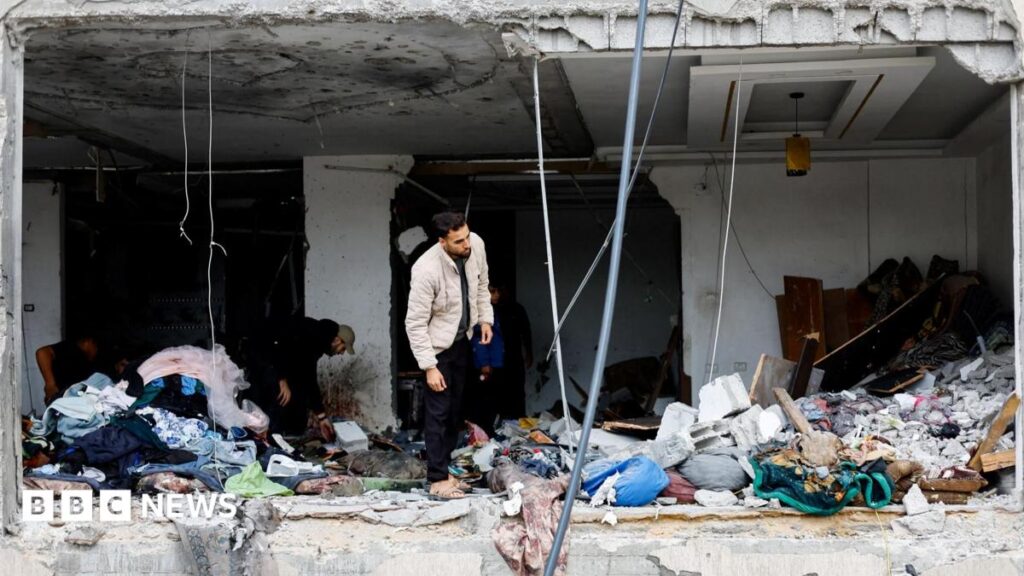
On 26 November 2026, an Israeli airstrike hit a residential building in Gaza City, killing Abu al‑Ouf, his wife and their two teenage daughters, according to doctors at Al‑Shifa Hospital. Israeli officials did not immediately confirm the identity of those killed, but later statements from the Israel Defense Forces (IDF) described the operation as a “targeted elimination of a senior Hamas operative.” The loss of three civilians alongside a senior commander sparked renewed condemnation from humanitarian groups, who warned that the strike violated the principle of distinction under international law.
The death of Abu al‑Ouf also prompted a wave of grief and anger across Gaza. Local media reported spontaneous protests outside the strike site, with mourners chanting slogans against the Israeli occupation. Hamas’s official news outlet, Al‑Aqsa TV, described the attack as an “act of terror” aimed at “intimidating the Palestinian people.” The organization has not yet announced any direct retaliation, but security sources say the internal security network is already scrambling to fill the leadership vacuum.
Strategic implications for Hamas and Israeli operations
Analysts at the International Crisis Group argue that removing a senior security chief can temporarily disrupt Hamas’s ability to coordinate internal policing and intelligence, but it is unlikely to cripple the group’s overall operational capacity. The internal security wing is staffed by a cadre of lower‑level officers who can assume command, and the organization has a history of quickly re‑appointing successors to maintain continuity.
For Israel, the strike signals a continued policy of “decapitation” – targeting high‑level Hamas figures to erode the group’s command structure. However, the collateral loss of family members may backfire by fueling further radicalisation among Gaza’s youth, a concern voiced by some Israeli security analysts who caution that such tactics could harden public support for Hamas and complicate any future ceasefire negotiations.
Humanitarian and diplomatic reverberations, including Africa’s stance
The strike has reignited calls from African nations and the African Union for an immediate ceasefire and unhindered humanitarian access. South Africa’s foreign ministry, citing the death of civilians, urged the United Nations Security Council to adopt a resolution demanding “proportionate use of force” in Gaza. Nigeria’s ambassador to the UN, meanwhile, highlighted the need for “regional solidarity” and warned that continued civilian casualties could destabilise the broader Middle East, affecting African diaspora communities across Europe and North America.
African NGOs operating in Gaza, such as the Sudanese‑run Mercy for Gaza and Kenya‑based Hope Aid, have expressed heightened security concerns for staff on the ground. They note that the targeting of senior officials in residential areas raises the risk that aid convoys could be caught in future strikes, potentially slowing the delivery of food, medical supplies and reconstruction materials that many African donor countries have pledged.
What could come next for the Gaza conflict and regional actors
In the short term, Hamas is likely to appoint a new head of internal security within days, a move intended to reassure its ranks and demonstrate resilience. The organization may also intensify its propaganda campaign, portraying the strike as evidence of Israel’s willingness to target families, a narrative that could be leveraged in diplomatic forums where African states are seeking a balanced approach to the conflict.
Long‑term, the incident could influence the calculus of mediators such as Egypt and Qatar, who have been brokering intermittent truces. If civilian casualties continue to rise, pressure could mount on Israel to restrain its decapitation strategy, while Hamas might feel compelled to retaliate, risking a further escalation that would draw in regional actors and complicate the already fragile humanitarian situation.
Quick Answers
Who was Mohammed Abu al‑Ouf?
He was the head of Hamas’s internal security service for northern Gaza, overseeing intelligence and policing for the militant group.
What impact could his death have on the Gaza conflict?
The strike may temporarily disrupt Hamas’s internal security operations but is unlikely to cripple the group, while also risking increased civilian anger and potential retaliation.
How are African countries reacting to the strike?
South Africa, Nigeria and other African states have called for a ceasefire and warned that civilian deaths could destabilise the region, while African NGOs fear heightened security risks for aid workers.
Source: www.bbc.co.uk




💬 Comments 0