Israeli troops order Qusra families to vacate homes, turn houses into barracks – 2026 crisis
Background: Qusra’s strategic squeeze
Qusra, a modest Palestinian village in the West Bank’s Ramallah‑al‑Bireh governorate, sits on a hill that overlooks the Israeli settlement of Itamar. Over the past decade, the settlement’s expansion has narrowed the village’s access to main roads and agricultural land, creating a tense buffer zone that has repeatedly erupted into clashes.
The village’s mayor, Ahmad Al‑Qawasmi, has long warned that the proximity of the settlement makes Qusra a flashpoint for military operations. In the weeks leading up to August 2026, Israeli forces intensified patrols around the area, citing security concerns after a series of stone‑throwing incidents and a suspected weapons cache discovered nearby.
What happened on the ground
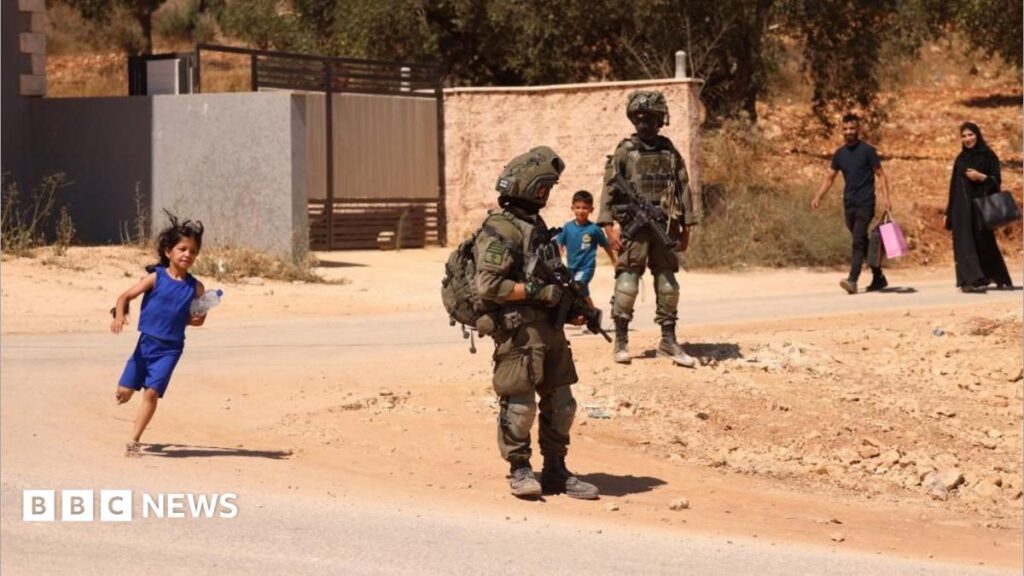
On August 12, Israeli soldiers entered Qusra’s main street, escorted by armored vehicles. According to eyewitnesses, troops knocked on doors, informed residents that the houses would be used as temporary barracks, and gave families only a few hours to leave. Some families were offered cash compensation, but many refused, fearing the loss of property and the risk of demolition.
Human Rights Watch documented that at least 15 homes were repurposed as military quarters within 48 hours. The mayor said the soldiers also set up a command post in the village’s community centre, effectively turning Qusra into a forward operating base for further operations against Itamar and surrounding settlements.
Why it matters beyond the immediate conflict
The forced displacement of Qusra’s residents adds a new layer to the broader pattern of settlement‑linked pressure on Palestinian communities. By converting civilian houses into barracks, the Israeli military not only disrupts daily life but also creates a de‑facto annexation of land that could later be formalised in settlement plans.
Internationally, the move risks triggering a fresh wave of diplomatic criticism. The United Nations Office for the Coordination of Humanitarian Affairs (OCHA) has warned that such actions could constitute a violation of the Fourth Geneva Convention, which protects civilian property in occupied territories. The episode may also influence how donor nations allocate aid to the Palestinian Authority, especially as the United States prepares its next foreign aid package.
African and diaspora perspectives
African countries have historically voiced strong support for Palestinian self‑determination, with South Africa’s apartheid analogy frequently cited in UN debates. In 2026, the African Union’s Peace and Security Council is set to discuss the Israeli‑Palestinian conflict during its June summit, and the Qusra incident is expected to feature prominently in the agenda.
The African diaspora in the United Kingdom and the United States has mobilised quickly, organising protests outside Israeli embassies and launching crowdfunding campaigns for displaced families. Nigerian activist groups, such as the Lagos‑based “Solidarity for Palestine”, have pledged to send medical supplies and legal aid to NGOs operating in the West Bank, highlighting a growing trans‑Atlantic solidarity network.
Reactions on the ground and abroad
Palestinian officials condemned the forced evacuations as “collective punishment”. The Palestinian Ministry of Interior announced plans to file a petition with the International Court of Justice, seeking an emergency injunction against the use of civilian homes for military purposes.
Israel’s Defence Ministry defended the operation, stating that the barracks are a “temporary security measure” necessary to protect Israeli civilians from “persistent attacks”. The ministry also warned that any attempts to re‑occupy the houses could be met with “legal consequences”.
What’s next: possible scenarios and regional ripple effects
If the displacement continues, humanitarian NGOs warn of a looming crisis: over 300 residents could become internally displaced, straining already limited shelter capacity in nearby towns such as Ramallah. Aid agencies are calling for an immediate cease‑fire and the establishment of a neutral monitoring team, possibly under the auspices of the European Union.
Regionally, the incident could fuel further unrest in neighboring Jordan and Lebanon, where refugee communities keep a close eye on West Bank developments. Moreover, the African Union’s upcoming deliberations may lead to a coordinated African diplomatic push, potentially resulting in a resolution that calls for an independent investigation and the withdrawal of troops from civilian structures.
Quick Answers
Why are Israeli troops turning Qusra houses into barracks?
The Israeli military says it needs temporary bases to protect nearby settlements after recent security incidents, but critics argue it is a tactic to pressure Palestinian residents and expand settlement control.
How many families have been displaced from Qusra?
At least 15 households have been ordered to leave, affecting roughly 300 people, according to local reports.
What is the African Union’s stance on the Qusra evacuation?
The AU is expected to discuss the incident at its June 2026 summit, with member states likely to call for an independent investigation and respect for international humanitarian law.
Source: www.bbc.co.uk



💬 Comments 0