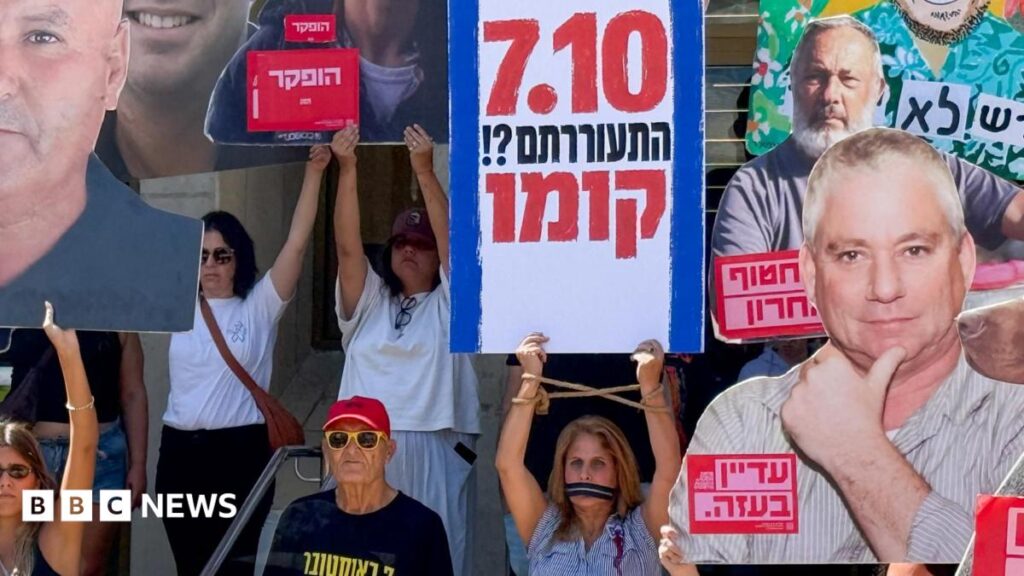
Israelis demand accountability for 7 Oct 2023 Hamas attack as Netanyahu refuses inquiry – three years on
Background: The 7 October 2023 shock
On 7 October 2023 Hamas militants launched a coordinated assault on southern Israel, breaching the border fence, killing more than 1,200 civilians and taking hundreds hostage. The attack exposed glaring gaps in Israel’s intelligence, early‑warning systems and the coordination between the Israel Defense Forces (IDF) and civilian authorities. In the weeks that followed, the country entered a protracted war in Gaza, reshaping regional politics and prompting intense scrutiny of Israel’s security apparatus.
The aftermath saw a wave of public protests, parliamentary inquiries and a surge of political pressure on Prime Minister Benjamin Netanyahu’s government. While several internal reviews were commissioned, many Israelis and opposition lawmakers argued that the investigations lacked teeth, transparency and the authority to hold senior officials personally accountable for the failures that allowed the attack to happen.
What the new demands look like
Three years after the assault, a coalition of veteran journalists, former security officials and civil‑society groups presented a formal petition to the Knesset calling for a state‑wide, independent inquiry with subpoena power. The petition cites specific lapses – such as the delayed activation of the Iron Dome, the failure to act on intelligence warnings, and the inadequate coordination between the Home Front Command and local municipalities – and asks for the names of the officials responsible for each shortfall.
In a televised press conference on 6 October 2026, opposition leader Yair Lapid reiterated the call, warning that “without a full accounting, the public’s trust in the security establishment will continue to erode.” The demand has resonated across the political spectrum, with members of the left‑wing Meretz party and even some right‑wing Knesset members joining the chorus for a transparent probe.
Why Netanyahu’s refusal matters
Prime Minister Benjamin Netanyahu’s outright refusal to take personal responsibility or to order a comprehensive state inquiry signals a broader political calculus. Analysts argue that Netanyahu, who has weathered multiple elections and corruption trials, sees an independent probe as a potential weapon for his rivals, especially as the next national elections loom in early 2027. By positioning himself as the defender of national security, he hopes to rally his base and sideline opponents who could use the inquiry’s findings to demand his resignation.
The refusal also raises constitutional questions about ministerial accountability in Israel’s parliamentary system. While the Supreme Court has previously ordered investigations into military conduct – notably after the 2006 Lebanon war – the lack of a formal mechanism for civilian oversight of the IDF’s strategic decisions leaves a gap that could erode democratic norms, according to legal scholar Prof. Eli Avivi of Tel‑Aviv University.
Implications for Africa and the diaspora
The security fallout from the 7 October attack reverberates far beyond the Middle East, affecting African nations that host sizable Israeli‑linked investments and diaspora communities. Egypt, Jordan and Sudan have all been negotiating security pacts with Israel that hinge on the stability of the Israeli‑Palestinian front. A prolonged internal crisis in Israel could stall joint anti‑terrorism initiatives that African states rely on to curb extremist groups operating in the Sahel and the Horn of Africa.
For the African diaspora in Israel – particularly Ethiopian Jews who comprise roughly 150,000 citizens – the lack of accountability fuels fears of marginalisation. Community leaders have warned that without a transparent review, the same systemic oversights that missed Hamas warnings could also overlook internal security lapses that disproportionately affect minority neighbourhoods, as reported by the Ethiopian Israeli Association earlier this year.
What could happen next
If pressure mounts, the Knesset may be forced to pass a resolution establishing an independent commission, similar to the 2008 Winograd Commission after the Lebanon war. Such a body would have the authority to subpoena senior officials, subpoena classified documents, and publish a final report that could trigger criminal investigations. However, any commission’s effectiveness will hinge on whether the government cooperates or attempts to limit its scope, a dynamic observed in past inquiries.
Internationally, the United States and European Union have signalled that continued opacity could affect military aid and diplomatic support. A 2025 US State Department memo warned that “persistent questions about Israel’s internal accountability mechanisms may influence future assistance packages.” For African investors, especially those in the tech and renewable‑energy sectors that depend on Israeli partnerships, the uncertainty could translate into delayed projects and a reassessment of risk exposure.
Quick Answers
Why are Israelis demanding a new inquiry three years after the 7 Oct 2023 attack?
Many believe earlier reviews were incomplete and lacked the power to hold senior officials accountable for intelligence and coordination failures.
How could Netanyahu’s refusal to launch an inquiry affect Israel’s relations with African countries?
It may stall joint security cooperation and create uncertainty for African investors relying on stable Israeli partnerships.
What would an independent commission be able to do that current reviews cannot?
It would have subpoena power, the ability to compel testimony from top officials, and the mandate to publish a public report that could trigger legal action.
Source: www.bbc.co.uk




💬 Comments 0