Israel’s 2026 West Bank Settlement Expansion Adds 12,000 Units, Undermining Two‑State Goal
Historical backdrop of Israeli settlement policy
Since the 1967 Six‑Day War, Israel has built a network of civilian communities across the occupied West Bank, an area the United Nations classifies as occupied territory. The settlements began as strategic outposts but have grown into towns with full municipal services, often linked by roads that bypass Palestinian villages.
International law, particularly the Fourth Geneva Convention, prohibits an occupying power from transferring its civilian population into occupied land. Yet successive Israeli governments have justified expansion as a security measure or a fulfillment of historical claims, a stance that has drawn repeated condemnation from the United Nations, the European Union, and the African Union.
The Oslo Accords of the 1990s created Areas A, B, and C, assigning varying degrees of control to the Palestinian Authority. Over 60 percent of the West Bank, designated Area C, remains under full Israeli civil and security control, making it the primary arena for new construction.
What the 2026 construction boom looks like on the ground
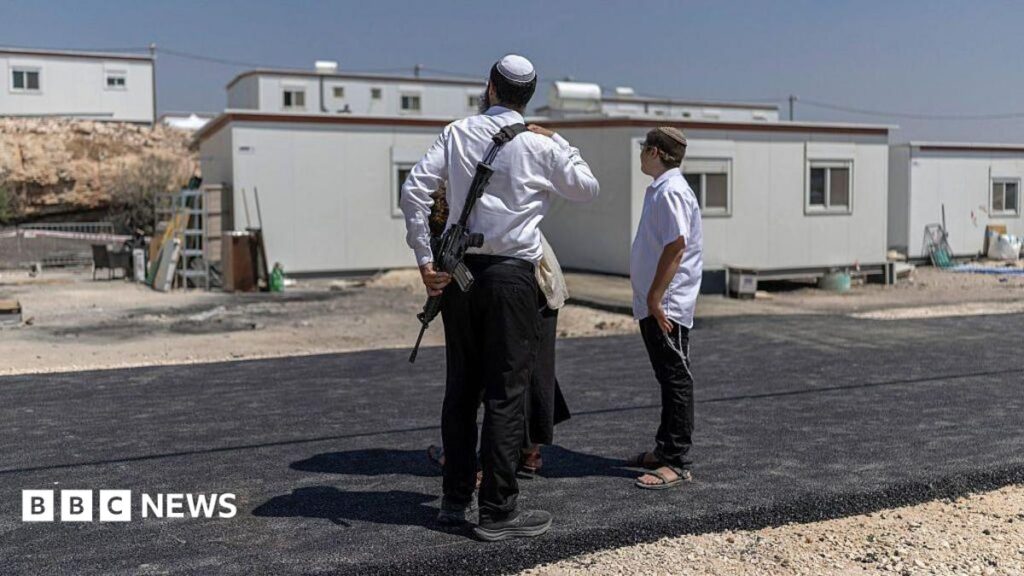
According to data released by the Israeli Ministry of Housing in March 2026, the government approved 12,000 new housing units across five major settlement blocs, including expansions near Ariel, Ma'ale Adumim, and the newly announced Givat HaMishmar project. The approvals cover both single‑family homes and multi‑storey apartment blocks.
Road works have kept pace with the building spree. Satellite imagery analyzed by the NGO B’Tselem shows at least 30 kilometres of new paved roads linking the new units directly to existing Israeli highways, effectively stitching the settlements into a contiguous urban corridor that slices through Palestinian agricultural land.
Critics argue that the construction is not merely about housing but about reshaping the demographic map of the West Bank. By establishing “facts on the ground,” the Israeli government aims to make any future border negotiations more favorable to a de‑facto annexation of large swaths of the territory.
Why the expansion threatens the two‑state solution and regional stability
The addition of thousands of new homes in Area C dramatically reduces the land available for a viable Palestinian state. Analysts at the International Crisis Group note that, at current rates, the contiguous Palestinian territory could shrink to less than 2,500 square kilometres by 2030, well below the minimum size required for economic self‑sufficiency.
Human rights organisations warn that the settlements intensify daily hardships for Palestinians. New roads often restrict access to farms, schools, and health clinics, while the accompanying security infrastructure—fencing, checkpoints, and military patrols—further fragments community life.
On the diplomatic front, the expansion undermines recent U.S. attempts to revive peace talks. While the Biden administration has reiterated support for a two‑state outcome, it has not taken concrete steps to halt settlement growth, a gap that European and African partners are increasingly unwilling to overlook.
African and diaspora perspectives on the settlement surge
African Union (AU) member states have historically supported the Palestinian cause, viewing it through the lens of anti‑colonial solidarity. In a joint statement issued at the AU summit in Addis Ababa in June 2026, 23 African countries condemned the “unlawful expansion of settlements” and called for an immediate freeze on construction, citing the impact on peace and regional security.
Nigeria, Africa’s largest economy, has taken a more nuanced stance. Foreign Minister Geoffrey Onyeama told reporters that Nigeria would consider scaling back its recent defense procurement deals with Israel if settlement activity continued unchecked, reflecting growing pressure from domestic civil‑society groups and the Nigerian diaspora in the United States and Europe.
The African diaspora, particularly activists in cities like London, Toronto, and Johannesburg, have organized coordinated protests outside Israeli embassies, demanding that multinational corporations divest from companies supplying construction materials to the settlements. These campaigns have already led to two European firms withdrawing bids for Israeli infrastructure contracts.
What comes next: possible scenarios and international responses
If settlement construction proceeds unchecked, the most likely outcome is a further erosion of the territorial contiguity needed for a Palestinian state, pushing the conflict toward a one‑state reality that many observers deem unsustainable. In that scenario, international legal actions at the International Court of Justice could increase, although enforcement mechanisms remain limited.
Conversely, a coordinated diplomatic push from the African Union, the European Union, and a reinvigorated United Nations Security Council could compel Israel to pause new approvals. Some analysts suggest that linking future Israeli‑UAE or Israeli‑Morocco economic agreements to settlement freezes might create leverage, a tactic already floated in back‑channel talks.
On the ground, Palestinian civil‑society groups are preparing to file additional petitions with Israel’s Supreme Court, a legal avenue that has occasionally succeeded in halting specific construction projects. However, the court’s decisions often hinge on security arguments supplied by the Israeli Defense Ministry, making outcomes unpredictable.
Quick Answers
How many new settlement units were approved in the West Bank in 2026?
The Israeli Ministry of Housing announced approval for about 12,000 new housing units across several settlement blocs in 2026.
What is the African Union’s position on Israeli settlement expansion?
In June 2026 the AU released a statement condemning the expansion as illegal and called for an immediate freeze on construction.
Why does settlement growth threaten the two‑state solution?
New settlements reduce the land available for a contiguous Palestinian state, making a viable, sovereign state increasingly unfeasible.
Source: www.bbc.co.uk




💬 Comments 0