Jantar Mantar denotified as Delhi protest site in 2026: what it means for Indian democracy and diaspora activism
Background: Jantar Mantar’s symbolic role in Indian dissent
Since the 1990s, the 18th‑century astronomical observatory known as Jantar Mantar has become an unofficial arena for citizens to voice dissent, from anti‑corruption rallies to climate‑justice marches. Its open‑air terraces and historic arches provide a visible backdrop that media outlets worldwide have come to associate with India’s vibrant street politics.
The site’s de‑facto status as a protest hub grew out of a legal gray area: while the monument is protected by the Archaeological Survey of India, there has never been an explicit law banning assemblies there. Over the decades, successive governments have tolerated, and at times even facilitated, large gatherings, allowing activists to stage sit‑ins, hunger strikes, and candle‑light vigils without formal permits.
The denotification decision and immediate fallout
On 12 October 2026, the Ministry of Culture issued an order removing Jantar Mantar from the list of “designated protest sites,” effectively stripping it of the informal permission that had allowed demonstrations to take place without prior clearance. The move was justified in a press release as a step to protect the monument’s structural integrity and to prevent “political exploitation” of heritage sites.
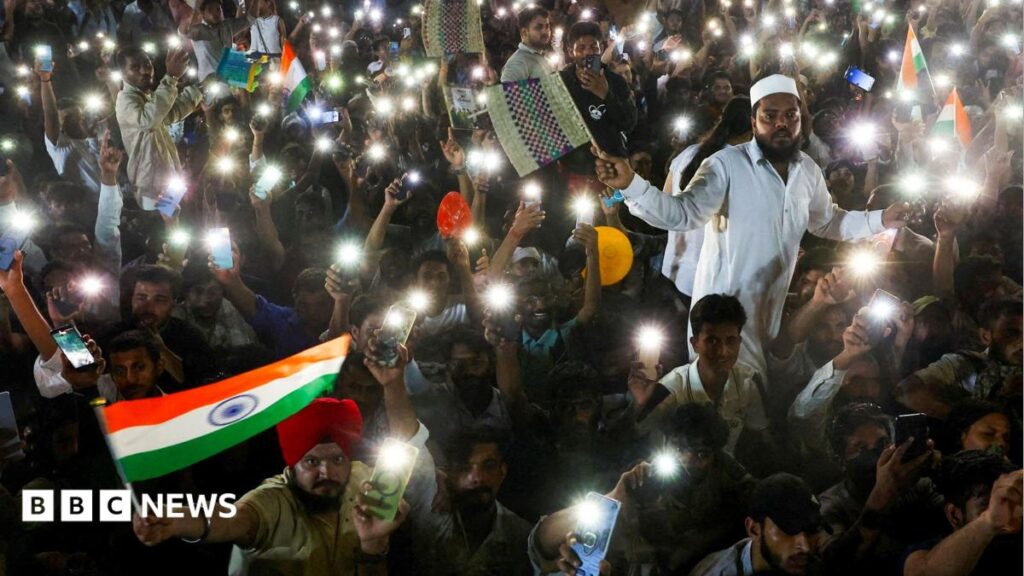
Within hours, activists gathered at the site to protest the very decision that halted their gathering. Police responded with a mix of crowd‑control measures and the issuance of notices demanding the removal of banners and temporary structures. Social media erupted with images of the empty terraces, while opposition parties condemned the decree as an attempt to silence dissent ahead of the upcoming state elections.
Why the change matters for India’s democratic space
Jantar Mantar’s denotification signals a broader shift in how the Indian state is managing public dissent. By moving the protest venue from a historic, semi‑public space to a regulated one, the government can more easily require permits, impose time limits, and levy fines—tools that have already been used to curb rallies in Delhi’s central parks and university campuses.
Legal scholars note that the decision could set a precedent for the removal of other informal protest zones across the country. If courts uphold the ministry’s authority, municipalities may follow suit, turning city squares, railway stations, and even market streets into “permit‑only” zones, thereby raising the cost of assembly for grassroots movements that lack funding.
Connecting the dots: a global trend of shrinking civic spaces
India’s move mirrors a pattern observed in several democracies where governments tighten control over public squares. In Nigeria, for example, Lagos authorities have repeatedly revoked permits for mass gatherings in Freedom Park, citing security concerns. Similarly, South Africa’s recent restrictions on protests near the Union Buildings have sparked debates about the balance between heritage preservation and the right to assemble.
These parallel developments suggest a converging narrative: heritage sites are increasingly being weaponised as legal levers to limit protest. For activists, the message is clear—spaces once considered public commons are being re‑classified as protected zones, subject to bureaucratic gate‑keeping that can be invoked selectively.
Implications for the Indian diaspora and African‑Indian communities
The Indian diaspora in Africa—particularly in Kenya, Tanzania, and South Africa—keeps a close eye on domestic political shifts, as they shape perceptions of India’s democratic credentials abroad. Business councils and cultural organisations often cite India’s vibrant civil society as a soft‑power asset when lobbying for trade agreements with African nations.
A constrained protest environment could dampen the diaspora’s willingness to champion Indian causes on the continent. Moreover, African‑Indian activist networks that have historically coordinated campaigns on climate justice and anti‑corruption may find it harder to align with Indian counterparts if the latter lose a high‑visibility rallying point like Jantar Mantar. The denotification thus risks eroding a symbolic bridge that has linked Indian and African civil‑society movements for decades.
What’s next: legal battles, alternative venues, and the future of street politics
Legal challenges are already brewing. A coalition of NGOs has filed a petition in the Delhi High Court, arguing that the denotification violates the Constitution’s guarantee of freedom of speech and assembly. Early hearings suggest the court may issue a stay on the order, allowing limited protests to continue while the case is examined.
Regardless of the court’s ruling, activists are scouting new locations. Rooftop gatherings, virtual protests, and flash‑mob style demonstrations are gaining traction as low‑cost, hard‑to‑regulate alternatives. In Lagos, for instance, climate activists have begun using boat rallies on the Atlantic coast to bypass land‑based permit requirements—a tactic that Indian protesters may emulate if Jantar Mantar remains off‑limits.
Quick Answers
What is Jantar Mantar and why is it important for protests?
Jantar Mantar is an 18th‑century astronomical monument in Delhi that has become an iconic open‑air venue for public demonstrations since the 1990s.
Why did the Indian government denotify Jantar Mantar as a protest site?
The Ministry of Culture said the move protects the monument’s structure and prevents its political exploitation, but critics view it as a means to tighten control over assemblies.
How could this decision affect Indian diaspora activism in Africa?
A reduced space for high‑profile protests may weaken the symbolic link between Indian and African civil‑society groups, limiting joint campaigns on issues like climate justice and anti‑corruption.
Source: www.bbc.co.uk




💬 Comments 0