Jared Kushner and Steve Witkoff land in Kyiv for talks after Russia meeting – implications for Ukraine war and African grain supplies 2026
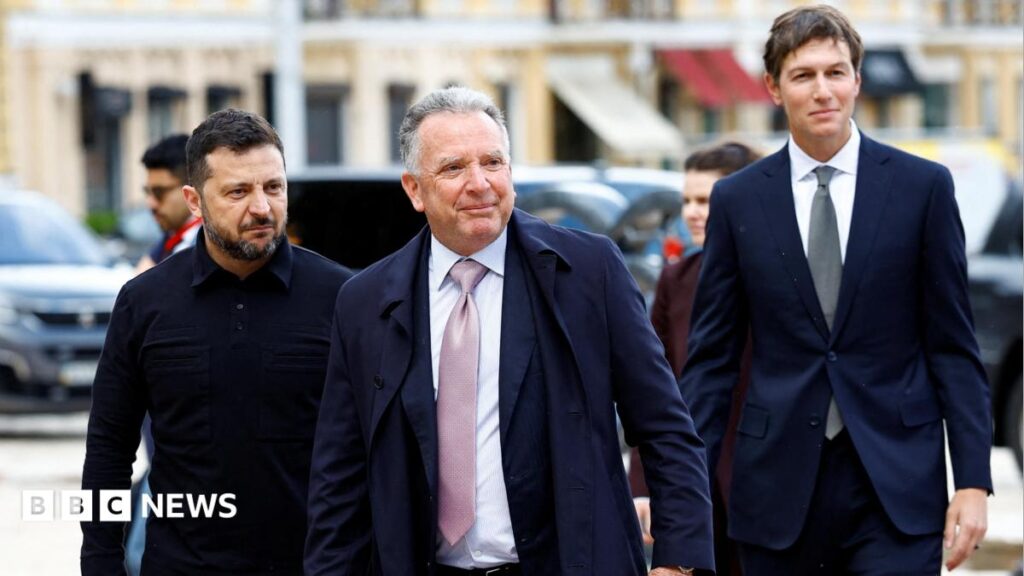
Background: US diplomatic maneuvering in the Ukraine conflict
Since the Russian invasion began in 2022, Washington has relied on a mixture of high‑level officials, senior advisers and private‑sector envoys to keep diplomatic channels open with Kyiv and Moscow. The appointment of former President Donald Trump’s inner circle – real‑estate mogul Steve Witkoff and former senior adviser Jared Kushner – marks a notable shift from career diplomats to politically connected negotiators, a tactic reminiscent of past administrations that have turned to trusted confidants during crises.
The two envoys arrived in Moscow earlier this week for a behind‑closed‑doors session with President Vladimir Putin, where they reportedly discussed a tentative cease‑fire framework and the release of remaining Western prisoners. While the details remain opaque, sources close to the Kremlin said the talks focused on “humanitarian corridors” and a possible de‑escalation in the Donbas region. Their subsequent flight to Kyiv signals a rare instance of back‑to‑back engagement with both belligerents in a single diplomatic tour.
For Ukraine, the presence of Kushner and Witkoff in the capital is both symbolic and practical. Kyiv’s foreign ministry has welcomed the visit as a sign that Washington is still willing to explore alternative tracks to a negotiated settlement, even as NATO’s military aid continues. At the same time, critics in Kyiv warn that the envoys lack formal diplomatic credentials and may prioritize political optics over substantive concessions.
Why the visit matters for global security and the African grain crisis
The war in Ukraine has rippled far beyond Europe, especially across sub‑Saharan Africa where Ukrainian wheat accounts for roughly 15 % of total grain imports. A prolonged conflict has already contributed to soaring food prices in countries such as Nigeria, Kenya and Ethiopia, prompting emergency imports and fueling social unrest. Any diplomatic breakthrough that could shorten the war or open new export corridors would therefore have a direct impact on African food security.
Analysts at the International Food Policy Research Institute (IFPRI) note that a modest de‑escalation—such as a temporary cease‑fire allowing grain ships to leave the Black Sea—could lower wheat prices in Africa by up to 12 % within six months. The arrival of Kushner and Witkoff, who have close ties to major U.S. agribusiness firms, raises the possibility that private‑sector logistics expertise will be leveraged to expedite grain shipments once a political opening emerges.
Beyond grain, the conflict has also disrupted energy markets, driving up oil and gas prices that affect African economies heavily dependent on imports. A negotiated settlement could stabilize global energy prices, easing inflationary pressures that have plagued South Africa’s manufacturing sector and Nigeria’s fuel subsidies. Thus, the talks in Kyiv are being watched closely by African policymakers who see the war as a secondary, yet potent, driver of their own economic challenges.
The American political calculus: domestic pressures and diaspora interests
Domestically, the Biden administration faces mounting criticism from both the progressive wing, which demands a firmer stance against Russia, and the moderate wing, which worries about the fiscal cost of endless military aid. Deploying Kushner—a figure who survived a contentious 2024 presidential primary campaign—offers the White House a way to signal a fresh diplomatic effort without committing additional troops or aid packages.
The Ukrainian diaspora in the United States, estimated at over 1 million people, has long lobbied for a robust American response. However, a growing segment of the diaspora, particularly younger Ukrainian‑Americans, has begun to call for a negotiated peace that prioritises humanitarian relief over continued fighting. Kushner’s involvement, given his past experience with community outreach during his 2020 presidential campaign, may be intended to bridge these divergent diaspora expectations.
In parallel, African‑American and African immigrant communities in the U.S. have been vocal about the war’s impact on food security back home. Organizations such as the African Diaspora Network have urged Washington to consider the downstream effects of the conflict on African grain imports when shaping any cease‑fire or sanctions policy. Kushner’s presence could therefore be a nod to those advocacy groups, signaling that the administration is listening to a broader coalition of constituents.
Reactions on the ground: Kyiv, Moscow and African capitals
In Kyiv, President Volodymyr Zelenskyy welcomed the envoys, emphasizing that “any constructive dialogue that brings relief to our people is welcome.” His office released a brief statement noting that the talks would focus on humanitarian corridors, prisoner exchanges and the safe passage of grain shipments. Opposition parties in Ukraine, however, cautioned that Kushner’s previous involvement in the 2020 election could be used by Moscow to claim undue U.S. influence.
Moscow’s state news agency, TASS, described the meeting as “a constructive step toward easing the humanitarian situation.” Kremlin spokesperson Dmitry Peskov later hinted that Russia would consider a limited cease‑fire if guarantees were provided that Western sanctions would not be intensified. This conditional stance aligns with Russia’s broader strategy of using grain exports as leverage, a tactic that has already strained relations with several African nations demanding uninterrupted deliveries.
African capitals have issued measured statements. Kenya’s foreign ministry highlighted the “urgent need for stable grain supplies” and urged the international community to prioritize humanitarian corridors. Nigeria’s president’s office, meanwhile, called for “a swift diplomatic resolution that safeguards African food imports and stabilises energy markets.” These reactions underscore how the Ukraine war has become a diplomatic concern for African states, even when the primary actors are far removed geographically.
What’s next: potential scenarios and the road ahead for Africa
If Kushner and Witkoff can broker a limited cease‑fire that includes a Black Sea grain corridor, the immediate effect would be a surge in wheat shipments to African ports such as Mombasa, Lagos and Abidjan. Logistics firms based in South Africa and Ethiopia have already prepared contingency plans to handle a sudden increase in cargo volumes, suggesting that the region is ready to capitalize on any opening.
Conversely, if talks stall and the war intensifies, African governments may be forced to accelerate diversification of grain sources, turning to alternative suppliers like Australia, Canada or Brazil. This shift could raise import costs and push food‑price inflation higher, prompting governments to allocate larger portions of their budgets to subsidies—an outcome that could strain already tight public finances.
Politically, the outcome of the Kyiv visit may also shape future U.S.–Africa cooperation. A successful diplomatic breakthrough could pave the way for a joint U.S.–African initiative on food‑security financing, leveraging American private‑sector expertise (including Kushner’s real‑estate network) to build storage infrastructure across the continent. Failure, on the other hand, could reinforce scepticism in African capitals about the reliability of Western diplomatic promises, potentially nudging some countries toward deeper ties with China or Russia.
Quick Answers
Why is the US sending Jared Kushner to Ukraine?
Kushner was sent as a trusted political adviser to explore alternative diplomatic tracks and signal a fresh US effort without adding more military aid.
How could a cease‑fire in Ukraine affect African grain imports?
A cease‑fire that opens a Black Sea grain corridor could lower wheat prices in Africa by up to 12 % and ease food‑security pressures in vulnerable countries.
What are the possible outcomes for African economies if the talks fail?
If negotiations collapse, African nations may face higher grain costs, increased inflation, and may need to seek more expensive alternative suppliers.
Source: www.bbc.co.uk




💬 Comments 0