Kenya helicopter crash kills Ecuadorian intel chief Michele Sensi-Contugi and five Americans – implications for regional security and US‑Kenya ties
Background: a high‑profile flight over the Rift Valley
On August 18, 2026, a Bell 412 helicopter departed Nairobi’s Wilson Airport on a routine surveillance mission that turned tragic when it vanished over the Great Rift Valley. The aircraft, owned by a private charter firm, was carrying seven occupants, including Ecuador’s Director of Intelligence, Michele Sensi‑Contugi, his wife Stephany Hollihan, and five American citizens identified as senior advisers to a multinational security consultancy. The flight plan listed a short hop to the remote town of Naivasha, a popular spot for wildlife tourism and a hub for several regional oil‑exploration projects.
Kenya’s aviation authority immediately launched an investigation, deploying a team of experts from the Kenya Civil Aviation Authority (KCAA) and inviting assistance from the United States National Transportation Safety Board (NTSB) under a bilateral agreement signed in 2022. The crash site, a steep gorge near the town of Gilgil, was difficult to access, prompting the use of military helicopters and ground crews to recover the wreckage and the bodies of the victims.
What happened: the crash sequence and early findings
Preliminary data from the helicopter’s flight‑data recorder, retrieved on August 20, suggest a sudden loss of altitude followed by a rapid spin before impact. According to the initial KCAA report, the aircraft experienced an unexpected engine failure at approximately 2,300 feet, a height that left pilots with little time to execute emergency procedures in the rugged terrain. Weather reports from the Kenya Meteorological Department recorded intermittent low‑level turbulence and a brief microburst in the area at the time of the crash, a factor investigators are still weighing.
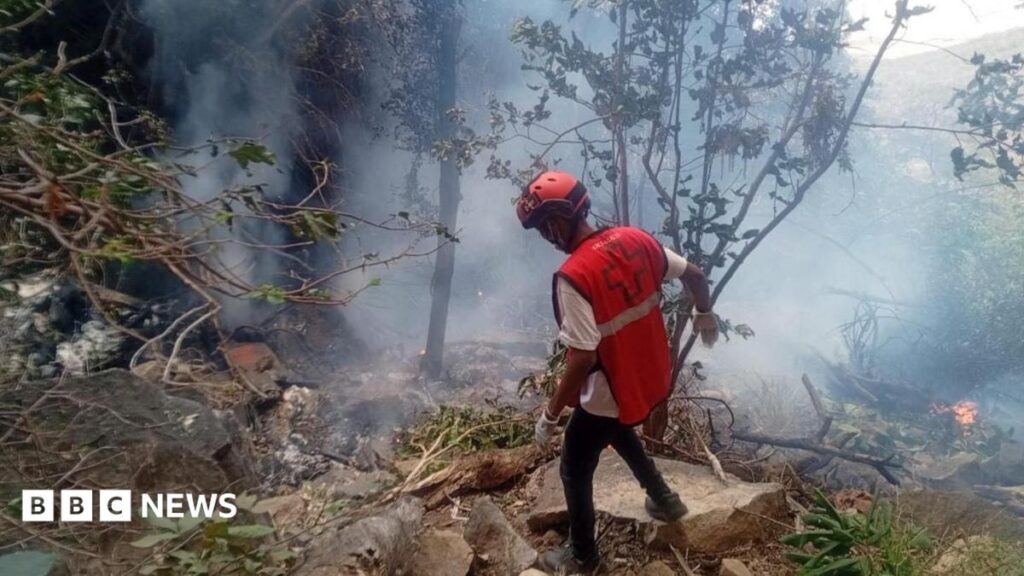
Witnesses on the ground reported hearing a loud, low‑frequency rumble before seeing a plume of smoke rising from the gorge. Local residents, many of whom work in the tourism sector, described the incident as “a shock” because the flight path crossed a corridor that is usually busy with chartered safari trips. Emergency services arrived within 45 minutes, but the steepness of the gorge and the wreckage’s fragmentation made rescue operations extremely hazardous.
Why it matters: security, diplomatic, and economic stakes for Kenya
The presence of an Ecuadorian intelligence chief on Kenyan soil underscores Nairobi’s growing role as a neutral meeting point for global security actors. Over the past decade, Kenya has positioned itself as a hub for intelligence sharing on trans‑national threats such as terrorism, illicit wildlife trade, and maritime piracy in the Indian Ocean. The loss of Sensi‑Contugi, who was in Kenya to negotiate a joint anti‑narco‑terrorism framework, could stall ongoing talks that involve the United Nations Office on Drugs and Crime (UNODC) and regional bodies like the Inter‑Governmental Authority on Development (IGAD).
Economically, the crash raises concerns for the foreign‑direct‑investment community that relies on Kenya’s stable air transport network. The charter firm that owned the helicopter provides logistical support to multinational mining and oil firms operating in the Turkana and Rift Valley regions. Any perception of safety lapses could prompt investors to reconsider project timelines, potentially affecting Kenya’s projected $1.4 billion contribution to GDP from extractive industries in 2026.
Reactions: from Nairobi to Washington and Quito
President William Ruto expressed condolences in a televised address, calling the tragedy “a stark reminder of the risks faced by those who work to keep our skies safe.” He ordered a full review of Kenya’s charter‑flight regulations and pledged additional resources to the KCAA. The Kenyan Ministry of Foreign Affairs announced that it would host a memorial service for the victims and offered diplomatic assistance to the families of the Americans and Ecuadorians.
In Washington, the State Department’s Africa Bureau issued a statement highlighting the “deep partnership” between the United States and Kenya on counter‑terrorism. A senior official, speaking on condition of anonymity, said the U.S. will accelerate the deployment of a new joint‑operations center in Nairobi that was slated for later this year, to ensure continuity of the programs that the deceased American advisers were supporting. Meanwhile, Ecuador’s Foreign Ministry confirmed that Sensi‑Contugi was on an official mission to discuss intelligence‑exchange protocols with Kenya’s National Intelligence Service, and that his death would be investigated as a matter of national importance.
What’s next: investigations, policy shifts, and regional ripple effects
The joint KCAA‑NTSB investigation is expected to release a final report within 90 days. Analysts anticipate that the findings could lead to stricter maintenance checks for older helicopter models operating in East Africa, a sector that has long relied on cost‑effective but aging fleets. In parallel, Kenya’s Civil Aviation Authority is already drafting amendments to its charter‑flight licensing framework, potentially requiring additional crew training on high‑altitude emergency procedures.
Beyond aviation safety, the crash may reshape Kenya’s diplomatic calculus. If the anti‑narco‑terrorism talks stall, neighboring countries such as Uganda and Tanzania could seek alternative venues for cooperation, diluting Kenya’s influence in the Horn of Africa security architecture. Conversely, the tragedy might galvanize a renewed commitment from the United States and Ecuador to deepen intelligence collaboration, especially in tracking drug‑smuggling routes that intersect with East African ports like Mombasa.
Quick Answers
Who was the Ecuadorian official killed in the Kenya helicopter crash?
Michele Sensi‑Contugi, Ecuador’s Director of Intelligence, died along with his wife Stephany Hollihan.
Why were American advisers on the helicopter?
The five Americans were senior consultants for a multinational security firm working on regional anti‑terrorism and anti‑narco‑trafficking projects.
How could the crash affect Kenya’s foreign investment?
Safety concerns may cause investors in mining and oil projects to delay or reassess plans, potentially impacting the sector’s $1.4 billion contribution to Kenya’s 2026 GDP.
Source: www.bbc.co.uk



💬 Comments 0