Kyiv’s Pivnichyi Bridge struck by Russian drone, German Chancellor visits amid heightened war risk – Oct 2026
Background: Kyiv’s critical infrastructure under fire
Since Russia launched its full‑scale invasion in February 2022, the Ukrainian capital has become a testing ground for increasingly sophisticated drone warfare. The Pivnichyi Bridge, which spans the Dnipro River in the northern part of Kyiv, is not just a commuter route; it links residential districts with industrial zones and serves as a key artery for humanitarian aid trucks entering the city from the north.
In the past year, Kyiv’s authorities have reported more than a dozen drone strikes targeting bridges, power substations and rail lines. Each attack is designed to disrupt logistics, sow panic and stretch the city’s emergency services thin. The Ukrainian Ministry of Defence has repeatedly warned that Russia is shifting from large‑scale missile barrages to swarms of cheaper, expendable drones that can be launched from relatively close launch points across the front line.
The attack: What happened on 4 October 2026
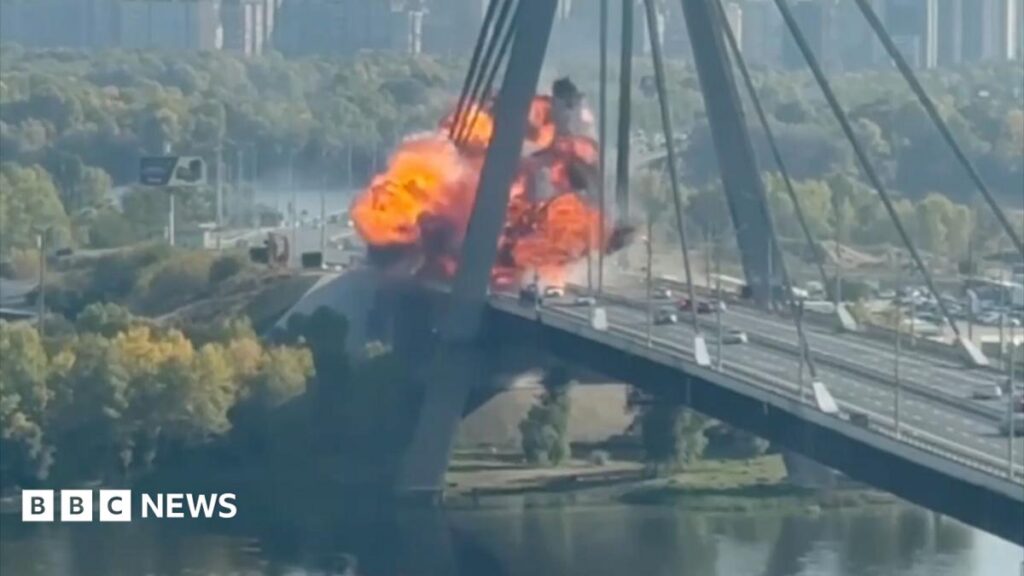
Early on 4 October, surveillance footage released by Kyiv’s emergency services showed a small quad‑copter‑type drone swooping low over the Pivnichyi Bridge as a convoy of civilian vehicles crossed. The unmanned aircraft released a payload that detonated on the bridge deck, igniting a fireball that lit up the riverbank for several seconds before emergency crews contained the blaze.
According to the city’s fire department, the explosion caused minor structural damage but no fatalities. Several drivers reported injuries from shattered glass and smoke inhalation, and traffic on the bridge was halted for about two hours while engineers inspected the integrity of the span. The incident was the latest in a series of drone‑related disruptions that have forced Kyiv to reroute traffic through older, less‑direct bridges, adding congestion to an already strained urban network.
Why it matters: Strategic and economic ripples
The bridge’s disruption has immediate tactical implications for Ukraine’s defensive posture. By targeting a route that supplies the northern suburbs, Russian forces aim to weaken the city’s ability to move troops and equipment quickly, especially as winter approaches and the terrain becomes more challenging. Analysts at the European Council on Foreign Relations note that each successful strike forces Kyiv to divert resources toward repair and security, detracting from frontline operations.
Beyond the battlefield, the attack reverberates through global markets that rely on Ukrainian grain exports. Kyiv’s port cities handle a significant share of wheat, corn and sunflower oil destined for North Africa and the Middle East. Any slowdown in the capital’s logistics network can delay customs clearance for export licences, potentially tightening grain supplies to countries such as Egypt, Nigeria and Kenya, where food inflation is already a political flashpoint.
Reactions: From Berlin to the Ukrainian diaspora
German Chancellor Olaf Scholz arrived in Kyiv later that morning for a surprise visit that was originally scheduled to focus on reconstruction funding. In his remarks, Scholz condemned the drone strike as “an unacceptable escalation” and pledged accelerated delivery of German‑made air‑defence systems to protect critical infrastructure. His presence was widely interpreted as a signal that Europe remains committed to Kyiv despite the growing cost of the conflict.
The Ukrainian diaspora in Canada, the United Kingdom and the United States responded with a surge of social‑media campaigns urging their host governments to increase humanitarian aid. A poll conducted by the Kyiv International Institute of Sociology found that 68 % of Ukrainians abroad said the latest bridge attack heightened their concern for family members still living in the capital, prompting many to send additional financial support via informal remittance channels.
What’s next: Anticipating further drone warfare and its wider fallout
Security experts predict that Russia will continue to refine its drone tactics, exploiting low‑cost technology to bypass Ukraine’s layered air‑defence shield. The Ukrainian Ministry of Defence has announced a plan to deploy mobile anti‑drone nets and electronic‑jamming units along the Dnipro’s major crossings, a move that could set a precedent for other conflict zones where similar cheap UAVs are used.
For African markets, the indirect consequences of a prolonged Ukrainian logistics bottleneck could be felt in the price of staple foods. The African Development Bank has warned that any significant disruption to Ukrainian grain shipments may force governments to tap emergency food reserves, potentially straining already tight fiscal budgets. Observers therefore recommend that African importers diversify their sourcing strategies, looking to domestic production and alternative exporters such as Brazil and Argentina to hedge against volatility.
Quick Answers
Did anyone die in the Pivnichyi Bridge drone strike?
No fatalities were reported; a few people suffered minor injuries from glass shards and smoke.
How might the bridge attack affect food prices in Africa?
Disruptions to Ukraine’s grain export logistics can tighten global supply, potentially raising wheat and corn prices in African importing nations.
What is Germany doing in response to the attack?
Chancellor Scholz pledged faster delivery of German air‑defence systems and reaffirmed Berlin’s support for Ukraine’s infrastructure protection.
Source: www.bbc.co.uk



💬 Comments 0