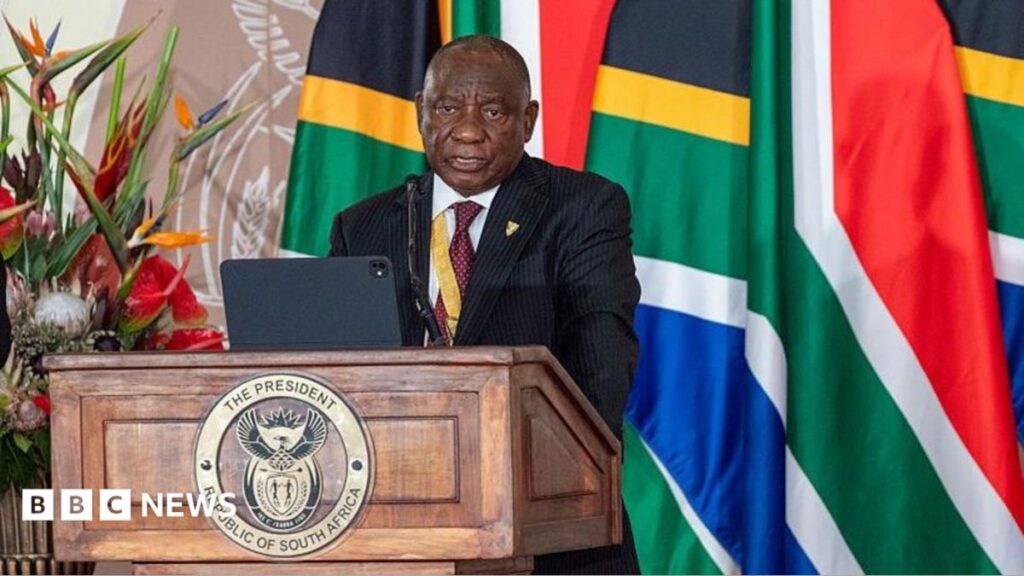
Man convicted of stealing R1.2 million from Cyril Ramaphosa’s farm amid South Africa’s Farmgate scandal, 2026
Background: The Farmgate scandal and its political roots
The so‑called Farmgate scandal erupted in early 2023 when a video surfaced showing President Cyril Ramaphosa allegedly receiving cash at his private farm in Limpopo. The footage sparked outrage, accusations of corruption, and a series of legal inquiries that have since become a litmus test for South Africa’s post‑apartheid political accountability.
Ramaphosa, who rose to the presidency on a platform of anti‑corruption and economic revival, has repeatedly denied wrongdoing, claiming the video was edited. Nevertheless, the case has kept the nation’s anti‑graft agencies busy, leading to multiple prosecutions of individuals linked to the farm’s operations.
The scandal coincided with a broader debate on land reform, as the government pushes to amend the constitution to allow for expropriation without compensation. Critics argue that the Farmgate controversy fuels mistrust in the ruling African National Congress (ANC) and could be weaponised by opponents of land redistribution.
International observers have noted that the scandal reflects a growing pattern across the continent, where high‑profile leaders face legal scrutiny for alleged misuse of state‑linked assets, signalling a shift toward more assertive civil‑society watchdogs.
The theft case: How a farmhand was found guilty
In August 2026, a 38‑year‑old farm employee, Thabo Mokoena, was sentenced to three years in prison after being convicted of stealing R1.2 million in cash that was stored in a secure vault on the President’s private property. Court documents show the money was allegedly earmarked for farm maintenance and staff salaries.
Mokoena’s defense argued that the cash was never part of an official government budget, but prosecutors, citing testimony from a senior farm manager, maintained that the funds were linked to state‑approved agricultural subsidies. The judge ruled that the evidence demonstrated a clear breach of trust and a violation of South Africa’s Theft Act.
The conviction was hailed by the opposition Democratic Alliance as a “small victory for the rule of law,” while Ramaphosa’s office called the case “an isolated incident unrelated to the broader allegations against the President.”
Legal analysts note that the verdict, although limited to a single individual, could set a precedent for how financial irregularities on private estates tied to public officials are prosecuted, potentially narrowing the legal grey area that has protected many elites in the past.
Political fallout: Impeachment talks and public trust
The Farmgate saga has kept impeachment proceedings on the parliamentary agenda since early 2024. According to a senior ANC source, the party’s internal disciplinary committee is split, with younger MPs demanding a transparent investigation, while veteran members fear a leadership vacuum that could jeopardise the upcoming 2027 elections.
Public opinion polls released by the South African Institute of Race Relations in September 2026 indicate that 57 % of respondents believe the President should step down, up from 42 % a year earlier. The rise in discontent is linked not only to the cash‑handing video but also to the perception that the farm theft case reveals systemic laxity in monitoring the President’s private financial dealings.
Civil‑society groups, such as Corruption Watch, have called for an independent commission of inquiry, arguing that the current parliamentary process is too politically charged to deliver an impartial verdict. Their statement, reported by the Mail & Guardian, warned that failure to act decisively could erode democratic norms and embolden other officials to misuse public resources.
The impeachment debate has also reverberated beyond South Africa’s borders, prompting regional bodies like the African Union to remind member states of the continent’s commitment to good governance under the African Charter on Democracy, Elections and Governance.
Economic and social implications for South Africa and the continent
Investor confidence in South Africa has been volatile since the scandal broke. The Johannesburg Stock Exchange’s FTSE‑JSE All‑Share Index fell by 3.2 % in the week following the August verdict, according to Bloomberg, as foreign investors reassessed political risk. Analysts at Standard Bank warn that continued uncertainty could delay foreign direct investment, particularly in the mining and renewable‑energy sectors that rely on stable governance.
The farm theft case also shines a light on the informal cash economy that underpins many South African agricultural enterprises. With R1.2 million in cash stored on a private farm, questions arise about the transparency of subsidy distribution, a matter that directly affects smallholder farmers across the nation who depend on timely state support.
For the African diaspora, especially South Africans living abroad, the scandal has sparked a wave of social media activism. Diaspora groups on platforms like Twitter and Facebook have organized virtual town‑hall meetings to discuss how perceived corruption at home influences their decisions to invest or return, a trend echoed in recent studies on brain‑gain versus brain‑drain dynamics.
Regionally, the case adds to a growing list of high‑profile corruption probes—from Kenya’s “Goldenberg” investigations to Nigeria’s recent oil‑revenue scandals—highlighting a continent‑wide push for greater fiscal accountability. Observers suggest that South Africa’s handling of Farmgate could serve as a benchmark for neighboring countries grappling with similar elite‑accountability challenges.
What’s next: Legal, political and societal pathways
Legally, the prosecution’s success against Mokoena may encourage the National Prosecuting Authority to pursue additional charges against other farm staff or contractors suspected of mishandling funds. Sources close to the NPA say a new task‑force is being assembled to audit cash flows linked to presidential farms, though they caution that any further indictments will depend on the availability of documentary evidence.
Politically, the ANC is expected to convene an emergency national conference by early 2027 to decide Ramaphosa’s fate. If the party opts for a leadership change, it could trigger a cascade of cabinet reshuffles and potentially alter South Africa’s stance on land reform, a policy area that has been stalled by the scandal’s distraction.
From a societal perspective, civil‑society organisations plan to launch a nationwide awareness campaign on public‑sector financial literacy, aiming to empower citizens to demand greater transparency in how state funds are allocated to private ventures. The campaign, titled “Money Matters,” hopes to translate legal outcomes into grassroots pressure for reform.
Finally, the diaspora’s role may become more pronounced. Remittance flows, which accounted for roughly 10 % of South Africa’s GDP in 2025, could be redirected toward community‑based watchdog initiatives if expatriates feel that domestic institutions are finally holding the powerful to account. Such a shift would not only bolster anti‑corruption efforts but also reinforce transnational ties that sustain the country’s socio‑economic fabric.
Quick Answers
Who was convicted in the Farmgate cash‑theft case?
Thabo Mokoena, a 38‑year‑old farm employee, was sentenced to three years in prison for stealing R1.2 million from President Cyril Ramaphosa’s farm.
How does the Farmgate scandal affect South Africa’s economy?
The scandal has weakened investor confidence, causing a 3.2 % drop in the JSE All‑Share Index and raising concerns about the transparency of state subsidies for agriculture.
What are the chances of President Ramaphosa being impeached?
While the ANC remains divided, polling shows a majority of South Africans now favour his removal, and an ANC national conference slated for early 2027 will likely decide his political future.
Source: www.bbc.co.uk




💬 Comments 0