Margaret Hamilton Dies at 90 – Apollo 11 Software Pioneer’s Legacy Fuels Women in STEM
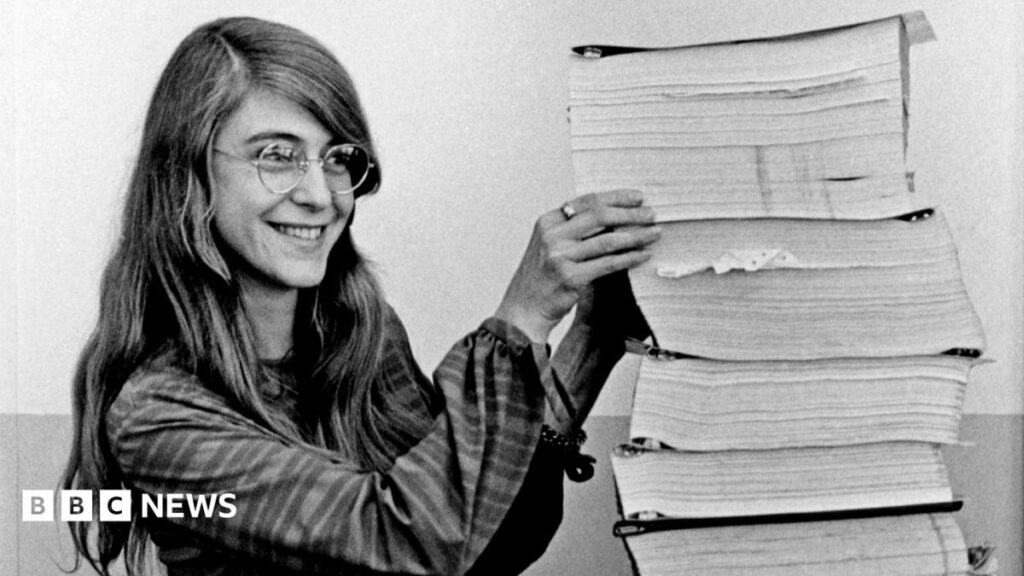
A Trailblazer Remembered: Who Margaret Hamilton Was
Margaret Heafield Hamilton, a name that once echoed through the corridors of NASA’s Mission Control, passed away at the age of 90. Born in 1936 in Indianapolis, she earned a degree in mathematics before diving into the nascent world of computer science. Her career began at the Massachusetts Institute of Technology’s Instrumentation Laboratory, where she would later become the lead software engineer for the Apollo program.
Hamilton’s brilliance was not merely technical; it was visionary. She coined the term “software engineering” to describe the rigorous discipline required to build reliable code for life‑critical systems. In the 1960s, when most programmers were men and software was seen as an afterthought, she insisted that code be treated with the same precision as hardware. Her insistence on robust design earned her the Presidential Medal of Freedom in 2016, the nation’s highest civilian honor.
Beyond the medals and accolades, Hamilton’s legacy lives in the countless engineers who followed her path. She mentored young programmers, advocated for women’s participation in technology, and founded her own software firm, Hamilton Technologies, in 1986. Her life story has become a cornerstone in curricula that aim to inspire future generations of innovators.
The Software That Took Humanity to the Moon
The Apollo Guidance Computer (AGC) was the beating heart of the lunar module, and Hamilton’s team wrote the software that kept it ticking. The code, written in assembly language, had to run on a computer no larger than a shoebox, with just 64 kilobytes of memory and a processor that operated at 0.043 megahertz. Yet it performed tasks that modern smartphones handle with ease: navigation, guidance, and real‑time decision making.
One of Hamilton’s most celebrated contributions was the development of priority‑based task scheduling and asynchronous error handling. When the lunar module’s computer was overloaded during the Apollo 11 descent, the software displayed a “1202” alarm, yet the mission continued safely because the code could gracefully discard lower‑priority tasks. This approach, now standard in mission‑critical systems, saved the first Moon landing from a potential abort.
Hamilton’s insistence on rigorous testing also set a new benchmark. Her team simulated every conceivable failure scenario, a practice that later became a model for aerospace and automotive software verification. The success of Apollo 11 proved that software could be as reliable as any physical component, reshaping how engineers approached complex systems.
Why Her Legacy Matters for Today’s Tech Landscape
In an era where software underpins everything from banking to healthcare, Hamilton’s principles are more relevant than ever. Her emphasis on defensive programming—anticipating errors before they happen—has been adopted by fintech firms, cloud providers, and even AI developers seeking to avoid catastrophic failures. The notion that code must be engineered, not merely written, is now a core tenet of modern software engineering curricula worldwide.
Hamilton’s story also underscores the importance of diversity in tech. Studies consistently show that teams with gender and cultural variety produce more innovative solutions. By breaking gender barriers in the 1960s, Hamilton opened doors for countless women who now lead AI labs, cybersecurity units, and startup incubators. Her life demonstrates that inclusive teams are better equipped to solve the most complex problems.
The ripple effect of her work can be seen in the rise of mission‑critical software standards such as DO‑178C for aviation and IEC 61508 for industrial safety. These frameworks echo Hamilton’s early insistence on formal verification, traceability, and exhaustive testing—practices that protect lives today, just as they did during the Moon landing.
Inspiring the Next Generation of African Women in STEM
Across Africa, a new wave of female engineers cites Hamilton as a role model. In Nigeria, the Women in Tech Africa (WiTA) network frequently references her story during mentorship sessions, highlighting how a single woman reshaped a global industry. Her journey from a mathematics graduate to a Nobel‑like figure resonates with young women who face cultural expectations that often steer them away from STEM fields.
African tech hubs such as Nairobi’s “Silicon Savannah” and Kigali’s burgeoning software ecosystem are increasingly adopting Hamilton’s best‑practice ethos. Startups building mobile money platforms, for example, employ rigorous error‑handling routines reminiscent of the AGC’s “priority‑based” design, ensuring transactions remain secure even under network strain. By invoking Hamilton’s legacy, these companies convey a message: robust, reliable code is a universal language that transcends borders.
Scholarships and coding bootcamps in Ghana and South Africa now feature modules on “software engineering fundamentals” that trace their lineage back to Hamilton’s work. This educational focus not only equips students with market‑ready skills but also embeds a narrative of African participation in the grand story of space exploration—a narrative that has historically been Euro‑centric.
What Her Passing Signals for Future Space Endeavours
Hamilton’s death arrives at a moment when humanity is poised to return to the Moon and venture to Mars. NASA’s Artemis program, the European Space Agency’s lunar initiatives, and private players like SpaceX all rely on software architectures that echo Hamilton’s early designs. Her passing serves as a reminder that the human element—visionary leadership and disciplined engineering—remains irreplaceable, even as automation advances.
The African Space Agency (AfSA), launched in 2023, is already planning a series of small satellite missions to provide broadband to remote regions. Engineers within AfSA have publicly acknowledged Hamilton’s influence, noting that her error‑tolerant approach guides their development of autonomous navigation algorithms for low‑Earth‑orbit constellations. Her legacy, therefore, is directly shaping the continent’s own foray into space.
Finally, Hamilton’s story fuels a broader conversation about preserving the histories of pioneering technologists. As more nations develop indigenous space capabilities, documenting the contributions of early engineers becomes a cultural imperative. Archives, oral histories, and university curricula that feature Hamilton’s work will help ensure that future innovators—whether in Houston, Lagos, or Cape Town—understand the foundations upon which they build.
Quick Answers
When did Margaret Hamilton die?
Margaret Hamilton passed away on October 5, 2026, at the age of 90.
What was Margaret Hamilton’s role in the Apollo 11 mission?
She led the development of the onboard flight software for the Apollo Guidance Computer, creating error‑handling and priority‑based scheduling that kept the lunar module operational during critical moments.
How does Margaret Hamilton’s legacy affect African tech communities?
Her emphasis on rigorous, defensive programming influences African fintech and space projects, while her story inspires women across the continent to pursue careers in STEM.
Source: www.bbc.co.uk




💬 Comments 0