Matisse Masterpieces Recovered in São Paulo 2026 – Implications for Global Art Restitution and African Collectors
Background: A history of high‑profile art thefts in Brazil
Brazil has long been a hotspot for art crime, thanks to its large informal market, porous customs controls, and a thriving network of private collectors who operate outside official channels. Between 2010 and 2024, the country saw more than 200 reported cases of stolen works ranging from colonial religious icons to contemporary African‑inspired paintings, according to a report by the Brazilian Institute of Cultural Heritage.
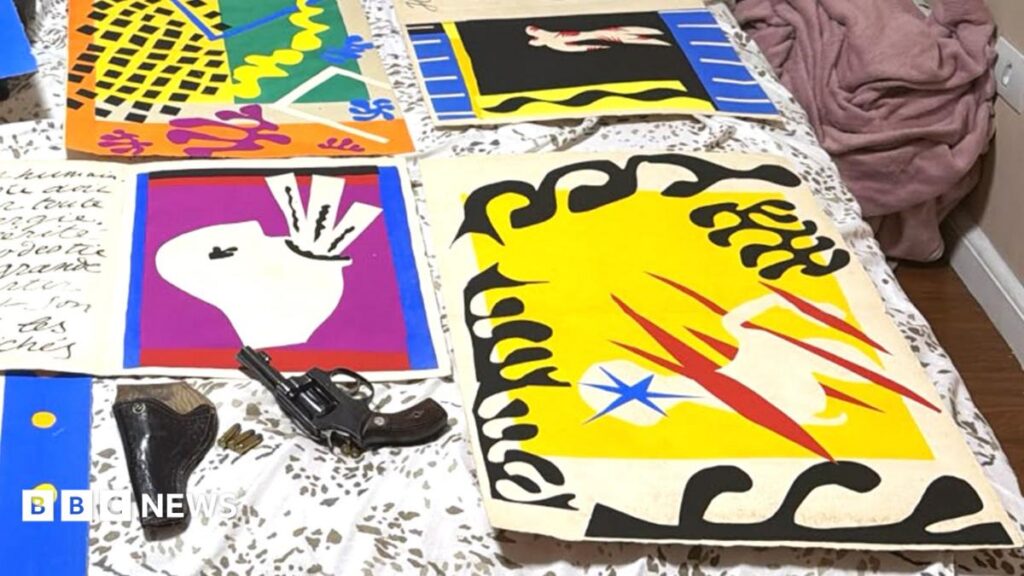
Henri Matisse, the French Fauvist whose bold colours and fluid forms reshaped early‑20th‑century painting, has been a recurring target for thieves because his works fetch millions at auction. The eight pieces seized in São Paulo belong to a series created in the 1930s that are especially prized for their rarity; together they are estimated at roughly $45 million in today’s market.
The most notorious Matisse theft in Brazil occurred in 2015, when a single canvas vanished from a museum in Rio de Janeiro and resurfaced years later in a private collection in Europe. That case highlighted the difficulty of tracing stolen art across borders and spurred the Brazilian Federal Police to launch a dedicated Art Crime Unit in 2018.
The São Paulo bust: How police uncovered the hidden collection
The investigation began after a tip‑off from an online art‑forum user who claimed to have seen photographs of a Matisse series on a social‑media profile linked to a wealthy businessman in Greater São Paulo. Detectives from the Art Crime Unit obtained a search warrant and, on 3 July 2026, entered the suspect’s residence, finding the eight canvases neatly wrapped in archival paper.
Authorities say the works were stored in a climate‑controlled room, suggesting the owner was aware of their value and intended to keep them hidden until a discreet buyer could be found. The man, identified as 48‑year‑old entrepreneur Carlos Silva, was arrested on charges of illegal possession of cultural property and organized theft, according to the Federal Police press release.
The seized paintings are now being examined by conservators at the São Paulo Museum of Art (MASP) to verify authenticity and condition. Early assessments indicate that the pieces have suffered minimal damage, a fact that will simplify the process of returning them to their rightful owners.
Why the recovery matters beyond France: Restitution, market dynamics, and African stakes
While the French Ministry of Culture will ultimately claim ownership, the case reverberates across the global art market, where provenance disputes have become a flashpoint for buyers, insurers, and regulators. The incident arrives at a moment when European museums are under pressure to return looted African artefacts, and the precedent set by Brazil’s swift action could influence how other jurisdictions handle illicit works.
African collectors have increasingly turned to European modernists like Matisse to diversify portfolios, often purchasing through auction houses that now demand rigorous provenance documentation. The recovery underscores the risk that African‑based buyers may inadvertently acquire stolen pieces, a concern voiced by the African Art Market Association in a statement released on 5 July 2026.
Moreover, the episode highlights Brazil’s growing role as a transit hub for illicit art moving between the Global South and Europe. Trade analysts note that the country’s large diaspora communities—particularly Nigerians and Ghanaian entrepreneurs—frequently engage in cross‑border art investments, making transparency in customs inspections a matter of economic security for African investors.
Reactions from the art world and African diaspora collectors
French cultural officials praised the Brazilian police as “model partners in the fight against cultural crime,” a comment echoed by UNESCO’s Director‑General in a tweet on 6 July 2026. In Lagos, prominent Nigerian collector Aisha Okonkwo warned that “the art world must stop treating provenance as a formality and start treating it as a legal requirement,” during a panel on cultural heritage at the Lagos International Art Fair.
Diaspora communities in São Paulo expressed mixed feelings. While many celebrated the crackdown on illegal trade, some smaller gallery owners feared that heightened scrutiny could hurt legitimate African‑focused exhibitions that rely on cross‑border loans. A representative of the Afro‑Brazilian Artists’ Union said the police action should be paired with support for legal channels that promote African art on the global stage.
Auction houses such as Christie's and Sotheby’s have already announced tighter due‑diligence protocols for works originating from South America, citing the Matisse case as a catalyst. Their new guidelines will require a certified chain‑of‑title report for any artwork that has passed through Brazilian ports since 2010.
What’s next: Legal battles, preventive measures, and the broader restitution trend
The next legal step will be a court hearing in São Paulo where Silva’s defense is expected to argue that he purchased the paintings in good faith. Brazilian law allows for restitution if the buyer can prove lack of knowledge of the theft, but prosecutors say the evidence of a direct tip‑off and the secretive storage undermines that claim.
Internationally, the case adds momentum to a wave of restitution claims by African nations seeking the return of colonial‑era artefacts. In March 2026, South Africa successfully reclaimed a 19th‑century bronze sculpture from a private collector in the United Kingdom, setting a legal benchmark that could be referenced in future disputes involving African‑origin artworks that surface in South America.
Experts suggest that Brazil could become a testing ground for a new multilateral framework that links customs agencies, art‑crime units, and African cultural ministries. Such a framework would enable real‑time sharing of stolen‑art databases and could help protect African creators whose works are increasingly sold on the global market.
Quick Answers
How many Matisse paintings were recovered in São Paulo?
Eight works by Henri Matisse were seized by Brazilian police in July 2026.
Why does this art theft matter to African collectors?
The case highlights risks of acquiring works with unclear provenance, prompting African buyers and diaspora galleries to demand stricter due‑diligence.
What will happen to the recovered paintings?
The paintings will be examined by conservators and then returned to the French Ministry of Culture, which holds legal title.
Source: www.bbc.co.uk




💬 Comments 0