Melania Trump‑brokered ceasefire in Oleshky 2026: Hundreds evacuated and what it means for Ukraine’s war
Background: Oleshky under Russian occupation
Oleshky, a modest town of roughly 15,000 residents on the Dnipro River, fell under Russian control during the early months of the 2022 invasion of Ukraine. Over the past four years the settlement has endured intermittent shelling, shortages of basic services and a steady flow of internally displaced people fleeing nearby front‑line towns. International aid agencies have long warned that the civilian population faces a humanitarian cliff, with winter looming and infrastructure barely functional.
The town’s strategic value lies more in its location than its size: it sits near a key crossing of the Dnipro, which Russian forces have used to move supplies southward. Because of this, Oleshky has been a focal point for occasional cease‑fire talks, but most attempts have fizzled out amid mutual distrust and the lack of a recognized third‑party mediator.
The unexpected mediator: Melania Trump’s diplomatic foray
In a development that surprised both Kyiv and Moscow, former U.S. First Lady Melania Trump announced in early October that she was personally reaching out to the warring parties to negotiate a limited cease‑fire for civilian evacuations in Oleshky. According to a statement released by her office, she leveraged contacts in the United Nations and private humanitarian networks to arrange a meeting in Geneva. While the Trump name is rarely associated with formal diplomacy, her involvement reflects a growing trend of high‑profile non‑state actors stepping into conflict mediation when official channels stall.
Sources close to the negotiation said that Melania’s team presented a neutral, humanitarian‑focused agenda, avoiding any political endorsement of either side. The proposal was reportedly welcomed by the United Nations Office for the Coordination of Humanitarian Affairs (OCHA), which has been urging a pause in hostilities to allow safe passage for civilians. Russian officials, meanwhile, cited the cease‑fire as a “humanitarian necessity” and a chance to showcase a willingness to cooperate with international actors beyond traditional state diplomats.
The evacuation and cease‑fire details
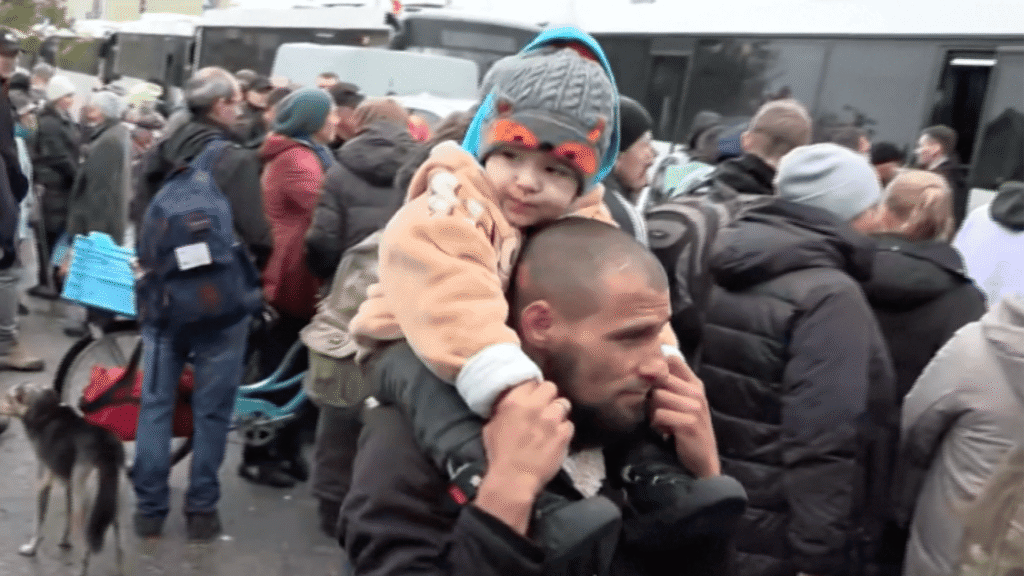
The cease‑fire, which began on 28 October 2026, covers a 12‑kilometre radius around Oleshky and is limited to a 48‑hour window each day for the movement of non‑combatants. Within the first 24 hours, local authorities reported that roughly 400 residents—mostly women, children and the elderly—were escorted out of the town by United Nations‑run convoys. Humanitarian NGOs estimate that up to 600 people could be evacuated before the temporary truce expires on 31 October.
Both sides have placed observers at the designated checkpoints to monitor compliance. While Ukrainian officials have praised the operation as a “lifeline” for those trapped in occupied territory, Russian military spokespeople warned that any violation of the cease‑fire would be met with “appropriate defensive measures.” So far, no major incidents have been reported, though isolated skirmishes on the town’s outskirts have raised concerns about the durability of the pause.
Regional and international implications
The Oleshky cease‑fire, albeit narrow in scope, could signal a shift in how the war is being managed on the diplomatic front. Analysts at the European Council on Foreign Relations note that the involvement of a high‑profile American figure—outside of formal U.S. government channels—may embolden other private actors to pursue similar initiatives, especially as fatigue sets in among traditional mediators. For African nations that have contributed troops to UN peacekeeping missions in Ukraine, the development offers a potential model for leveraging soft power without direct military engagement.
Economically, the brief lull in fighting has allowed a limited flow of agricultural products from the surrounding Kherson region to resume, easing price pressures on grain markets that affect several African importers, including Nigeria and Egypt. The United Nations has warned that any prolongation of hostilities could further disrupt the Black Sea grain export corridor, threatening food security across the continent.
What this means for conflict diplomacy
The Oleshky episode underscores a broader pattern: the increasing reliance on ad‑hoc, personality‑driven mediation when formal diplomatic tracks become gridlocked. Scholars of conflict resolution argue that such interventions can be a double‑edged sword—offering rapid humanitarian gains but also risking the legitimisation of actors who lack accountability mechanisms. In this case, Melania Trump’s involvement has drawn both praise for its humanitarian focus and criticism for blurring the line between private philanthropy and unofficial statecraft.
If the cease‑fire holds and more civilians can be moved to safety, it may create a template for future micro‑truce agreements in other contested towns. However, the durability of any agreement will ultimately depend on the willingness of Moscow and Kyiv to translate these localized pauses into broader confidence‑building measures—a step that remains elusive despite the temporary humanitarian relief.
Looking ahead: next steps for Oleshky and the wider war
Humanitarian agencies are now preparing a second evacuation wave, slated for early November, contingent on the renewal of the cease‑fire. The United Nations is also pushing for a formal monitoring mission to verify compliance and to explore the possibility of expanding the safe‑zone radius. Meanwhile, diplomatic circles in Brussels and Washington are watching closely, assessing whether the Oleshky model can be scaled up to larger de‑escalation zones along the front line.
For African stakeholders, the key takeaway is the fragility of global food supply chains that hinge on the stability of Ukrainian grain exports. Governments across the continent are urging the UN and the International Maritime Organization to secure alternative routes and to keep humanitarian corridors open. As the war drags on, the Oleshky cease‑fire offers a modest, yet tangible, reminder that even small‑scale diplomatic wins can have ripple effects far beyond the immediate battlefield.
Quick Answers
Why did Melania Trump get involved in the Oleshky cease‑fire?
She used her personal network and humanitarian contacts to propose a neutral, limited cease‑fire focused on civilian evacuations, filling a diplomatic gap as official talks stalled.
How many people have been evacuated from Oleshky so far?
Around 400 residents were moved out in the first 24 hours, with estimates that up to 600 could be evacuated before the cease‑fire ends on 31 October.
What impact does the Oleshky cease‑fire have on African grain imports?
The brief pause allows limited grain shipments from nearby Kherson to resume, helping to stabilise Black Sea grain flows that many African countries, such as Nigeria and Egypt, rely on for food security.
Source: www.aljazeera.com




💬 Comments 0