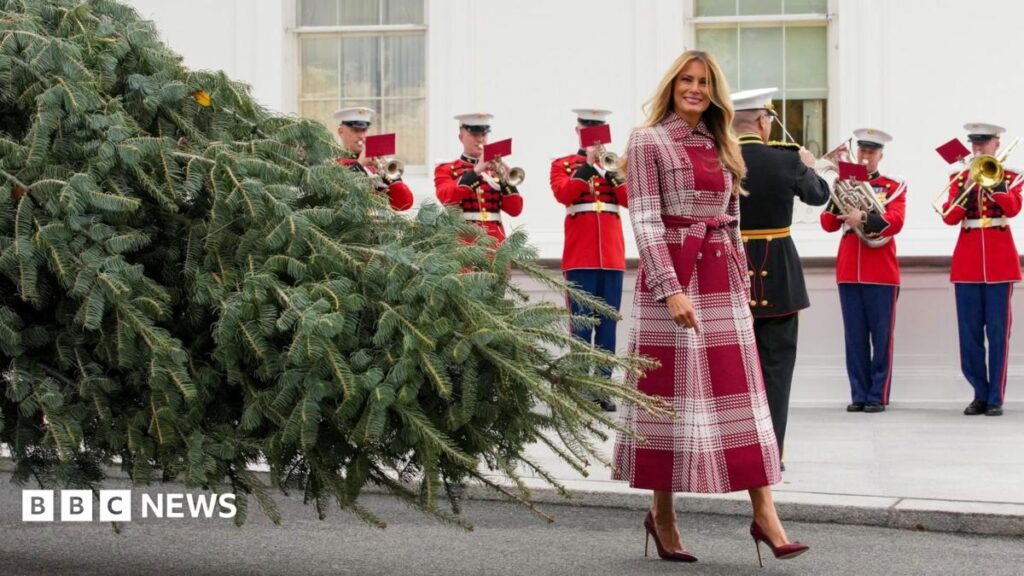
Melania Trump welcomes 18‑foot White House Christmas tree from Wisconsin farm in 2026
The tradition of the White House Christmas tree
Every December, the White House becomes the backdrop for a national holiday ritual that stretches back to the 19th century. A towering evergreen is placed in the East Room, lights are strung, and the First Family gathers to turn on the lights in a televised ceremony that reaches millions of households. The tree is more than décor; it signals a moment of unity, a pause in political turbulence, and a visual cue that the nation is entering a season of shared celebration.
Historically, the choice of tree and its origin have been carefully curated to send subtle diplomatic messages. Presidents have favored native species to highlight American forestry, while occasional foreign‑sourced trees have underscored international goodwill. In recent years, the tree‑selection process has also become a platform for promoting sustainable farming practices, reflecting growing public concern over climate change and responsible sourcing.
This year’s tree: an 18‑foot fir from Silent Night Evergreens
The 2026 tree is an 18‑foot noble fir harvested from Silent Night Evergreens, a family‑run farm in Endeavor, Wisconsin. According to a White House press release, the farm was chosen for its track record of environmentally‑friendly cultivation, including low‑impact harvesting techniques and a carbon‑offset program that re‑plants a sapling for every tree cut.
Silent Night Evergreens, which supplies holiday trees to a handful of major U.S. cities, sees the White House contract as a once‑in‑a‑generation marketing boost. The farm’s owners say the exposure will likely double demand for domestically grown firs, a sector that has struggled against cheaper imports from Canada and Europe. The selection also shines a spotlight on Mid‑western agriculture at a time when the region is navigating the aftershocks of a severe drought cycle.
Political symbolism under a new First Lady
Melania Trump’s appearance at the tree‑lighting marks her first high‑profile holiday event since assuming the role of First Lady. Observers note that her calm, fashion‑forward entrance may be an attempt to soften the administration’s often‑polarizing image, especially after a year marked by contentious immigration reforms and trade disputes.
Political analysts, such as those at the Brookings Institution, argue that the ceremony offers the Trump administration a rare bipartisan stage. By foregrounding a universally‑loved tradition, the First Lady can sidestep policy debates and appeal to a broader electorate, including older voters who associate the Christmas tree with stability and nostalgia.
What it means for the African diaspora and U.S.–Africa cultural ties
For African immigrants and descendants living in the United States, the White House holiday broadcast is a cultural touchstone that blends American customs with personal traditions. The visual of a towering fir, while not common in many African climates, often sparks conversations about how diaspora families adapt festive practices, incorporating foods like jollof rice or injera into a Thanksgiving‑style feast.
The ceremony also provides a platform for African‑American artists and musicians who frequently perform during the holiday season. In 2026, a gospel choir featuring several Nigerian‑American singers was slated to sing a rendition of “Silent Night,” underscoring how African talent is increasingly woven into mainstream U.S. holiday programming. Such visibility can boost demand for African‑inspired holiday music on streaming platforms, a trend that has been rising since the 2020s.
Economic ripple effects: U.S. tree farms and African timber markets
The spotlight on Silent Night Evergreens could have indirect consequences for African timber exporters. Many East African countries, such as Kenya and Ethiopia, have been expanding their Christmas‑tree plantations to serve both local markets and the European export niche. A surge in U.S. demand for domestically sourced firs may tighten global supply, prompting African growers to pivot toward higher‑margin ornamental species or explore new markets in the Middle East.
Conversely, the sustainability standards highlighted by the White House may inspire African forestry regulators to adopt similar certification schemes. If the U.S. continues to champion carbon‑offset tree farming, African governments could leverage that model to attract eco‑tourism and premium pricing for their own Christmas‑tree farms, aligning with broader green‑economy goals outlined in the African Continental Free Trade Area (AfCFTA) agenda.
Looking ahead: holiday messaging in a polarized era
The 2026 tree‑lighting will likely be dissected by both supporters and critics of the Trump administration. While some will praise the ceremony as a return to “classic American values,” others may point to the broader policy context—such as the administration’s stance on climate legislation—to argue that the symbolic gesture masks deeper contradictions. Social‑media analysts predict that the event will generate a spike in hashtags linking the tree to climate‑action debates, especially among younger users.
In the long run, the White House’s choice of a sustainably harvested fir could set a precedent for future administrations, regardless of party. If the public embraces the environmental narrative, future presidents may feel pressure to match or exceed the sustainability benchmarks set this year, potentially reshaping the holiday season into a platform for climate advocacy that resonates worldwide—including across the African continent, where forest conservation remains a pressing issue.
Quick Answers
Where does the 2026 White House Christmas tree come from?
It is an 18‑foot noble fir grown by Silent Night Evergreens in Endeavor, Wisconsin.
Why is the tree’s source important for sustainability?
The farm uses low‑impact harvesting and a carbon‑offset program that replants a sapling for every tree cut.
How might the White House tree affect African timber markets?
Increased U.S. demand for domestic firs could tighten global supply, prompting African growers to shift to higher‑value species or new markets.
Source: www.bbc.co.uk



💬 Comments 0