Mysterious luminous object over Tripoli, Libya filmed with explosion – 2026 incident
The incident: what was seen over Tripoli
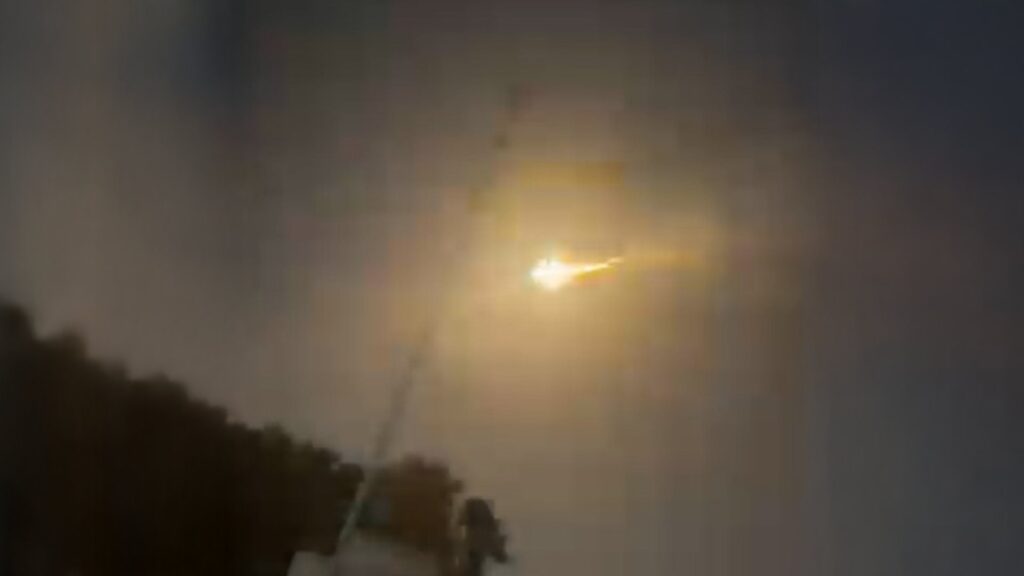
On the night of October 3, 2026, a video that quickly went viral on social media showed a bright, pulsating object streaking across the sky above Tripoli and the surrounding western Libyan desert. The footage, captured from a rooftop balcony in the capital, shows the object leaving a glowing trail before it appears to burst into a flash accompanied by a loud, concussive boom that rattles nearby windows.
Local witnesses reported a sudden, sharp sound that lasted only a few seconds, followed by a brief period of darkness as the sky seemed to “reset”. Some described the object as “disc‑shaped” while others said it resembled a “fireball”. The Libyan civil aviation authority confirmed that the incident was logged by several radar stations, but they have not released detailed flight‑track data.
The Ministry of Interior issued a brief statement saying the incident is under investigation and that security forces are “monitoring the area for any possible remnants”. No casualties were reported, but a few residents near the blast site reported minor property damage, such as cracked windows and scorch marks on walls.
A history of aerial mysteries in North Africa
Libya is not the first North African country to experience unexplained aerial phenomena. In 2019, a similar “fireball” was reported over the Sahara near the Algerian border, prompting a joint inquiry by Algerian and French defense ministries that ultimately attributed the event to a meteorite that fragmented in the atmosphere. More recently, in 2024, a series of bright lights over Egypt’s Red Sea coast sparked speculation about foreign drone activity, especially after the Egyptian Air Force intercepted an unidentified aerial vehicle.
These episodes have fed a growing body of regional folklore that blends modern security concerns with older myths about “sky beings”. Scholars note that the prevalence of such reports often spikes during periods of political instability, when state capacity to monitor airspace is weakened. Libya, still recovering from a decade of civil war, has limited radar coverage and relies heavily on ad‑hoc reporting from civilian observers.
International observers, including the United Nations Support Mission in Libya (UNSMIL), have warned that gaps in air‑traffic monitoring can be exploited by illicit actors. In 2022, UNSMIL released a report linking unregulated drone flights to smuggling routes that cross the Mediterranean, suggesting that any unexplained aerial event deserves close scrutiny beyond the realm of curiosity.
Security and geopolitical stakes for Libya and the region
The timing of the luminous object coincides with a series of diplomatic moves aimed at normalising relations between Libya’s rival governments in the east and west. Analysts from the African Centre for Strategic Studies say that any unexpected aerial incident could be weaponised by political factions to justify tighter control of airspace, potentially reshaping power balances in Tripoli.
Moreover, the Mediterranean corridor is a strategic conduit for energy shipments from the Gulf to Europe. A sudden, unexplained explosion near a major port city raises concerns among European energy firms that rely on Libyan oil and gas exports. According to a statement from the European Union’s Energy Security Desk, “any disruption to Libyan air or maritime routes will be closely monitored for its downstream impact on European markets.”
Regional rivals, notably Egypt and Tunisia, have also expressed interest in the incident. Egyptian media outlets cited “possible foreign surveillance” as a motive, while Tunisian officials called for a “transparent joint investigation” with the International Civil Aviation Organization (ICAO). Such reactions illustrate how a single visual event can ripple through diplomatic channels across the Maghreb.
Impact on African aviation, tourism, and diaspora perceptions
African airlines operating in and out of Tripoli have already issued precautionary advisories. Libyan Airlines announced a temporary suspension of night flights from Tripoli International Airport pending a safety assessment, while private charter operators in neighboring Algeria have warned pilots to stay clear of the western Libyan airspace until the phenomenon is explained.
For the Libyan diaspora in Europe and North America, the incident revives anxieties about safety back home. Community leaders in cities such as Paris, London, and Toronto have used social‑media groups to share updates, emphasizing the need for accurate information to combat rumors that could affect remittance flows and future travel plans.
Tourism operators that market Mediterranean cruises and desert safaris in Libya are also feeling the tremor. A spokesperson for Sahara Adventures, a tour company based in Tunis, noted that “potential travelers are asking about the security situation, and we must be ready with factual briefings rather than speculation.” The incident therefore has a direct economic dimension for a sector that already struggles with perception challenges.
What comes next: investigations and possible scenarios
Libyan authorities have pledged a multi‑agency probe involving the General Directorate of Civil Aviation, the National Intelligence Service, and, for the first time, a technical team from the United Nations Institute for Training and Research (UNITAR). Sources say the team will analyse radar logs, satellite imagery, and the viral video frame‑by‑frame to determine whether the object was a meteor, a drone, or something else.
Experts outline three leading hypotheses. The first is a natural meteoritic event, which would explain the bright flare and loud explosion but would be unusual over a populated area. The second scenario involves a high‑altitude, long‑range drone—potentially a test flight by a foreign power or a commercial operator that strayed off‑course. The third, more speculative, hypothesis points to a “re‑entry” of space debris, a growing concern as the number of defunct satellites climbs, according to a 2025 report by the European Space Agency.
Regardless of the final conclusion, the episode underscores the need for stronger regional air‑space monitoring. Calls are growing for a Maghreb‑wide surveillance network that could share real‑time data among Algeria, Tunisia, Morocco, and Libya. Such cooperation would not only improve safety but also provide a collective deterrent against illicit aerial activity that threatens both civilian and commercial interests.
Quick Answers
What was the luminous object seen over Tripoli on October 3, 2026?
The object remains unidentified; authorities are investigating whether it was a meteor, a drone, or re‑entering space debris.
Who is investigating the explosion in western Libya?
Libya’s civil aviation authority, the National Intelligence Service, and a UN‑backed technical team are conducting a joint inquiry.
Will the incident affect air travel in and out of Libya?
Libyan Airlines has paused night flights from Tripoli International Airport until safety checks are completed, and other carriers are issuing cautionary advisories.
Source: www.aljazeera.com



💬 Comments 0