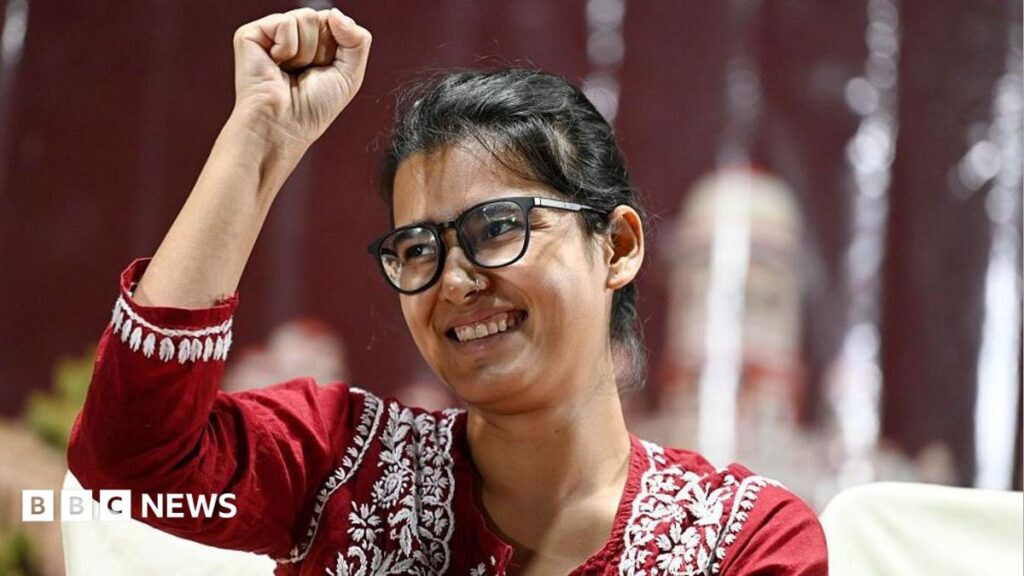
Neha Bora, 22‑year‑old Indian Gen Z protester, challenges Modi’s policies in 2026 rallies
A new wave of Indian youth activism
India’s demographic dividend has turned into a political dividend as the country’s median age hovers around 28. The past two years have seen a surge of Gen Z voices taking to streets, campuses and social media to demand climate action, education reform and greater accountability from the government. Unlike the student movements of the 1970s, today’s protests are coordinated through encrypted messaging apps and TikTok‑style videos, allowing rapid mobilisation across states.
The 2026 protests that captured global headlines were sparked by the government’s decision to roll back student loan waivers and tighten internet censorship ahead of the national elections. Young people, many still in university, responded with flash‑mob sit‑ins, viral chants, and a coordinated “#FutureFirst” hashtag that trended for weeks. Analysts say the scale of participation – estimated at over 150,000 demonstrators in 12 cities – marks the most extensive Gen Z‑led mobilisation in India since the 2019 climate strikes.
Political scientists note that this generational shift is reshaping India’s public sphere. While older protest traditions relied on trade unions and party cadres, the new wave is less tied to any single political party and more focused on issue‑based coalitions. This makes it harder for the ruling Bharatiya Janata Party (BJP) to co‑opt or marginalise the movement, raising the stakes for the upcoming 2027 parliamentary elections.
Who is Neha Bora?
Neha Bora, a 22‑year‑old student from Delhi’s Jamia Millia Islamia, first appeared on television after delivering an impassioned speech at a climate rally in March 2026. Her background in environmental engineering and her fluency in Hindi, English and Punjabi quickly made her a relatable bridge between technical policy debates and street‑level grievances.
Bora’s rise was accelerated by a viral TikTok video in which she challenged Prime Minister Narendra Modi on the nation’s carbon‑emission targets, ending with the line, “Our future can’t be a footnote in your budget.” The clip amassed over 12 million views within 48 hours, prompting mainstream outlets to feature her as the “face of Gen Z resistance.”
While she denies any formal affiliation with political parties, Bora has spoken at several policy round‑tables, including a closed‑door meeting with the Ministry of Environment. Sources say she leverages her growing platform to push for a student‑led climate bill, but she remains cautious about being labelled a “political pawn.”
The 2026 protests: tactics and turning points
The protests led by Bora and other young organizers employed a blend of digital disruption and physical presence. On 15 May, activists blocked the Delhi‑Gurgaon Expressway for three hours, using solar‑powered sound systems to broadcast demands. Simultaneously, a coordinated “digital blackout” saw thousands of accounts tweet the same message every 30 seconds, flooding the government’s social‑media monitoring tools.
A pivotal moment came on 2 June when Bora and a coalition of student unions presented a 12‑point charter to the Parliament’s Standing Committee on Education. The charter called for free internet for all tertiary institutions, a rollback of loan interest rates, and a legally binding climate‑action timeline. Though the committee postponed a vote, the move forced the BJP to address the demands publicly for the first time.
Critics, including some senior BJP leaders, labelled the movement “elitist” and “foreign‑influenced,” a narrative echoed by state‑run media. Yet independent pollsters reported a 7‑point dip in Modi’s approval rating among voters aged 18‑30 after the protests, suggesting the campaign is reshaping public opinion.
Why it matters for Indian politics
The protests underscore a growing disconnect between the BJP’s development agenda and the aspirations of a digitally savvy youth. With India projected to become the world’s third‑largest economy by 2030, the policy choices made today will affect a generation that will dominate the workforce for the next three decades. Issues like student debt, climate resilience, and internet freedom are now central to electoral calculations.
Political analysts argue that the BJP’s traditional reliance on Hindu nationalist rhetoric may be insufficient to retain younger voters who are increasingly issue‑oriented. If the Gen Z movement sustains its momentum, opposition parties such as the Indian National Congress and the Aam Aadmi Party could find a common platform to rally around, potentially reshaping coalition dynamics ahead of the 2027 elections.
Moreover, the protests have triggered a legislative response: the Ministry of Law and Justice announced a review of the 2024 Internet Regulation Act, citing “public concerns” raised during the demonstrations. While the review’s outcome remains uncertain, it signals that youth pressure can translate into policy reconsideration even in a tightly controlled political environment.
Echoes across Africa: youth movements in a digital age
Neha Bora’s story resonates with a wave of African youth activism that has gained prominence over the past five years. In Nigeria, the #EndSARS protests of 2020 demonstrated how social‑media‑driven mobilisation can challenge entrenched security forces. More recently, South Africa’s climate strikes and Kenya’s “Digital Freedom” rallies have shown a similar pattern of tech‑enabled dissent.
What sets the Indian and African cases apart is the scale of cross‑border digital solidarity. During Bora’s June rally, hashtags linking #FutureFirst with #EndSARS trended simultaneously in Lagos and Nairobi, highlighting a shared narrative of demanding accountability from authoritarian‑leaning regimes. Scholars note that this trans‑continental dialogue is fostering a “global Gen Z commons” where ideas, tactics and support flow freely across continents.
For African investors and NGOs, the Indian protests present a cautionary tale and a learning opportunity. Companies operating in both markets are reassessing their ESG (environmental, social, governance) strategies, recognizing that a youthful, digitally connected workforce can quickly amplify reputational risks. Meanwhile, diaspora organisations are leveraging Bora’s visibility to amplify African youth causes, creating a feedback loop that strengthens civil society on both sides of the Indian Ocean.
What’s next for Bora and the movement?
Looking ahead, Bora has signalled that the next phase will focus on institutionalising the movement’s demands. She and a team of policy interns are drafting a “Youth Bill of Rights” to be presented at the upcoming International Climate Conference in Nairobi later this year. If adopted, the bill could set a precedent for youth participation in global treaty negotiations.
The Indian government, meanwhile, is expected to roll out a “Youth Engagement Taskforce” in September, a move viewed by some observers as a co‑optation strategy. Sources close to the taskforce say it will include representatives from student unions, but critics warn that the selection process may be dominated by pro‑government voices, limiting its effectiveness.
For observers outside India, the key takeaway is the durability of digital‑first protest models. As internet penetration continues to rise across the Global South, the ability of young leaders like Neha Bora to blend on‑the‑ground action with viral online content will likely redefine how governments respond to dissent. Whether that leads to genuine policy change or simply a new form of digital surveillance remains to be seen.
Quick Answers
Who is Neha Bora and why is she in the news?
Neha Bora is a 22‑year‑old student activist from Delhi who became a prominent face of India’s 2026 Gen Z protests against government policies on student debt and climate action.
How do the Indian Gen Z protests relate to African youth movements?
Both regions are using social‑media platforms to organise large‑scale protests, and hashtags from India and Africa have trended together, showing a shared digital‑activist culture.
What could be the political impact of the protests on Modi’s government?
Polls suggest a dip in Modi’s support among 18‑30‑year‑olds, and the protests have forced the BJP to reconsider internet regulations and student‑loan policies ahead of the 2027 elections.
Source: www.bbc.co.uk




💬 Comments 0