Netanyahu accused of delegitimising Israeli election after Likud loss, claims of foreign interference – Oct 2026
Background: Israel’s volatile political landscape
Israel’s parliamentary system has produced a series of short‑lived governments over the past decade, with Benjamin Netanyahu returning as prime minister in 2022 after a brief interlude. The latest snap election, scheduled for October 2026, was called after his coalition lost its majority in a confidence vote, prompting a scramble among parties to form a new bloc. Netanyahu’s Likud party, which has dominated Israeli politics for much of the past three decades, entered the race with a narrow lead in early polls, but faced a resurgent opposition coalition that included several Arab‑led parties.
The political stakes are high because the election will determine Israel’s approach to the Gaza conflict, its settlement policy, and its diplomatic outreach to African nations that have recently normalized ties with Tel Aviv. Netanyahu’s tenure has been marked by a hard‑line stance on security and a focus on bolstering Israel’s high‑tech economy, while his opponents argue for a more inclusive political agenda that addresses socioeconomic disparities, especially among minority communities.
The accusations: delegitimising the vote and alleging foreign meddling
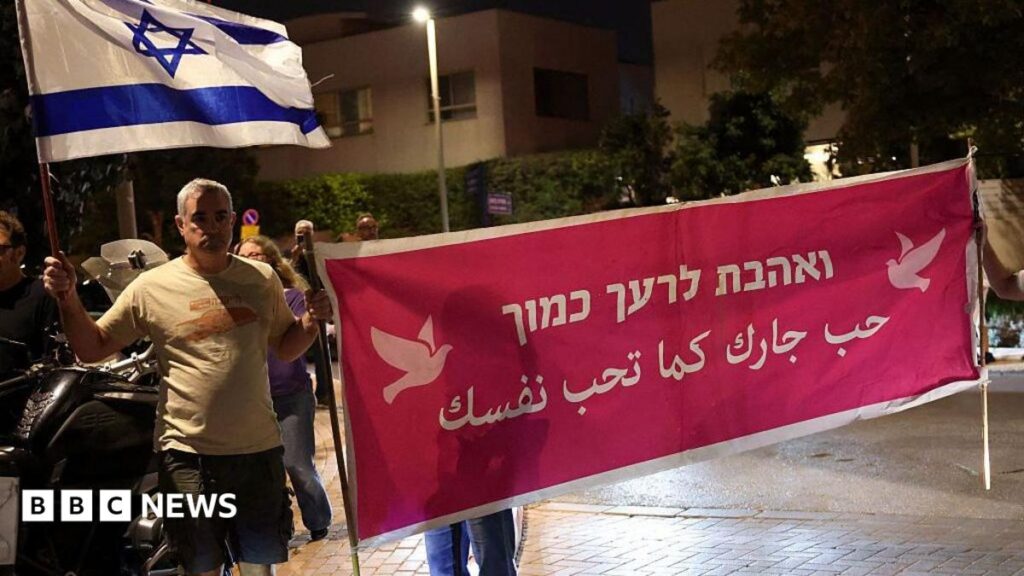
In the days leading up to the vote, opposition leaders publicly accused Netanyahu of trying to “delegitimise” the election by questioning the integrity of the ballot‑counting process. The criticism intensified after Likud’s internal poll showed the party slipping behind a coalition of Arab‑led parties, which the opposition framed as a legitimate expression of voter sentiment.
Likud’s response was to allege foreign interference, suggesting that external actors were backing the Arab‑led bloc to undermine Israel’s right‑wing government. Party spokespersons cited “unusual campaign financing patterns” and “coordinated social‑media activity” as evidence, though no concrete proof has been presented publicly. The rhetoric mirrors a broader trend in which incumbent leaders in contested democracies invoke external threats to rally their base and cast doubt on opposition victories.
Why it matters: democratic norms and regional stability
When a sitting prime minister accuses opponents of “stealing” an election, it erodes public confidence in the electoral system. International observers, including the European Union and the United Nations, have warned that such rhetoric can fuel unrest and delegitimize the eventual winner, regardless of the outcome. In Israel’s case, the stakes are amplified by the country’s pivotal role in Middle‑East peace negotiations and its security partnership with the United States.
A contested election could also stall or reverse recent diplomatic breakthroughs with African states. In the past two years, nations such as Sudan, Morocco, and the Republic of the Congo have deepened ties with Israel, opening trade corridors in agriculture, water technology, and defense. Political instability in Jerusalem risks sending mixed signals to these partners, potentially slowing joint projects that are already delivering jobs and technology transfer to African economies.
African angle: diaspora, diplomacy, and development projects
Israel is home to a sizable Ethiopian Jewish community, many of whom arrived during the 1980s and 1990s airlifts. This diaspora group has historically faced challenges related to integration, police relations, and representation in government. An election marred by accusations of illegitimacy could exacerbate tensions for Ethiopian Israelis, who often align with parties advocating social equity and anti‑racist policies.
Beyond the diaspora, several African nations are watching the Israeli election for clues about future cooperation. The Israeli‑Ethiopian agricultural partnership, which has introduced drip‑irrigation technology to Ethiopian farms, is slated for expansion pending stable bilateral relations. Similarly, tech incubators in Kenya and Nigeria that rely on Israeli venture capital could see funding pipelines disrupted if Israel’s political climate turns inward or if foreign‑interference claims lead to sanctions or diplomatic friction.
What’s next: legal battles, coalition talks and possible ripple effects
Legal experts say that if the opposition files formal complaints about alleged interference, Israel’s Supreme Court may be called upon to review the election’s validity—a scenario that has occurred twice in the past decade. Such a judicial review could delay the formation of a new government for months, extending the caretaker period and leaving key policy decisions in limbo.
Meanwhile, coalition negotiations are already underway. Arab‑led parties have signaled a willingness to join a broader centre‑left bloc, provided they secure guarantees on budget allocations for minority communities and a clear stance on the Gaza ceasefire. Likud, on the other hand, is likely to seek a unity government that retains a right‑wing security platform while offering concessions to centrist parties. The outcome of these talks will determine whether Israel can maintain its current trajectory of high‑tech growth and African trade partnerships, or whether a shift toward a more inclusive but less predictable coalition will reshape its foreign policy.
Quick Answers
What did Netanyahu’s Likud party claim about foreign interference in the 2026 election?
Likud alleged that external actors were financing and coordinating social‑media campaigns for Arab‑led parties to undermine Netanyahu’s right‑wing government, though no public evidence has been provided.
How could Israel’s election controversy affect African diplomatic ties?
Political instability could delay or weaken joint projects in agriculture, technology, and defense with African nations that have recently normalized relations with Israel.
What impact might the election dispute have on Ethiopia’s diaspora in Israel?
A contested election could heighten social tensions for Ethiopian Israelis, who often support parties pushing for anti‑racist reforms and greater community representation.
Source: www.bbc.co.uk


💬 Comments 0