Norway’s King Haakon VIII honors Harald V and pledges climate action in first speech, 2026
Background: The Norwegian monarchy and Haakon's preparation
Norway’s constitutional monarchy has been a stable, largely ceremonial institution since the early 20th century, but its sovereigns have often used their platform to shape public discourse on social welfare and the environment. Crown Prince Haakon, now King Haakon VIII, spent decades in the public eye, serving as a UN‑goodwill ambassador and champion of climate initiatives, which gave him a reputation that extends beyond royal protocol.
Harald V, who reigned for 31 years, was widely respected for his modest style and his commitment to Norway’s welfare model. His death in March 2026 triggered a period of national mourning, and the line of succession moved automatically to his son, who had already been acting as regent during his father’s health declines. The transition was smooth, reflecting the country’s strong respect for constitutional order.
The new king’s first public address was scheduled for the traditional Constitution Day celebration, a symbolic moment that ties the monarchy to Norway’s founding charter of 1814. By choosing this venue, Haakon signaled that his reign would be rooted in the nation’s democratic heritage while also pointing to the challenges of the 21st century.
The first speech: personal tribute and a forward‑looking agenda
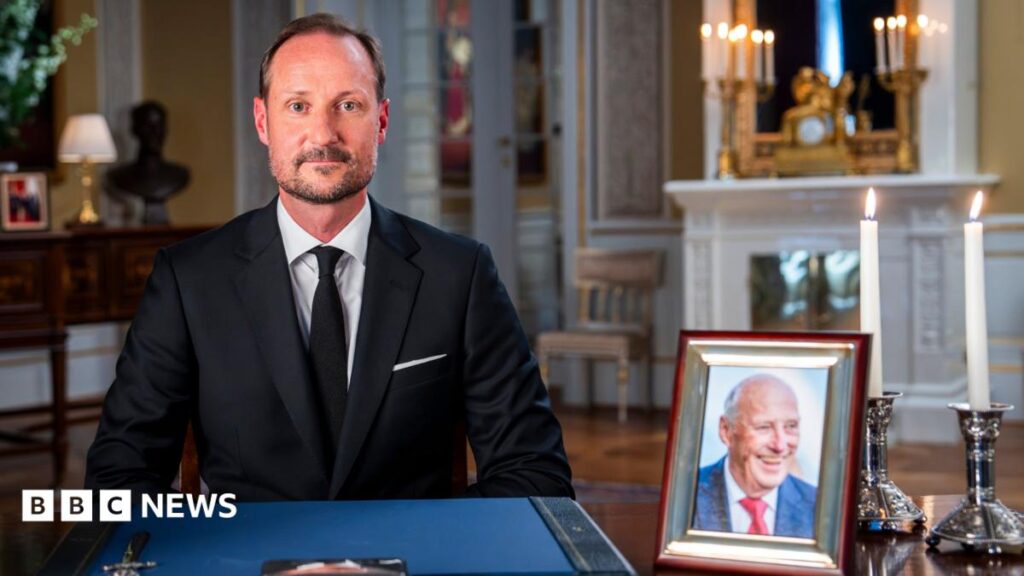
Standing before a sea of flags at Oslo’s Palace Square, Haakon opened with a heartfelt remembrance of his father, describing Harald V as “my dear father, a steady hand in stormy seas.” He recalled specific moments—such as the king’s 2015 visit to the Arctic research station—underscoring a shared commitment to Norway’s maritime legacy. The emotional tone resonated with an audience still processing the loss of a beloved monarch.
After the tribute, the new king shifted to policy. He pledged to continue Norway’s leadership on climate change, citing the country’s goal to cut greenhouse‑gas emissions by 55 % by 2030. He highlighted the sovereign wealth fund’s (Government Pension Fund Global) responsibility to divest from high‑carbon assets, a stance that aligns with his earlier advocacy for greener investment practices.
Haakon also touched on social cohesion, warning against the rise of extremist rhetoric and promising to support the welfare state that has kept Norway among the world’s most equal societies. He called for “dialogue over division,” a phrase that mirrors his father’s long‑standing emphasis on consensus politics.
Why the speech matters for Norway’s domestic politics
Even though the Norwegian monarch holds no legislative power, the speech set a tone for the next parliamentary term. By foregrounding climate ambition, Haakon is nudging the centre‑right Conservative Party and the centre‑left Labour Party toward more aggressive carbon‑neutral policies, a dynamic that could affect Norway’s oil‑dependent economy.
His emphasis on social unity arrives at a time when the country is grappling with integration of immigrants from Africa and the Middle East, as well as rising concerns over rural depopulation. The king’s call for “shared responsibility” may pressure municipal leaders to address housing shortages and employment gaps that have fueled recent protests in Oslo’s suburbs.
Lastly, the monarch’s public stance on the sovereign wealth fund could influence the fund’s board, which traditionally operates independently. A subtle royal endorsement of divestment may embolden activist shareholders and NGOs pushing for stricter ESG (environmental, social, governance) criteria.
Implications for Africa: investment, climate and aid
Norway’s sovereign wealth fund is the world’s largest, and it holds stakes in several African extractive projects, from copper mines in Zambia to offshore oil blocks in Nigeria. Haakon’s climate‑first rhetoric could accelerate the fund’s ongoing review of these holdings, potentially leading to reduced exposure to fossil‑fuel ventures on the continent.
Conversely, the king’s history of supporting renewable‑energy partnerships may open new avenues for Norwegian green technology firms in Africa. In 2024, Norway signed a memorandum with Kenya to develop offshore wind farms; a royal endorsement could speed up financing and attract additional European investors looking for climate‑aligned projects.
Norway also contributes significantly to development aid, especially in education and health sectors across sub‑Saharan Africa. Haakon’s mention of “global solidarity” may translate into a modest increase in aid budgets, reinforcing Norway’s reputation as a generous donor while aligning aid with climate resilience goals.
What comes next: the king’s role in a changing Norway
The next months will test how much influence a constitutional monarch can exert in practice. Haakon is expected to host regular audiences with the prime minister, attend international climate summits, and use his patronage to spotlight emerging Norwegian artists and scientists. These soft‑power tools can shape public opinion without overstepping legal boundaries.
Domestically, the king’s speech may serve as a rallying point for the upcoming 2027 parliamentary elections, where parties will likely position themselves relative to his climate and unity agenda. Analysts suggest that parties aligning closely with the monarch’s themes could gain a credibility boost among centrist voters.
Internationally, Haakon’s diplomatic outreach could reinforce Norway’s role as a mediator in Arctic governance and as a bridge between Europe and Africa on sustainable development. How effectively he balances tradition with progressive advocacy will determine whether his reign is seen as merely ceremonial or as a catalyst for substantive change.
Quick Answers
Who is King Haakon VIII of Norway?
Haakon VIII is the son of the late King Harald V and became Norway’s monarch in March 2026 after his father’s death.
What were the main themes of Haakon’s first speech?
He honored his father, emphasized national unity, pledged stronger climate action, and called for continued support of Norway’s welfare model.
How might Haakon’s reign affect Norway’s investments in Africa?
His climate‑focused stance could push the sovereign wealth fund to reduce fossil‑fuel holdings in Africa while encouraging more green‑energy partnerships on the continent.
Source: www.bbc.co.uk



💬 Comments 0