Pakistan school roof collapse kills 33 students and a teacher in Gujranwala 2026 – safety implications for South Asian schools
Background: fragile school infrastructure in Pakistan
Pakistan’s public‑school building stock is largely a legacy of the 1970s and 1980s, when rapid expansion of enrolment outpaced the capacity of local governments to fund safe construction. Many classrooms are still made of low‑cost brick and concrete, with flat roofs that double as play areas during hot months. The lack of regular structural audits means that hidden cracks and corrosion often go unnoticed until a catastrophic failure occurs.
The country’s building‑code enforcement has historically been weak, especially in peripheral districts where municipal budgets are stretched thin. According to a 2022 report by the Pakistan Institute of Development Economics, only about 30% of public schools meet the minimum safety standards set by the national construction authority. This shortfall is compounded by climate‑related stressors such as intense monsoon rains that add weight to already over‑stressed roofs.
The tragedy: what happened on the day of the collapse
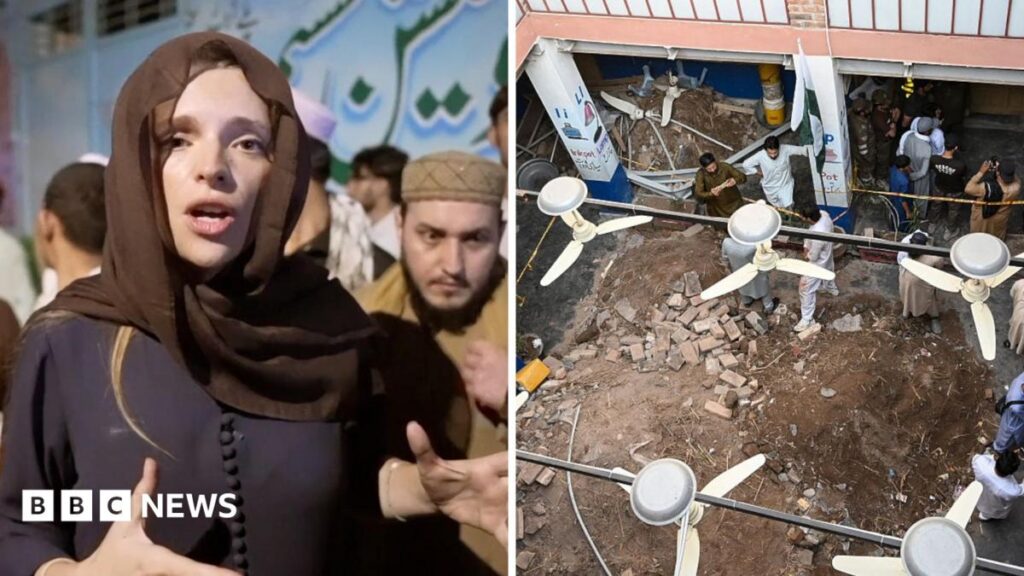
On the morning of 13 October 2026, the roof of a government primary school in Gujranwala caved in while classes were in session. Hospital officials confirmed that 33 pupils, aged between six and twelve, and one teacher lost their lives, while more than a dozen others sustained injuries ranging from broken limbs to head trauma. Rescue teams from the district emergency services, aided by local volunteers, worked through the night to pull survivors from the rubble.
Eyewitnesses said the roof gave way suddenly after a heavy downpour that began early that day. The school’s administration had reportedly postponed the day’s outdoor activities because of the rain, but the structural weakness of the flat roof went undetected. The incident triggered an immediate lockdown of nearby schools while authorities assessed the safety of other public‑school buildings in the area.
Why it matters: beyond the immediate loss of life
The human toll is heartbreaking, but the collapse also spotlights systemic gaps in public‑sector investment. Parents in Gujranwala have long complained about dilapidated facilities, yet budget allocations for school repairs have remained stagnant at under 0.5% of the national education budget for the past five years. The tragedy is likely to deepen mistrust between communities and the state, potentially driving families to seek private schooling—a shift that could widen existing educational inequities.
From a policy perspective, the incident forces the Ministry of Federal Education and Professional Training to confront a stark choice: launch a costly nationwide audit of school structures, or risk further loss of life. International donors, including the World Bank, have earmarked funds for school‑infrastructure upgrades, but disbursement has been slow, and many projects are still in the planning phase.
Regional pattern: similar safety failures across South Asia and Africa
The Gujranwala collapse is not an isolated event. In the past decade, India, Bangladesh and Nepal have each recorded multiple school‑building failures linked to weak construction and extreme weather. A 2024 study by the Asian Development Bank found that over 40% of public schools in the region are vulnerable to roof collapse during monsoon seasons.
African nations face comparable challenges. In Nigeria, a 2022 roof failure at a primary school in Kano killed 15 children, while in Kenya a 2025 ceiling collapse left dozens injured. The common denominator is under‑funded maintenance, inadequate enforcement of building codes, and climate‑induced stressors. The parallel suggests that lessons learned in Pakistan could inform a broader, cross‑continental push for safer learning environments.
Reactions and calls for reform: government, NGOs and the diaspora
Prime Minister Shehbaz Sharif expressed “deep sorrow” and announced a three‑day mourning period, while pledging a “comprehensive inquiry” into the incident. Opposition parties seized the moment to demand a parliamentary committee to audit all public schools within six months. Human‑rights NGOs such as Human Rights Watch have called the collapse “a preventable disaster” and urged the government to adopt a zero‑tolerance stance on unsafe school structures.
The Pakistani diaspora, particularly in the United Kingdom and the United Arab Emirates, mobilised quickly on social media, launching crowdfunding drives to support the victims’ families. Several diaspora‑led education charities have also offered technical expertise to help local authorities conduct structural assessments, echoing similar diaspora‑driven interventions after school‑building failures in Kenya and Ghana.
What’s next: investigations, funding and the road to safer schools
A forensic engineering team appointed by the Ministry is expected to submit a report within 30 days, detailing the precise cause of the roof failure and recommending remedial actions. Early indications suggest that water infiltration weakened the steel reinforcement, a problem that could be addressed through relatively inexpensive retrofitting if identified promptly.
In the longer term, the tragedy may accelerate the rollout of the “Safe Schools Initiative,” a joint effort between the Pakistani government and the World Bank that aims to upgrade 10,000 vulnerable school buildings by 2030. Successful implementation will require transparent procurement, community monitoring and, crucially, sustained budgetary commitments. For African policymakers watching from the sidelines, Pakistan’s experience offers a cautionary tale and a possible blueprint for scaling up school‑safety programs before the next monsoon or heatwave hits.
Quick Answers
How many people died in the Pakistan school roof collapse?
Thirty‑three pupils and one teacher were confirmed dead, according to hospital officials.
What caused the roof to collapse at the Gujranwala school?
Preliminary reports point to heavy rain adding weight to an already weakened flat roof, which had structural cracks and corrosion.
Will this incident affect school safety policies in Pakistan?
Yes, the government has pledged a nationwide audit and faster implementation of the Safe Schools Initiative to upgrade vulnerable school buildings.
Source: www.bbc.co.uk




💬 Comments 0