Palestinian teens killed in Al-Mughayyir settler attack, Israeli army says stones thrown – 2026 tragedy
Background: Settler expansion and Al‑Mughayyir’s fraught history
Al‑Mughayyir, a small Palestinian village in the central West Bank, has been a flashpoint for friction between Israeli settlers and local residents for years. Since the 2000s, a network of outposts has sprouted around the village, often built on privately owned Palestinian land, prompting frequent clashes over water, grazing rights and property.
Human‑rights monitors, including B'Tselem and Al‑Haq, have documented a steady rise in settler‑related violence in the area, ranging from vandalism of homes to the intimidation of farmers. The village’s economy, largely based on small‑scale livestock farming, has been especially vulnerable, with reports of settlers herding away sheep and goats during the harvest season.
The broader context is a stalled peace process and an increasingly polarized security environment. While Israeli authorities claim a duty to protect settlers, Palestinian officials argue that the state’s legal apparatus often turns a blind eye to illegal outposts, creating a de‑facto law‑of‑the‑jungle scenario that fuels resentment.
The fatal attack: What happened on September 2, 2026
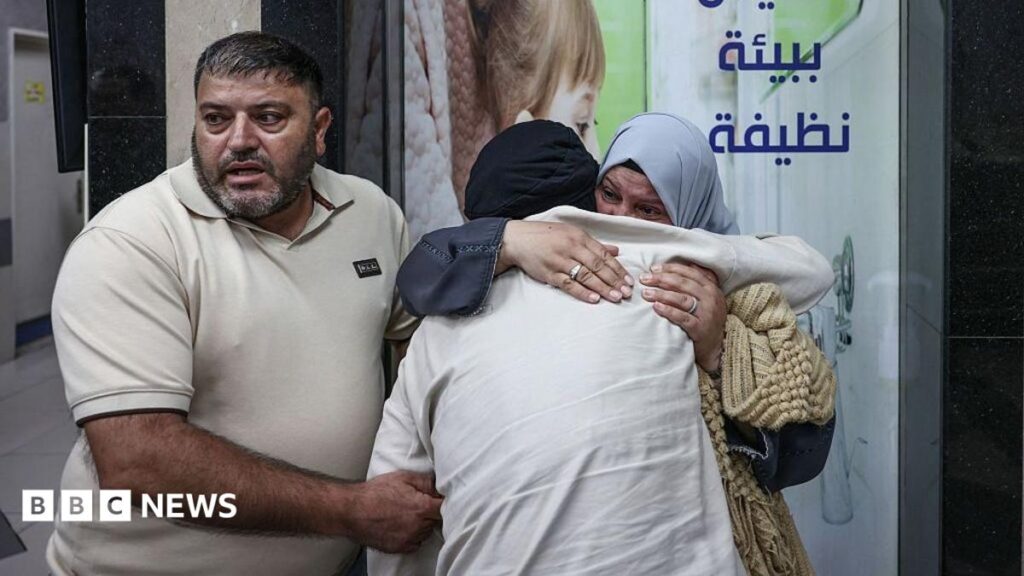
On the night of September 2, three Palestinian teenagers—ages 15, 16 and 18—were shot dead while attempting to intervene in a dispute over a flock of sheep. According to the Al‑Mughayyir village council, the youths were trying to stop a group of Israeli settlers from stealing the animals, a routine that had become commonplace during the summer grazing period.
The Israeli Defense Forces (IDF) released a contrasting account, stating that soldiers were fired upon with stones by a crowd that included the three teens, prompting the troops to return fire. The IDF’s statement added that the soldiers acted in self‑defence after being hit by projectiles that could have caused serious injury.
Eyewitnesses interviewed by local Palestinian media described a chaotic scene in which the teens approached the settlers, shouted warnings, and were then caught in a sudden exchange of gunfire. The exact sequence of events remains contested, and an independent forensic investigation has yet to be launched.
Conflicting narratives and legal questions
The divergent accounts have reignited a long‑standing debate over the legal status of settler violence. International law, as interpreted by the United Nations, classifies the settlements as illegal and holds occupying powers responsible for protecting the civilian population. Yet Israeli courts have repeatedly ruled that private Palestinian property can be expropriated for “security” reasons, a stance that critics say provides impunity for settler attacks.
Human‑rights organisations argue that the IDF’s claim of stone‑throwing does not justify lethal force, especially when the victims were minors. They point to the 2015 Israeli Supreme Court ruling that lethal force may only be used when there is an imminent threat to life, a standard that appears unmet in this case according to their analysis.
The families of the deceased have filed a petition with the Israeli Supreme Court demanding a transparent investigation. Meanwhile, the Palestinian Authority has called for an International Criminal Court (ICC) probe, echoing previous requests after similar incidents in Hebron and Nablus.
African and diaspora perspectives: Solidarity, policy and investment
Across Africa, the tragedy has resonated strongly in countries that have historically supported the Palestinian cause, notably South Africa, which likens Israel’s policies to apartheid. South Africa’s Department of International Relations issued a statement condemning the killings and urging the UN Security Council to act, a move that aligns with the African Union’s 2022 resolution calling for an end to settlement expansion.
The incident also sparked a wave of activism among African diaspora groups in Europe and North America. Organizations such as the African Palestinian Solidarity Network organised vigils in London, Paris and New York, highlighting how the loss of young lives in the West Bank mirrors broader struggles against colonial‑era oppression on the continent.
From an economic standpoint, the heightened tension may affect African investors with interests in Israeli technology and Palestinian agricultural projects. Several South‑African venture funds have paused new investments in joint Israeli‑Palestinian agritech initiatives, citing reputational risk and the need for clearer compliance with international human‑rights standards.
Looking ahead: Investigations, diplomatic fallout and possible reforms
The immediate priority for the Israeli government is to launch an internal inquiry, a step that could either restore confidence among the settler community or deepen Palestinian scepticism if perceived as a white‑wash. International observers, including the EU’s Middle East envoy, have urged the IDF to cooperate fully with any independent forensic examination.
On the diplomatic front, the United States is expected to issue a measured response, balancing its traditional support for Israel with growing congressional pressure to address civilian casualties in the occupied territories. A bipartisan group of US lawmakers has already drafted a resolution calling for stricter oversight of IDF engagement rules in the West Bank.
If the investigation confirms excessive use of force, it could prompt a reevaluation of the Rules of Engagement that govern Israeli troops in civilian areas. Such a shift might reduce the frequency of lethal incidents, but it would also require a broader political willingness to curb settler expansion—a demand that remains contentious within Israel’s coalition government.
Quick Answers
Who were the Palestinian teens killed in Al‑Mughayyir?
The victims were three teenagers, aged 15, 16 and 18, from the West Bank village of Al‑Mughayyir.
What are the main points of disagreement between the village council and the Israeli army?
The council says the teens were protecting sheep from settlers, while the Israeli army claims they threw stones at troops, prompting a lethal response.
How has Africa responded to the incident?
South Africa condemned the killings and called for UN action, while African diaspora groups organized vigils and some African investors paused projects linked to Israel‑Palestine cooperation.
Source: www.bbc.co.uk




💬 Comments 0