Parrot eggs hatch after Thai smuggler arrested at Johannesburg airport, 2026
Background: South Africa’s role in the illegal wildlife trade
South Africa sits on a key corridor that links African wildlife sources with Asian markets, making its airports a frequent checkpoint for smuggling operations. While most attention focuses on ivory or rhino horn, exotic birds are also high‑value contraband because of their rarity and the demand for pet trade in Southeast Asia. The country’s Department of Environment, Forestry and Fisheries (DEFF) has reported a rise in bird‑related seizures over the past five years, according to its 2025 annual report.
Thailand, a major destination for illegal wildlife, has a well‑established network of collectors, middlemen and buyers who pay premium prices for exotic species. Parrots, especially those native to Indonesia and Papua New Guinea, are prized for their bright plumage and ability to mimic speech. Smugglers often use creative methods—such as homemade incubators—to keep eggs viable during long flights, a tactic that has emerged only recently in law‑enforcement briefings.
The arrest at O.R. Tambo International Airport
On 23 August 2026, immigration officers at O.R. Tambo International Airport in Johannesburg flagged a 50‑year‑old Thai national whose hand‑luggage contained a compact, battery‑powered incubator. Inside, 12 parrot eggs were kept at a constant temperature of 37 °C, the temperature required for successful hatching. The suspect, identified by airport security as Somchai Prasert, was detained after a routine customs scan revealed the device’s unusual heat signature.
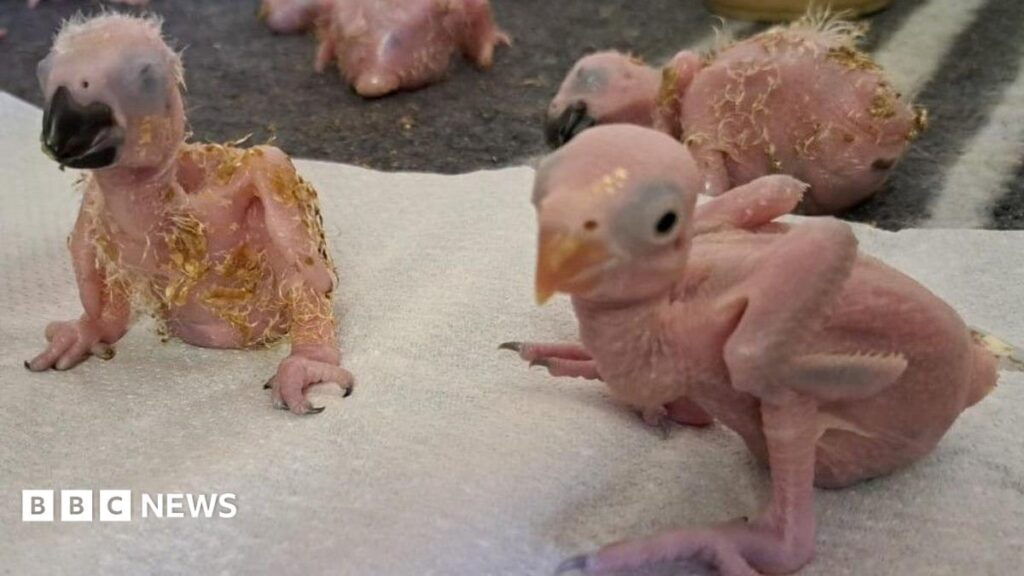
DEFF officials later confirmed that the eggs began to hatch while the suspect was in police custody, producing three viable chicks before the incubator was shut down for safety reasons. The incident sparked immediate media interest because it is one of the few documented cases where smuggled wildlife actually survived the journey to a foreign country.
Why the incident matters for South Africa
The successful hatching of smuggled eggs on South African soil highlights a gap in the country’s bio‑security protocols. While customs officials are trained to spot concealed goods, the detection of live‑animal equipment—especially low‑tech devices—remains a challenge. According to a senior DEFF officer, the case will prompt a review of thermal‑imaging scanners at major entry points.
Beyond procedural concerns, the event raises questions about the potential for illegal breeding colonies to be established unintentionally. If the chicks were to escape or be sold locally, they could become a vector for invasive species, threatening native bird populations that already face habitat loss and climate stress.
Connecting the dots: a broader trend in African‑Asian wildlife trafficking
The Johannesburg arrest is part of a growing pattern where African transit hubs are used to funnel exotic birds to Asian consumers. Recent investigations by Interpol’s Environmental Crime Programme have linked similar shipments to ports in Kenya and Mozambique, where eggs are concealed in medical equipment or even in clothing. These routes exploit lax inspections and the high volume of legitimate cargo moving between continents.
For African conservationists, the trend is alarming because it creates a feedback loop: poachers are incentivised to harvest more wild birds, depleting already fragile populations. A 2024 study by the University of Pretoria warned that unchecked bird trafficking could push several parrot species toward extinction within the next decade if demand from Asia continues unabated.
What’s next: legal, ecological and diplomatic steps
Somchai Prasert is expected to face charges under South Africa’s National Environmental Management: Biodiversity Act, which carries a maximum fine of R5 million and up to five years’ imprisonment for illegal wildlife trade. Prosecutors are also likely to seek the forfeiture of the incubator and any remaining eggs, a move that would send a strong deterrent signal to other smugglers.
On the diplomatic front, South Africa and Thailand have agreed to deepen cooperation on wildlife crime, including joint training for customs officers and the sharing of intelligence on smuggling networks. Conservation NGOs are urging both governments to fund rapid‑response teams that can intervene when illegal hatchlings are discovered, preventing them from entering the pet market or the wild.
Quick Answers
What law did the Thai suspect break in South Africa?
He violated the National Environmental Management: Biodiversity Act, which criminalises the import, export and trafficking of protected wildlife.
How many parrot chicks hatched from the smuggled eggs?
Three chicks successfully hatched before the incubator was turned off by authorities.
Why are parrot eggs a target for wildlife traffickers?
Parrot species are highly valued in the Asian pet market for their colors and ability to mimic speech, making their eggs lucrative commodities.
Source: www.bbc.co.uk




💬 Comments 0