Pope Leo Meets Bob Dylan at Vatican Residence in Rome, 2026 – A Cultural‑Political Turning Point
Background: A Pope Known for Pop‑Culture Outreach
When Pope Leo ascended to the papacy in 2024, he pledged to modernise the Vatican’s image by engaging directly with artists, musicians and activists. His first major cultural overture was a public lecture on climate justice that featured a spoken‑word performance by a Kenyan poet, signalling a willingness to break with the Church’s traditionally solemn tone.
Bob Dylan, the 2021 Nobel laureate in literature, has long been a touchstone for protest music. His verses have been quoted by civil‑rights leaders, anti‑war activists and even politicians across the ideological spectrum. In 2023, Pope Leo cited Dylan’s anti‑nuclear lyric “When the war is over” in the preface of a Vatican‑published book warning against nuclear re‑armament, an unusual nod that hinted at a deeper alignment of moral concerns.
Both figures share a history of using art to challenge power structures. While Dylan’s work has evolved from folk protest to gospel‑infused Americana, the Pope’s recent encyclicals have embraced a more lyrical language, referencing music and poetry as tools for spiritual renewal.
The Meeting: An Unprecedented Private Audience
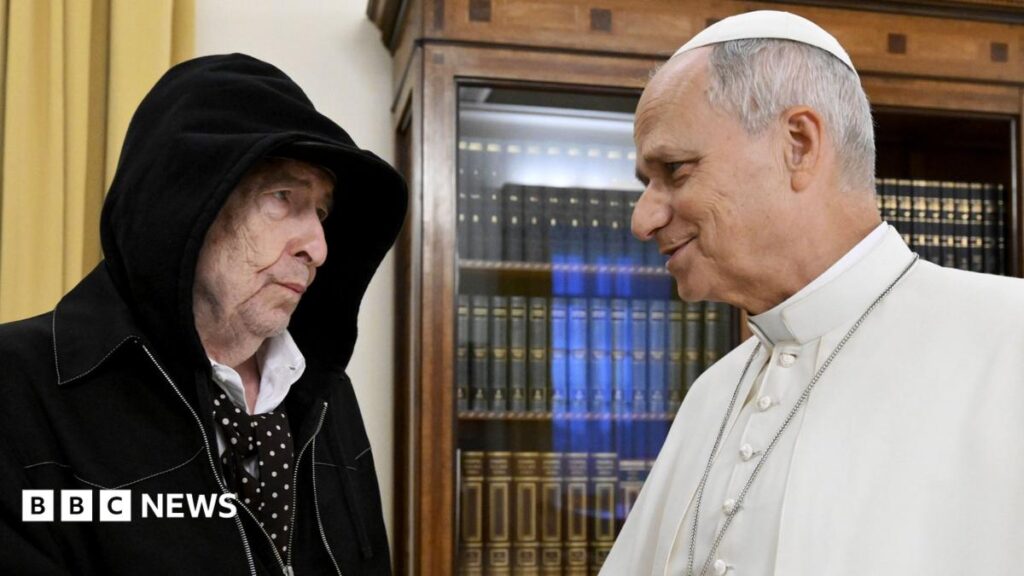
On 4 November 2026, Pope Leo invited Bob Dylan to the Domus Sanctae Marthae, the official residence of the pontiff in Vatican City. The encounter was kept low‑key, with only a handful of Vatican officials and a small team of Dylan’s advisors present. According to a Vatican press release, the two men spent roughly two hours discussing “the moral responsibilities of artists in an age of nuclear uncertainty.”
While the exact agenda was not disclosed, sources close to the Vatican say that the Pope presented Dylan with a signed copy of the anti‑nuclear book he had prefaced, and asked the musician to consider a new composition that could serve as a rallying hymn for the Church’s disarmament campaign. Dylan, who has rarely performed new material in public since his 2022 gospel tour, reportedly responded with a modest smile and a promise to “think about it.”
The meeting also featured a brief private performance of Dylan’s 1974 classic “Hurricane,” a song about wrongful imprisonment that resonated with the Pope’s recent emphasis on social justice. The performance, though not recorded for public release, was described by Vatican staff as “moving” and “a reminder that art can bridge the gap between sacred and secular concerns.”
Why It Matters: Culture, Peace and the Vatican’s Soft Power
The rendezvous is more than a celebrity encounter; it signals a strategic use of cultural capital by the Holy See. By aligning with a globally recognised protest icon, Pope Leo aims to amplify the Vatican’s anti‑nuclear messaging beyond its traditional diplomatic channels. The Pope’s earlier call for a “global nuclear moratorium” received tepid response from major powers, but a partnership with Dylan could generate a fresh wave of public pressure.
Music has historically been a conduit for peace movements—from John Lennon’s “Imagine” to the anti‑apartheid songs of South Africa. Dylan’s involvement could re‑ignite that tradition, especially as the world grapples with renewed tensions over uranium enrichment in Eastern Europe and the proliferation of tactical nuclear weapons in the Indo‑Pacific. The Vatican hopes that a Dylan‑inspired anthem could become an unofficial soundtrack for future disarmament rallies, much like “We Shall Overcome” did for civil‑rights marches.
From a diplomatic perspective, the meeting also showcases the Vatican’s ability to act as a neutral convenor. While governments are often locked in geopolitical posturing, the Pope can invite cultural figures from any side of a conflict, offering a platform for dialogue that is difficult for states to replicate.
African Relevance: Nuclear Risks, Catholic Influence and Musical Heritage
Africa is not immune to the nuclear debate. Nations such as South Africa, Kenya and Nigeria host critical uranium mining operations that feed the global supply chain, while the Niger‑Uranium controversy has already sparked protests over environmental and health impacts. The Vatican, which oversees the largest Catholic population on the continent—over 500 million adherents—has a unique lever to shape public opinion on these issues.
Pope Leo’s outreach to Dylan could inspire African Catholic musicians to craft protest songs that speak directly to local concerns, such as the proposed nuclear power plant in Ghana or the militarisation of the Sahel. In Kenya, where the Catholic Church runs dozens of schools and hospitals, clergy often act as community leaders. A Vatican‑endorsed anti‑nuclear anthem could be introduced in liturgies, youth groups and university campuses, creating a grassroots chorus that pressures governments to adopt stricter safety standards.
Moreover, the meeting underscores a broader trend of African artists gaining global platforms. The recent success of Nigerian Afrobeats star Burna Boy at the United Nations Climate Summit shows that the continent’s cultural producers are increasingly invited to shape international policy dialogues. A Dylan‑Vatican collaboration could open doors for African songwriters to co‑author future peace‑themed works, reinforcing the continent’s growing soft‑power influence.
Reactions: From the Global Press to the African Diaspora
Western media outlets hailed the meeting as “a bold cultural gamble” and “a sign that the Vatican is willing to meet pop culture on its own turf.” The New York Times highlighted the symbolic power of a Nobel laureate sitting across from the Pope, while The Guardian questioned whether the encounter could translate into concrete policy changes.
In African newsrooms, the story sparked a different conversation. South African newspaper Mail & Guardian noted that the Vatican’s anti‑nuclear stance could bolster the African Nuclear‑Weapon‑Free Zone (AFNZ) advocacy, which has been championed by the African Union since 2009. Meanwhile, Nigerian diaspora blogs praised the Pope for “recognising the universal language of protest music,” seeing it as a potential catalyst for diaspora‑led campaigns against nuclear exploitation in West Africa.
Among musicians, reactions were mixed. Some folk artists praised the Pope’s willingness to engage with a “voice of dissent,” while others warned that the Church’s historic ties to colonial powers could complicate the authenticity of any joint artistic project. Dylan’s own camp remained cautiously optimistic, with his manager stating that the songwriter “always appreciates when his work is used for a higher moral purpose.”
What’s Next: From a Private Song to a Global Campaign
The Vatican has already announced a series of follow‑up events, including a “Music for Peace” summit in Rome slated for early 2027, where Dylan is expected to appear alongside African gospel choirs and South‑Asian classical musicians. The summit will aim to commission new works that address nuclear disarmament, climate justice and human rights, with a particular focus on regions most vulnerable to nuclear fallout.
In parallel, the Vatican’s Secretariat of State is drafting a diplomatic brief for the United Nations General Assembly, citing the Pope‑Dylan meeting as evidence of “cultural solidarity” in the fight against nuclear proliferation. African delegations are being consulted to ensure the brief reflects the continent’s specific concerns, such as uranium mining impacts and the need for transparent nuclear energy policies.
If a Dylan‑inspired anthem does emerge, the Church plans to disseminate it through its global network of parishes, Catholic radio stations and online platforms. For African Catholics, this could mean hearing the song during Sunday Mass in Lagos, Nairobi or Johannesburg, turning a lyrical message into a lived experience that bridges the sacred and the secular.
Quick Answers
What was the purpose of Pope Leo's meeting with Bob Dylan?
The meeting aimed to explore how music can amplify the Vatican’s anti‑nuclear campaign and to discuss a potential new song that would serve as a rallying cry for global disarmament.
How does the Pope‑Dylan encounter relate to nuclear disarmament?
By linking a world‑renowned protest musician with the Vatican’s moral authority, the Pope hopes to create cultural momentum that pressures governments to adopt stricter nuclear non‑proliferation policies.
What impact could this meeting have on African Catholic communities?
African Catholics could use a Vatican‑endorsed anti‑nuclear anthem in worship and activism, strengthening grassroots opposition to nuclear projects and supporting continental disarmament initiatives.
Source: www.bbc.co.uk


💬 Comments 0