Russian bombing kills 26 at Ukraine aid centre in Kharkiv village, 2026 attack
Background: Russia’s escalation against humanitarian sites
Since the invasion began in 2022, Russian forces have repeatedly struck locations that are clearly marked as civilian or humanitarian. International law, notably the Geneva Conventions, obliges warring parties to spare aid centres, hospitals and schools. Yet satellite imagery and eyewitness testimony have documented a pattern of large‑scale munitions being dropped on such sites, often under the pretext of targeting “enemy positions”. The latest strike on a Ukrainian aid centre in the southern village of Zolochiv, Kharkiv region, follows a series of similar attacks that have drawn condemnation from the UN and the International Committee of the Red Cross.
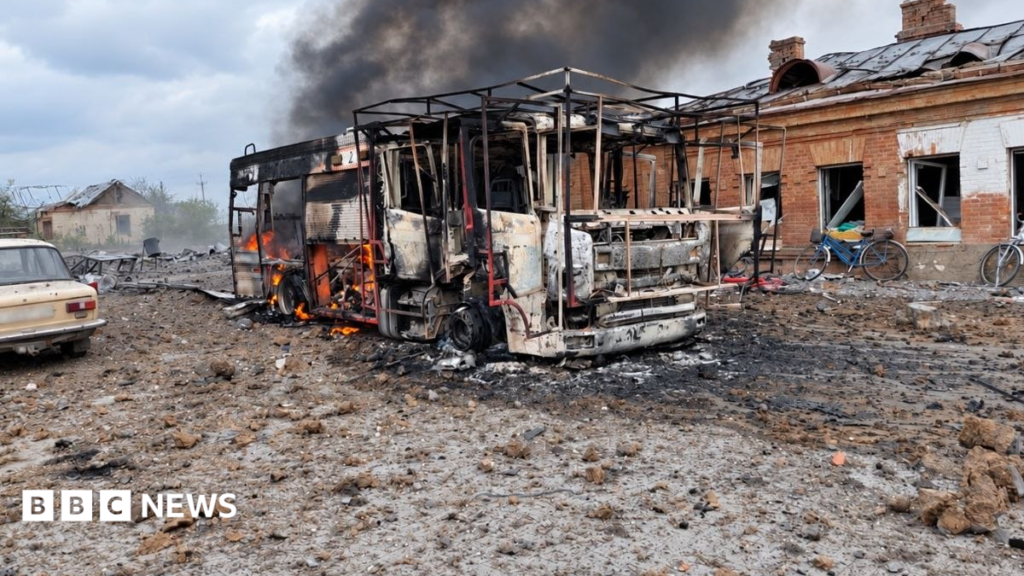
The village of Zolochiv sits on a key supply corridor that channels food, medical kits and winter heating supplies from the south to displaced families in the east. The aid centre, operated by a coalition of NGOs including the International Rescue Committee (IRC) and Ukrainian Red Cross, was a hub for distributing grain and heating fuel to over 12,000 residents. On 1 November 2026, at least nine 3,000‑kilogram aerial bombs rained down on the site, killing 26 people and injuring dozens more, according to Kyiv’s emergency services.
The attack: How the bombing unfolded
According to the Ukrainian military’s public information centre, the bombs were launched from a Russian Tu‑160 bomber that flew over the village at low altitude before releasing the payload. Radar logs captured three distinct waves of impact, each hitting the centre’s main warehouse and the adjacent medical tent. Survivors described a deafening roar followed by a shockwave that ripped roofs off the makeshift structures, scattering debris across the courtyard where families were queuing for food parcels.
Rescue teams arrived within minutes, but the scale of destruction hampered their efforts. The blast ignited stored grain, creating a secondary fire that threatened to spread to nearby residential blocks. Emergency responders, many of whom were volunteers from the diaspora, worked through the night to extract victims from the rubble. The death toll, confirmed by the regional health authority, reached 26, making it one of the deadliest single‑day attacks on a humanitarian facility in the conflict.
Why it matters beyond Ukraine’s borders
The strike reverberates far beyond the immediate tragedy. Ukraine supplies roughly 20 percent of the world’s wheat and barley, and the war has already forced African nations to confront soaring food prices and looming shortages. Disruptions to grain shipments from the Black Sea, compounded by attacks on inland distribution hubs, threaten to tighten the supply chain that feeds millions in the Sahel, the Horn of Africa and parts of the Middle East. Analysts at the African Development Bank warn that each kilogram of lost grain translates into higher import bills for countries already grappling with debt and climate‑related crop failures.
Moreover, the incident underscores a growing risk for African humanitarian staff working in Ukraine. The IRC, which employs dozens of African nationals in its Kyiv and Kharkiv operations, has temporarily suspended field deployments pending a security review. This pause could delay aid to vulnerable groups, including Ukrainian refugees who have fled to neighboring European nations where many African diaspora communities have set up support networks.
International reaction and legal implications
The United Nations Office for the Coordination of Humanitarian Affairs (OCHA) issued an urgent appeal on 2 November, calling the bombing a “clear violation of international humanitarian law”. The UN Security Council convened an emergency session, but a joint statement from five African members—Nigeria, South Africa, Kenya, Ethiopia and Egypt—pressed for an “impartial investigation” while warning against politicising the issue in a way that could jeopardise ongoing peace talks.
Human rights groups, including Amnesty International, have catalogued the Zolochiv strike as part of a broader Russian tactic to undermine civilian morale by targeting aid infrastructure. If investigations confirm that the bombs were deliberately aimed at the centre, the act could be classified as a war crime, opening the door for prosecutions at the International Criminal Court. Several African states have signalled willingness to cooperate with any ICC probe, reflecting a growing consensus on the continent that accountability for such atrocities is essential for global stability.
What comes next: Aid, diplomacy and the African perspective
In the short term, humanitarian organisations are scrambling to reroute supplies through alternative corridors, many of which run through eastern Ukraine or across the Moldovan border. The European Union has pledged an emergency €200 million package to bolster logistics, and the African Union is mobilising its own emergency fund to support NGOs with African staff on the ground. Diaspora groups in Poland, Germany and the United Kingdom are also organising cash drives to fill the immediate funding gap left by the disrupted operations.
Long‑term, the attack could reshape Africa’s diplomatic posture toward the Russia‑Ukraine war. Several African nations, which have historically balanced relations with Moscow and the West, may find it harder to justify neutrality when civilian lives are lost in a facility that housed African aid workers. The incident is already being cited in parliamentary debates in Nigeria and Ghana as a reason to push for stronger sanctions against Russia and to demand a swift ceasefire that guarantees safe passage for humanitarian convoys.
Quick Answers
How many people were killed in the Russian bombing of the Ukraine aid centre?
The attack on 1 November 2026 killed 26 people, according to Kyiv’s emergency services.
Why does the bombing matter for African countries?
Disruptions to Ukraine’s grain exports raise food‑price pressures in Africa, and the strike endangers African humanitarian staff operating in the region.
What legal steps could follow the attack on the aid centre?
If investigators confirm the centre was deliberately targeted, the bombing could be classified as a war crime and referred to the International Criminal Court.
Source: www.bbc.co.uk



💬 Comments 0