Russian double‑tap drone strike kills 15, injures 130 at Kryvyi Rih mall 2026 – effects on Ukraine and African students
Background: Russia’s evolving strike doctrine
Since the start of the full‑scale invasion in 2022, Russian forces have refined a grim pattern known as the "double‑tap" attack. The first strike hits a target, and a second wave follows minutes later, aimed at rescuers, journalists or civilians who gather after the initial blast. Human Rights Watch has documented dozens of such incidents, arguing they breach the principle of proportionality and the duty to protect civilians under international humanitarian law.
The tactic is not limited to military installations; it has increasingly been deployed against commercial centres, transport hubs and cultural venues. Analysts say the strategy serves two purposes: it amplifies terror among the population and it strains emergency services that are already overstretched by months of conflict. The United Nations Office for the Coordination of Humanitarian Affairs (OCHA) warned in early 2026 that double‑tap strikes could push civilian casualties beyond the thresholds that trigger large‑scale international intervention.
In the months leading up to August, Russia intensified its use of loitering munitions—sometimes called "kamikaze drones"—because they can be launched from a distance, are cheap, and leave minimal radar trace. The United States and several European allies have repeatedly called for tighter export controls on these systems, but Moscow continues to procure them from domestic manufacturers and sympathetic partners.
The Kryvyi Rih mall attack: what happened on August 22, 2026
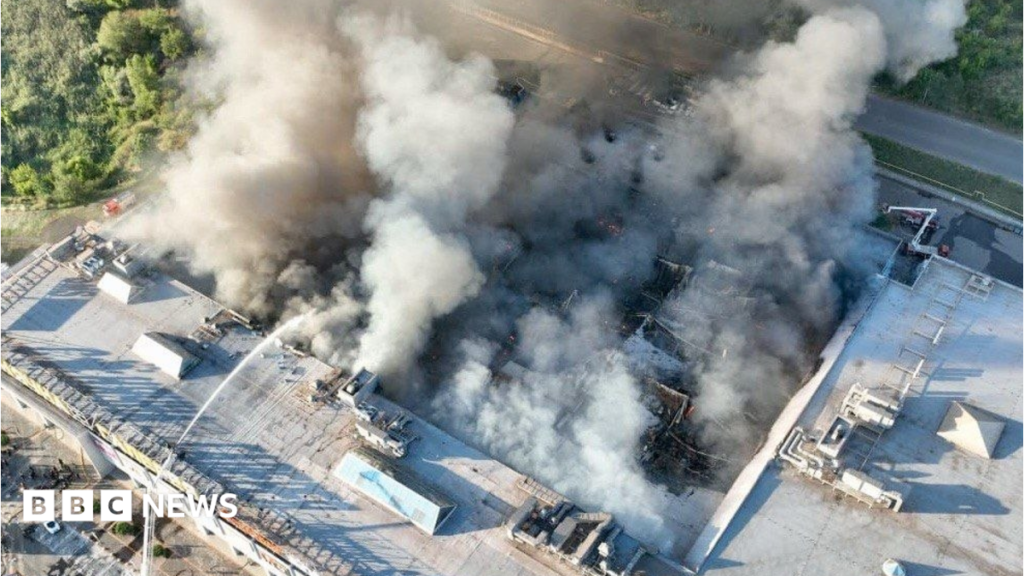
At approximately 14:30 local time on August 22, a Russian Shahed‑136 loitering munition struck the central shopping complex in Kryvyi Rih, a city of roughly 650,000 people in central Ukraine. The first explosion ripped through the food‑court area, igniting a blaze that quickly spread to adjacent retail units. Emergency crews rushed to the scene, but a second drone detonated roughly ten minutes later, targeting the makeshift triage zone set up outside the mall.
Ukrainian officials confirmed that 15 people were killed in the two blasts, including three teenagers, and that at least 130 others were injured, 23 of them children. The regional governor, Serhiy Shevchenko, described the incident as a "deliberate double‑tap on civilians" and vowed to pursue war‑crimes investigations through the International Criminal Court. Hospitals in the city reported that many of the injured suffered shrapnel wounds and severe burns, overwhelming local intensive‑care capacity.
Satellite imagery released by a commercial provider later that day showed a sizable crater at the mall’s north wing and a second, smaller impact crater near the emergency‑services parking lot. The images corroborated eyewitness accounts that the second strike was timed to hit responders, a hallmark of the double‑tap method.
Why the attack matters beyond the immediate tragedy
Beyond the heartbreaking loss of life, the strike underscores a broader shift in Russia’s war calculus. By targeting a civilian commercial hub, Moscow signals that no sector of Ukrainian society is off‑limits, eroding the distinction between combatants and non‑combatants that underpins the Geneva Conventions. Legal scholars at the International Law Commission have warned that repeated double‑tap incidents could constitute “widespread or systematic attacks against civilian population,” a core element of the crime of genocide if intent can be proven.
The economic fallout is also significant. Kryvyi Rih is a key logistics node for the transport of agricultural produce from the surrounding grain‑rich oblasts. The mall’s destruction has temporarily halted a major distribution point for locally sourced food, compounding supply‑chain disruptions that already threaten grain exports to Africa and the Middle East. According to the Ukrainian Ministry of Agribusiness, the region accounts for roughly 12% of Ukraine’s wheat output, and any delay in moving that grain can ripple through global markets, potentially raising food prices in import‑dependent African nations.
Internationally, the attack has reignited calls for a new round of sanctions targeting the manufacturers of loitering munitions. The European Parliament, in a session on August 24, voted to expand the sanctions list to include several Russian defense firms previously exempted under the 2022 “dual‑use” waiver. If enacted, the measures could tighten the financial squeeze on Russia’s drone program, but critics argue that without a coordinated enforcement mechanism, the impact may be limited.
African diaspora in Ukraine: a community on edge
Ukraine hosts an estimated 30,000 African students, many of whom are enrolled in engineering, medicine and language programmes. Nigeria, Ghana and Kenya are the top source countries, and the city of Kryvyi Rih has a modest but growing cohort of Nigerian students attending the local technical institute. When the double‑tap strike hit the mall, several African nationals were among the injured, according to a statement from the Nigerian Embassy in Kyiv.
The embassy’s chargé d’affaires, Ambassador Chukwuma Okafor, expressed “deep sorrow” and announced that consular teams would be dispatched to assist victims and their families. He also warned that the incident could deter prospective African students from choosing Ukrainian universities, a concern echoed by the African Union’s Education Committee, which cited the safety of African scholars as a priority in its 2026 partnership framework with Ukraine.
Beyond academia, a sizable African diaspora works in construction, logistics and the informal sector across Ukrainian cities. Community leaders in Kyiv have organized solidarity rallies, demanding that the Ukrainian government prioritize the protection of foreign nationals in conflict zones. The attacks have sparked a broader conversation about the need for a dedicated “safe corridor” for foreign students and workers, a proposal that the Ukrainian Ministry of Foreign Affairs is reportedly reviewing in consultation with European partners.
What comes next: diplomatic, legal and humanitarian pathways
In the short term, Ukraine has called for an emergency UN Security Council meeting to condemn the double‑tap tactic and to press for a resolution authorising additional protection for civilian infrastructure. While a consensus among the permanent members remains elusive, the United Kingdom and Canada have announced plans to provide Ukraine with portable air‑defence systems capable of intercepting low‑altitude drones, a move that could blunt future loitering‑munition attacks.
On the legal front, Ukraine’s Office of the Prosecutor General has opened a war‑crimes case against the Russian military unit believed to have coordinated the Kryvyi Rih strike. The case will be filed with the International Criminal Court, where Ukraine already has several pending investigations. Human rights NGOs are preparing a supplemental dossier that highlights the double‑tap pattern as evidence of a systematic policy, hoping to strengthen the prosecution’s argument for command responsibility.
Humanitarian agencies are scrambling to fill the gap left by the damaged mall, which previously served as a distribution hub for food parcels and medical supplies to nearby villages. The World Food Programme has redirected shipments to a temporary warehouse in Dnipro, while local NGOs are mobilising volunteers to provide psychological first‑aid to children traumatized by the explosions. For African students, university administrations are offering emergency scholarships and counseling services, signalling a recognition that the conflict’s fallout extends far beyond Ukraine’s borders.
Quick Answers
How many people were killed and injured in the Kryvyi Rih mall double‑tap strike?
Fifteen people were killed and at least 130, including 23 children, were injured.
What is a "double‑tap" attack and why is it controversial?
A double‑tap attack involves a second strike timed to hit responders after an initial explosion, violating the principle of civilian protection under international humanitarian law.
How does the mall attack affect African students in Ukraine?
Several African students were among the injured, prompting embassies to provide consular aid and raising concerns about safety that could discourage future African enrolments.
Source: www.bbc.co.uk




💬 Comments 0