Russian missile strike hits Kyiv power plant, Zelensky says no warning – 2026 power outage impact
A decade of targeting Ukraine's energy backbone
Since Russia launched its full‑scale invasion in February 2022, the Ukrainian power grid has become a recurring battlefield. Early in the war, Moscow used cruise missiles and artillery to knock out substations in the east, forcing Kyiv to implement rolling blackouts that lasted weeks. The pattern intensified in 2023 when Russia deployed more precise ballistic missiles, aiming at high‑voltage transmission lines that feed the capital and industrial hubs.
Western allies responded by bolstering Ukraine's air‑defence shield and supplying portable generators, but the sheer scale of the attacks kept the grid vulnerable. By 2025, Ukraine had rebuilt many facilities, yet the system still relied on aging Soviet‑era infrastructure that is difficult to harden against high‑speed missiles. This fragility has turned every strike into a political flashpoint, with Kyiv accusing Moscow of weaponising electricity as a weapon of war.
The strategic logic behind these attacks is two‑fold: to undermine civilian morale and to cripple the country's ability to sustain a war effort. Cutting power hampers communications, hampers the manufacturing of weapons, and forces the population into a state of chronic uncertainty. Over the past four years, each major outage has been followed by a diplomatic outcry, a spike in humanitarian aid, and a renewed call for more robust defensive systems.
What happened on 14 October 2026
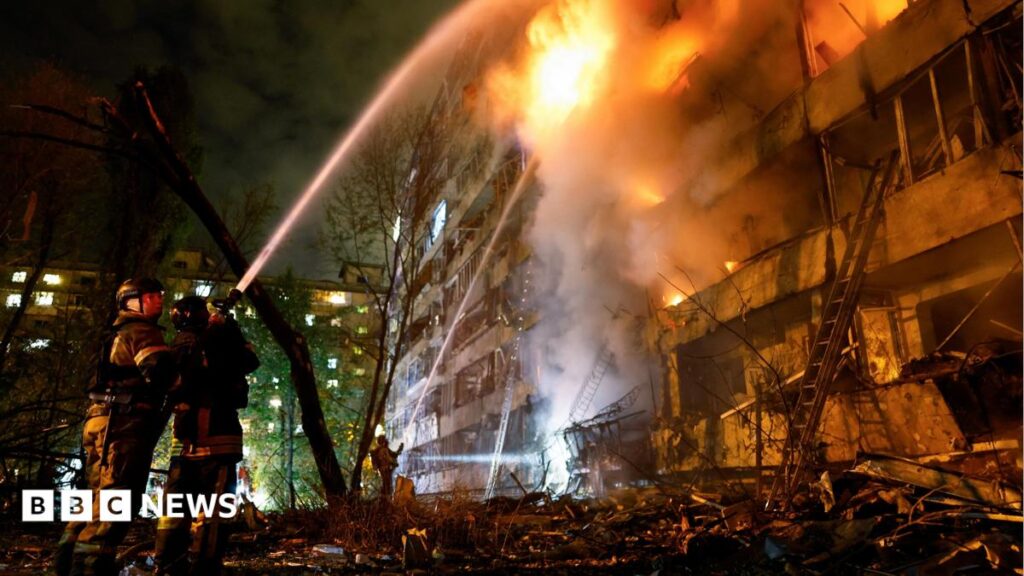
On the evening of 14 October, Ukrainian President Volodymyr Zelensky announced that Russian ballistic missiles struck a key power plant on the outskirts of Kyiv. The facility, which supplies roughly 30 percent of the capital’s electricity, was hit without any prior detection, according to Zelensky’s office. The missiles, believed to be Iskander‑K models, landed within minutes of each other, igniting fires and disabling two of the plant’s three turbine generators.
Officials said the attack triggered an automatic shutdown of the plant’s grid connection, leading to an immediate loss of power for about 1.2 million residents in central Kyiv. Emergency crews worked through the night to contain the blaze, while backup generators supplied limited electricity to hospitals and critical infrastructure. The Ukrainian Ministry of Energy reported that the plant could resume partial operations within 48 hours, but full restoration may take weeks.
Zelensky’s statement emphasized that Kyiv received “no early warning from our partners,” a claim that has sparked debate among NATO intelligence circles. Some analysts suggest the missiles may have been launched from a location that evaded radar coverage, while others point to possible gaps in the shared early‑warning network that NATO provides to Ukraine. The incident has reignited calls for faster integration of allied surveillance data into Ukraine’s command‑and‑control systems.
Why the strike matters beyond Ukraine’s borders
The outage underscores how energy infrastructure has become a lever of geopolitical pressure. A sudden dip in Ukrainian electricity output forces the country to import more power from neighboring European grids, raising wholesale electricity prices across the continent. In the weeks following the 2022 attacks, the European Power Exchange recorded a 12‑percent surge in spot prices, a trend that re‑emerged after the latest strike, according to Bloomberg data.
For the global energy market, any disruption in Ukraine—a key transit route for Russian gas to Europe—feeds uncertainty about supply reliability. While Russia’s gas exports have dwindled since the EU’s diversification push, the perception of instability in the region can still sway investor sentiment, affecting futures contracts for both gas and oil. This volatility ripples into emerging markets that import refined products, including several African nations that rely on European refiners for their fuel supplies.
Politically, the attack adds pressure on NATO to accelerate the delivery of advanced air‑defence systems, such as the U.S. Patriot and the European SAMP‑TG. The lack of an early warning, as Zelensky highlighted, could be used by Moscow to argue that Ukraine’s allies are not meeting their commitments, potentially influencing future aid packages. Conversely, Western leaders may leverage the incident to justify a new tranche of military assistance, framing it as a direct response to Russian aggression on civilian targets.
Implications for Africa, the diaspora and the road ahead
African countries that import European electricity—especially those in the Maghreb and West Africa—watch Ukrainian energy disruptions closely because they can translate into higher electricity tariffs on the continent. A study by the African Development Bank in 2025 warned that a 5‑percent rise in European wholesale prices could add up to $0.03 per kilowatt‑hour for African consumers, a noticeable increase for economies already battling energy poverty.
The Ukrainian diaspora in Africa, though small, is active in sectors such as technology, education, and humanitarian work. The blackout has prompted community groups in Nairobi and Lagos to organize relief drives, sending portable solar chargers and medical‑grade generators to Kyiv. These initiatives highlight a growing pattern of African‑based diaspora mobilising resources for crises in Eastern Europe, a trend that could reshape trans‑continental solidarity networks.
Looking forward, Ukraine plans to fast‑track the reconstruction of the damaged plant, with the Ministry of Energy earmarking $250 million for modernisation, including the installation of anti‑missile shielding and AI‑driven predictive maintenance. International donors, led by the EU and the United States, have pledged additional funds, but experts caution that without a comprehensive early‑warning upgrade, the risk of repeat attacks remains high. For Kyiv, the immediate challenge is to keep the lights on while convincing allies that the security gaps can be closed swiftly.
Quick Answers
What was the immediate impact of the Russian strike on Kyiv's power supply?
The attack knocked out two of three turbines at a major plant, causing a blackout for about 1.2 million residents and forcing reliance on emergency generators.
How could the Kyiv power outage affect electricity prices in Africa?
Disruptions in Ukraine can push European wholesale electricity prices higher, which may raise African consumer tariffs by roughly $0.03 per kilowatt‑hour, according to the African Development Bank.
Why did President Zelensky say there was no early warning?
He claimed that NATO’s shared early‑warning network did not alert Ukrainian defenses before the missiles arrived, highlighting gaps in real‑time radar coverage.
Source: www.bbc.co.uk




💬 Comments 0