Russian missile strike kills 19 in northern Ukraine block of flats, five children among dead – implications for civilians, food security and African diaspora
A night of horror in northern Ukraine
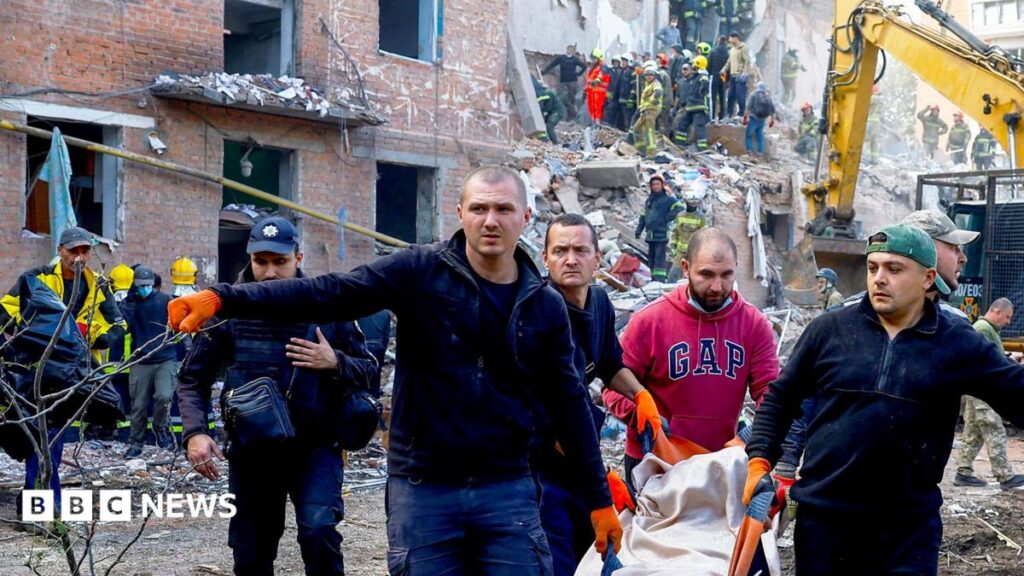
In the early hours of October 6, a Russian Iskander missile slammed into a residential building in the town of Vovchansk, in the Kharkiv region, flattening a block of 30 apartments. Emergency services reported that 19 people were killed, including five children who were asleep in their beds when the explosion ripped through the building’s lower floors.
Survivors described a scene of chaos: shattered windows, burning debris, and families scrambling for any safe exit as the structure collapsed. Local authorities confirmed that the strike hit a civilian‑only zone, a fact that has reignited accusations of indiscriminate attacks on non‑military targets. The Ukrainian Interior Ministry released a list of the deceased, confirming the ages of the child victims ranged from three to ten years old.
The attack comes at a time when Ukraine’s winter is approaching, raising fears that displaced families will face even harsher conditions if shelter and heating become scarcer. International aid groups have already warned that the loss of civilian housing compounds an already severe humanitarian crisis in the region.
Escalating civilian toll in the Russian‑Ukrainian war
Since the war began in February 2022, civilian casualties have steadily risen, but the intensity of attacks on densely populated neighborhoods has surged in the last six months. According to the United Nations Office for the Coordination of Humanitarian Affairs (OCHA), more than 7,000 civilians have been killed in Ukraine, with children accounting for roughly 15% of those deaths.
Human Rights Watch has documented a pattern of Russian forces using long‑range missiles to strike residential districts, often after issuing vague “targeting” warnings that do not specify precise coordinates. Experts say this tactic aims to erode morale and force civilian displacement, a strategy that violates international humanitarian law, which obliges parties to distinguish between combatants and civilians.
The Vovchansk strike is being investigated as a potential war crime. Ukrainian prosecutors have opened a case, and the International Criminal Court (ICC) has indicated it will monitor the investigation, citing the need to establish whether the missile was deliberately aimed at a civilian structure or used without due regard for civilian safety.
Why the strike matters beyond the frontlines
Beyond the immediate tragedy, the attack underscores a broader strategic shift in the conflict. Analysts note that as Russian forces face mounting pressure on the front, they are increasingly turning to high‑precision, long‑range weapons to hit targets deep inside Ukrainian territory. This shift threatens to prolong the war by making reconstruction and civilian resilience more difficult.
The destruction of housing stock also has macro‑economic implications. The Ukrainian government estimates that each destroyed dwelling reduces regional GDP by about 0.3%, a figure that compounds the loss of agricultural output caused by disrupted planting cycles. The cumulative effect could push Ukraine’s post‑war recovery costs well beyond the $400 billion currently projected by the World Bank.
Moreover, attacks that kill children attract heightened international scrutiny, potentially influencing future sanctions. The United States and European Union have hinted at expanding sanctions to include entities that supply missile components, a move that could further isolate Russia’s defense industry and alter the calculus of its military strategy.
African eyes on the conflict: diaspora, aid, and food security
While the Vovchansk tragedy is a Ukrainian story, its reverberations are felt across Africa. Hundreds of African students and migrant workers were living in Ukraine before the war, many of them in the Kharkiv region. The recent strike has heightened anxiety among African embassies, which are now accelerating evacuation plans for their nationals still in conflict zones.
Food security is another critical link. Ukraine is a major exporter of wheat, maize and sunflower oil to Africa, especially to North‑East and West African nations that rely on these imports for staple diets. The intensification of attacks on civilian infrastructure often coincides with disruptions to grain export corridors, raising the risk of further price spikes. The United Nations Food and Agriculture Organization warned in September that the war could push an additional 30 million Africans into acute hunger if export flows do not stabilize.
African civil society groups have also used the Vovchansk incident to call for a stronger African Union (AU) stance on the war. In a joint statement issued by the AU’s Peace and Security Council, member states urged the International Criminal Court to act swiftly on alleged war crimes, arguing that accountability is essential to prevent the spill‑over of conflict‑driven migration into African nations.
What comes next: diplomatic, legal and humanitarian pathways
The immediate priority for Ukrainian authorities is to secure the area, provide medical assistance, and locate any survivors trapped under rubble. International NGOs, including Médecins Sans Frontières and the Red Cross, have pledged additional field hospitals and trauma teams to the region.
Legally, the Vovchansk attack will likely become a focal point in forthcoming discussions at the International Criminal Court and at the UN Security Council. If evidence confirms that the missile strike was deliberately directed at a civilian building, Russia could face new resolutions demanding reparations and stricter enforcement of arms embargoes.
Diplomatically, the incident may accelerate peace‑building initiatives that involve African mediators. Several African leaders, such as Kenya’s President William Ruto and South Africa’s Foreign Minister Naledi Pandor, have expressed willingness to host neutral talks, leveraging Africa’s growing role in global conflict resolution. Their involvement could bring fresh perspectives on cease‑fire enforcement and post‑war reconstruction, especially concerning the rebuilding of housing and food‑supply chains that affect both Ukraine and African consumers.
Quick Answers
How many children were killed in the Vovchansk missile strike?
Five children were among the 19 people killed when a Russian missile hit a residential block in Vovchansk, northern Ukraine.
Why does the Ukraine war affect African food security?
Ukraine supplies a large share of wheat, maize and sunflower oil to Africa; intensified fighting disrupts exports, risking higher food prices and hunger across the continent.
What legal steps are being taken after the attack?
Ukrainian prosecutors have opened a war‑crime investigation, and the International Criminal Court is monitoring the case for possible prosecution.
Source: www.bbc.co.uk




💬 Comments 0