Russian strike on Kramatorsk buses kills at least 30 civilians, 2026 war‑crime concerns rise
Background: civilian transport under fire in the Ukraine war
Since the invasion began in 2022, Ukraine’s road network has become a battlefield for both sides. Buses, minibuses and commuter vans that ferry workers, students and the elderly across front‑line towns have repeatedly been caught in artillery barrages and air strikes, turning daily commutes into life‑or‑death gambles.
Human Rights Watch and the UN Office of the High Commissioner for Human Rights have documented a steady increase in attacks on non‑military vehicles, especially in the Donetsk and Luhansk oblasts. These incidents are often framed by Russian officials as “mistargeted” strikes, but the pattern of hitting crowded civilian transports suggests a deliberate strategy to sow terror and cripple local economies.
Kramatorsk, a strategic industrial hub in the Donetsk region, has been a flashpoint since early 2023. Its railway station and bus depots serve as vital arteries for the movement of food, medical supplies and workers. The city’s proximity to the front line makes it especially vulnerable to long‑range missiles and drone strikes.
What happened on October 8, 2026
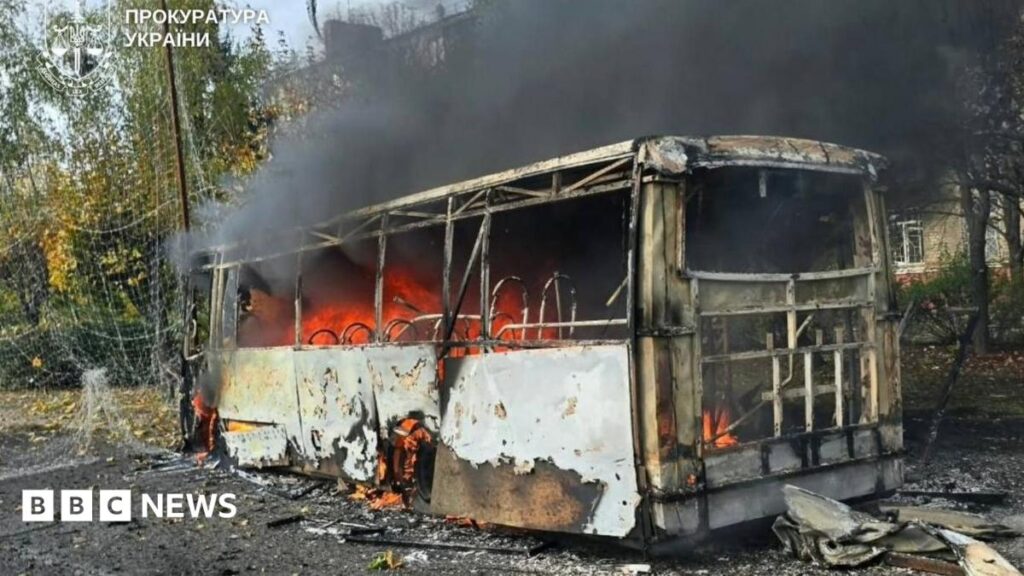
On the evening of October 8, two buses packed with commuters left a market area in Kramatorsk heading toward a nearby factory. According to local officials, a Russian missile hit the first bus as it stopped at a traffic light, igniting a fire that quickly spread to the second vehicle parked behind it. Emergency responders reported at least 30 dead and dozens more injured, many with severe burns.
Witnesses told reporters that the explosion was deafening and that the blast ripped through the windows, sending shrapnel into the passenger cabin. Ambulances struggled to reach the site because nearby roads were blocked by debris and ongoing shelling. The city’s mayor, Oleksandr Klymenko, declared a three‑day period of mourning and called the attack a “war crime against civilians.”
Russian authorities denied responsibility, claiming the strike hit a “military convoy” that had mistakenly been in the vicinity. However, satellite imagery released by the Institute for the Study of War shows the coordinates of the impact line up with the civilian bus route, contradicting the Kremlin’s narrative.
Why it matters: legal, humanitarian and strategic stakes
Targeting civilian transport violates the Geneva Conventions, which protect non‑combatants from indiscriminate attacks. International legal experts argue that the Kramatorsk strike could be classified as a war crime, potentially opening the door for investigations by the International Criminal Court (ICC) and the International Court of Justice (ICJ). The ICC’s Office of the Prosecutor has already opened a preliminary examination of alleged Russian attacks on civilian infrastructure.
Humanitarian groups warn that repeated strikes on buses and trains cripple the ability of NGOs to deliver aid. The United Nations World Food Programme (WFP) relies on road convoys to move grain and medical kits from distribution hubs in eastern Ukraine to remote villages. Each attack forces aid agencies to reroute supplies, increasing costs and delaying assistance to already vulnerable populations.
Strategically, the strike serves a dual purpose for Moscow: it terrorises civilians, eroding morale, and it hampers the Ukrainian economy by disrupting the flow of workers to factories that produce essential goods, including steel and agricultural equipment. The loss of even a single day's labor can ripple through supply chains that already face sanctions and export restrictions.
The African angle: grain security, diaspora shock and aid logistics
Ukraine supplies roughly 12% of the world’s wheat, a staple for many African nations that rely on cheap imports to keep bread prices stable. The World Bank estimates that a 10% drop in Ukrainian grain exports can raise cereal prices across sub‑Saharan Africa by up to 5%, hitting the poorest households hardest. Each attack that stalls transport routes in the Donbas region therefore has a direct line to food security on the continent.
The Ukrainian diaspora in Nigeria, Kenya and South Africa reacted with outrage on social media, organising vigils and fundraising drives for victims’ families. Community leaders say the strike deepens the sense of vulnerability that many diaspora members feel, especially those who have relatives still living in the conflict zone and who are unable to travel home for funerals or support.
African NGOs operating in Ukraine, such as the African Development Bank’s humanitarian wing and the Diaspora Relief Fund, have warned that the Kramatorsk attack could force a pause in field operations. Logistics teams that rely on bus routes to move volunteers between field offices now face heightened security assessments, potentially slowing down projects that address war‑related trauma among African refugees in Europe.
What’s next: investigations, sanctions and diplomatic pressure
The Ukrainian government has formally requested that the ICC issue arrest warrants for senior Russian commanders believed to have authorized the strike. Kyiv’s prosecutor general, Iryna Venediktova, said evidence—including radar data and survivor testimonies—will be submitted to The Hague within weeks. If warrants are issued, they could complicate Russia’s diplomatic outreach to non‑Western partners, many of whom are already wary of being seen as complicit in war crimes.
Western capitals are likely to respond with a new wave of sanctions targeting the Russian defence sector, especially firms that produce the missile systems implicated in the attack. The European Union’s recent “war‑crimes sanction regime” already allows for asset freezes on individuals linked to civilian attacks, and lawmakers in Brussels have signalled they will expand the list after the Kramatorsk incident.
On the ground, Ukraine is expected to bolster air‑defence coverage around transport hubs in the Donetsk region, allocating additional Patriot batteries and mobile anti‑drone units. While this may reduce the frequency of similar strikes, analysts caution that the underlying doctrine of targeting civilian mobility is unlikely to change without a broader political settlement.
Quick Answers
How many people were killed in the Kramatorsk bus strike?
Local officials confirmed that at least 30 civilians died in the missile attack on two buses in Kramatorsk on October 8, 2026.
Why does the Kramatorsk attack matter for African countries?
Ukraine supplies a large share of the world’s wheat; disruptions to its transport network can raise grain prices in Africa, threatening food security for millions.
What legal steps is Ukraine taking after the strike?
Ukraine has asked the International Criminal Court to issue arrest warrants for Russian commanders it says ordered the attack, providing radar data and witness statements as evidence.
Source: www.bbc.co.uk




💬 Comments 0