Russian strikes on Kyiv’s Northern Bridge March 2026: why the attacks matter for Ukraine and African food security
The strategic role of Kyiv’s bridge network
Kyiv’s river crossings over the Dnipro have always been more than just roadways; they are the city’s circulatory system, linking the historic centre with suburbs, industrial zones and the main supply routes from the west. Before the war, the Northern (or Paton) Bridge handled roughly 40% of daily commuter traffic and was a key conduit for humanitarian aid and commercial freight entering the capital.
Since February 2022, Russian forces have repeatedly tried to sever these arteries, aiming to cripple the Ukrainian defence’s mobility and to exert pressure on civilians. The pattern of targeting bridges, tunnels and overpasses has become a hallmark of the conflict, echoing tactics used in other wars where controlling or destroying transport links can dictate the pace of an offensive.
International observers note that each bridge carries symbolic weight as well. The Northern Bridge, built in the Soviet era and later renovated, represents Kyiv’s resilience. Its repeated damage sends a message that even the most vital infrastructure is vulnerable, feeding into the broader narrative of psychological warfare.
What happened on the second day of the strike
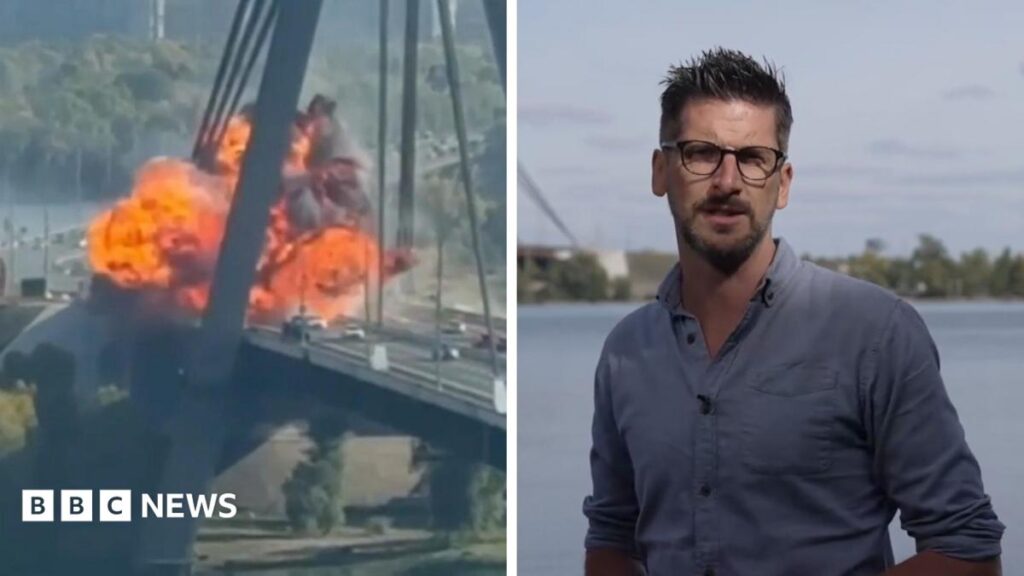
On the morning of 2 March 2026, Russian artillery and guided rockets struck the Northern Bridge for the second consecutive day, according to BBC correspondent Dan Johnson, who was on the ground near the damaged span. The first hit, recorded on 1 March, left a sizable crater in the central deck, forcing traffic to be rerouted to the older, more congested southern crossing.
The follow‑up strike targeted the same section, creating a second breach that collapsed a 15‑metre stretch of the roadway. Video footage shared on social media showed emergency crews working under heavy smoke, while local authorities issued an immediate ban on all vehicular traffic across the bridge.
Ukrainian officials confirmed that the attacks were part of a coordinated effort to disrupt supply lines ahead of a planned counter‑offensive in the north‑east. The Ministry of Defence released satellite imagery showing damage to the bridge’s support pillars, indicating that the munitions used were likely precision‑guided, a capability that Russia has increasingly showcased in recent months.
Why destroying bridges matters beyond the battlefield
Bridges are force multipliers in modern warfare. By disabling the Northern Bridge, Russian forces hoped to slow the movement of troops, heavy equipment and artillery that the Ukrainian army relies on to reinforce front‑line positions. The loss of a primary crossing forces logistics to shift to longer, more vulnerable routes, increasing fuel consumption and exposing convoys to ambushes.
For civilians, the impact is immediate and severe. The bridge’s closure has added an average of 45 minutes to daily commutes for thousands of workers, disrupted school transport, and limited access to hospitals on the opposite bank. Humanitarian organisations have warned that the bottleneck could delay the delivery of medical supplies and food, especially as winter temperatures dip lower than usual this year.
Strategically, repeated attacks on infrastructure signal a shift from purely territorial battles to a war of attrition aimed at eroding public morale. As the United Nations notes, sustained damage to critical civil assets can accelerate internal displacement, creating a secondary crisis that stretches the capacity of both local and international aid systems.
The ripple effect on African markets and the diaspora
Ukraine is a top global exporter of wheat, corn and sunflower oil—commodities that feed millions across Africa. The Dnipro river, which the Northern Bridge spans, also serves as a corridor for grain shipments heading to Black Sea ports. Disruptions to Kyiv’s transport network delay the inland movement of grain to ports such as Odesa and Chornomorsk, tightening the supply chain that African importers depend on.
According to a report from the International Grains Council released in early March, the repeated strikes on Ukrainian infrastructure have already shaved 1‑2 million tonnes off projected export volumes for the 2026 harvest. For countries like Nigeria, Egypt and Kenya, which import up to 30% of their wheat from Ukraine, even a modest shortfall can push local bread prices upward by 5‑8%, exacerbating inflationary pressures that already strain household budgets.
The African diaspora in Ukraine, though a small community, feels the shockwaves directly. Several Ukrainian‑based Nigerian and Ghanaian entrepreneurs who run food‑processing firms have reported delays in receiving raw grain, threatening production schedules and employment for local staff. Moreover, the heightened risk of further attacks has prompted some diaspora members to consider repatriation, adding a new dimension to migration patterns that African consulates are now monitoring closely.
International response and what comes next for Kyiv
NATO allies have condemned the strikes as violations of international humanitarian law, urging Russia to cease targeting civilian infrastructure. The United States announced a $150 million package in late February to fast‑track the repair of Kyiv’s bridges, including the deployment of rapid‑construction units equipped with modular bridge components.
Ukraine’s Ministry of Infrastructure outlined a three‑phase reconstruction plan: immediate emergency shoring, a mid‑term phase using pre‑fabricated steel sections, and a long‑term upgrade that will incorporate flood‑resistant designs. The plan, slated for completion by the end of 2027, hinges on sustained funding from the European Investment Bank and private sector partners.
Analysts caution that while reconstruction can restore physical connectivity, the psychological scar of repeated attacks may linger. Community leaders in Kyiv’s northern districts are organising “bridge vigils” to keep public attention on the human cost of infrastructure warfare, a tactic that mirrors similar grassroots movements seen in South‑African townships during the apartheid era.
Quick Answers
Which Kyiv bridge was hit by Russian strikes on 1‑2 March 2026?
The Northern (Paton) Bridge over the Dnipro River was struck on both days, creating two separate breaches.
How do the bridge attacks affect food security in Africa?
Damage to Kyiv’s transport links slows grain movement to Black Sea ports, reducing Ukrainian export volumes and pushing up wheat prices in African importing countries.
What is Ukraine doing to repair the damaged bridge?
Ukraine has launched a three‑phase reconstruction plan that includes emergency shoring, modular steel replacements, and a long‑term upgrade, backed by NATO and EU funding.
Source: www.bbc.co.uk




💬 Comments 0