Sabah FC’s 2026 Champions League debut: How the Azerbaijani club from the Iranian border qualified
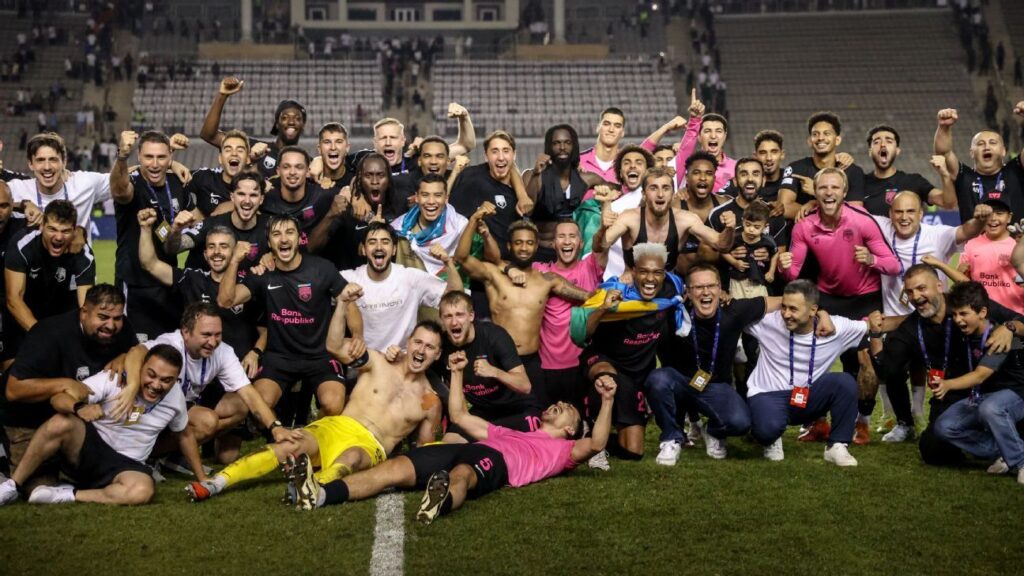
From obscurity to Europe’s biggest stage
When Sabah FC first appeared on the Azerbaijani football map a little over a decade ago, few imagined the club would be rubbing shoulders with Europe’s elite. Founded in 2017 after a merger of two regional outfits, the team quickly climbed the domestic ladder, securing promotion to the Premier League in 2020. Their rapid rise was powered by a mix of savvy local investment and an ambitious recruitment policy that favoured young talent from the Caucasus and beyond.
The 2025‑26 season proved decisive. Finishing second in the Azerbaijan Premier League – their highest ever league position – earned Sabah a place in the UEFA Champions League qualifying rounds, a slot usually reserved for clubs from traditional powerhouses like Spain or England. Their qualification was sealed after a dramatic 3‑2 aggregate win over Belarusian side BATE Borisov, a club with a long history of European competition.
According to UEFA’s official match report, Sabah’s success hinged on a compact defensive shape and the clinical finishing of their forward, Nigerian striker Chukwudi Nwankwo, who netted a late equaliser in the second leg. Nwankwo’s contribution highlights the growing role of African players in clubs that are otherwise off the radar of major European leagues.
The quirky back‑story of a Lithuanian‑inspired coach
Sabah’s head coach, Valdas Dambrauskas, is as unconventional as the club’s ascent. Before stepping into football management, Dambrauskas worked as a television presenter on a Lithuanian quiz show called "Klausimų Karalius" (King of Questions). He later admitted in an interview with LRT that the show taught him how to think several moves ahead – a skill he now applies on the touchline.
His coaching résumé began in the lower tiers of Lithuanian football, where he earned a reputation for turning under‑funded squads into over‑performers. In 2021, he was recruited by Sabah’s sporting director, who was impressed by a video of Dambrauskas delivering a tactical masterclass on a live‑streamed quiz‑show panel. The appointment was initially dismissed as a publicity stunt, but the results have silenced skeptics.
Dambrauskas’ emphasis on disciplined pressing and quick transitions has resonated with Sabah’s squad, many of whom are still adapting to the rigours of European competition. His ability to speak multiple languages – Lithuanian, Russian, and English – also aids communication with the club’s diverse roster, which includes several players from Nigeria, Ghana, and the Democratic Republic of Congo.
Why Sabah’s Champions League spot matters beyond the pitch
The financial windfall from a Champions League campaign can be transformative for clubs from smaller leagues. UEFA distributes roughly €15 million to teams that reach the group stage, a sum that dwarfs the annual budgets of most Azerbaijani clubs. For Sabah, this injection could fund stadium upgrades, youth academy expansion, and a more competitive wage bill to retain emerging African talent.
Moreover, the exposure on a global platform raises the club’s brand value, attracting sponsors from the Gulf region and beyond. Early reports suggest that a Dubai‑based logistics firm is already in talks to become the main shirt sponsor, a deal that could bring an additional €2 million per season, according to a source close to the negotiations.
From a sporting perspective, the experience of facing teams like FC Barcelona – the club’s group‑stage opponent – offers invaluable learning for both players and coaching staff. It also puts Azerbaijani football under a brighter spotlight, potentially encouraging UEFA to allocate more development funds to the region, a move that could benefit neighbouring nations with similar footballing aspirations.
A pattern of ‘new‑comer’ clubs breaking into Europe’s elite
Sabah’s story is part of a broader trend where clubs from non‑traditional football markets are cracking the Champions League code. In the last five years, clubs such as FC Midtjylland (Denmark), Union Saint‑Gilloise (Belgium), and FC Sheriff Tiraspol (Moldova) have all reached the group stage, challenging the monopoly of the big‑five leagues.
Analysts at Deloitte’s Football Money League note that UEFA’s revised coefficient system, which rewards consistency over a longer period, has opened doors for clubs that invest wisely in scouting and data‑driven tactics. This shift aligns with the rise of analytics‑focused managers like Dambrauskas, who blend traditional coaching with modern performance metrics.
For African players, the emergence of such clubs creates alternative pathways to Europe. While the Premier League and Ligue 1 remain the most coveted destinations, clubs like Sabah can offer regular playing time, exposure to continental competition, and a stepping‑stone to larger markets. This diversification may also reduce the pressure on African talent pipelines that traditionally flow through a handful of European powerhouses.
What’s next for Sabah and its supporters?
Sabah’s immediate task is to navigate a challenging group that includes Barcelona, Shakhtar Donetsk, and a surprise qualifier from the Turkish Süper Lig. Their realistic aim, according to the club’s sporting director, is to finish third and secure a place in the Europa League knockout phase – a target that would still guarantee substantial revenue and further European experience.
Fans in the town of Qusar, close to the Iranian border, have already begun travelling in droves, organizing caravans and fundraising events to cover transport costs. The local municipality announced a free‑ticket scheme for schoolchildren, hoping to inspire the next generation of Azerbaijani footballers.
Beyond the season, the club’s long‑term vision includes establishing a fully accredited academy that will partner with African football schools. The aim is to create a pipeline that benefits both regions: African youngsters gain European exposure, while Sabah cultivates a unique identity rooted in multicultural talent.
Quick Answers
How did Sabah FC qualify for the 2026 Champions League?
Sabah finished second in the Azerbaijan Premier League and won their qualifying round tie against BATE Borisov, securing a group‑stage spot.
What impact will Champions League revenue have on Sabah FC?
The expected €15 million UEFA payout can fund stadium upgrades, youth development, and higher wages, dramatically boosting the club’s financial stability.
Why is Sabah’s rise significant for African footballers?
Sabah offers a new European platform for African players, providing regular top‑level competition and a possible springboard to larger leagues.
Source: www.espn.com




💬 Comments 0