Serbia elections 2026: Record turnout as student movement challenges Aleksandar Vučić
A decade of Vučić’s dominance
Since first becoming prime minister in 2014 and later president, Aleksandar Vučić has steered Serbia through a blend of economic reforms and tight media control, consolidating power through a mix of nationalist rhetoric and promises of EU integration. His Serbian Progressive Party (SNS) has won every national election since 2012, often with margins that left little room for opposition voices.
Critics argue that Vučić’s rule has eroded democratic checks, citing the curtailment of independent journalism, the use of state resources for campaign purposes, and the marginalisation of civil‑society groups. International observers have repeatedly flagged Serbia’s electoral framework as “unlevel”, though the country still scores higher on democratic indices than many of its Balkan neighbours.
The upcoming vote marks the first time since 2012 that a sizable, organised student movement has entered the political arena with a concrete agenda to unseat the incumbent. Their emergence reflects a growing fatigue among younger Serbians who have not seen the promised EU accession or tangible improvements in job prospects.
The student uprising: From classrooms to the ballot box
The movement, dubbed “Nova Generacija” (New Generation), began in late 2024 as a series of campus protests against tuition hikes and alleged corruption in university funding. By mid‑2025, the group had broadened its platform to include electoral reform, media freedom, and a transparent path toward EU membership.
Using social media platforms like TikTok and Telegram, Nova Generacija mobilised thousands of volunteers to register voters, distribute leaflets in Belgrade’s bustling neighborhoods, and host live‑streamed town halls. Their digital savvy helped overcome the state‑run media’s limited coverage, turning the campaign into a viral phenomenon that resonated with urban youths and disillusioned middle‑class voters.
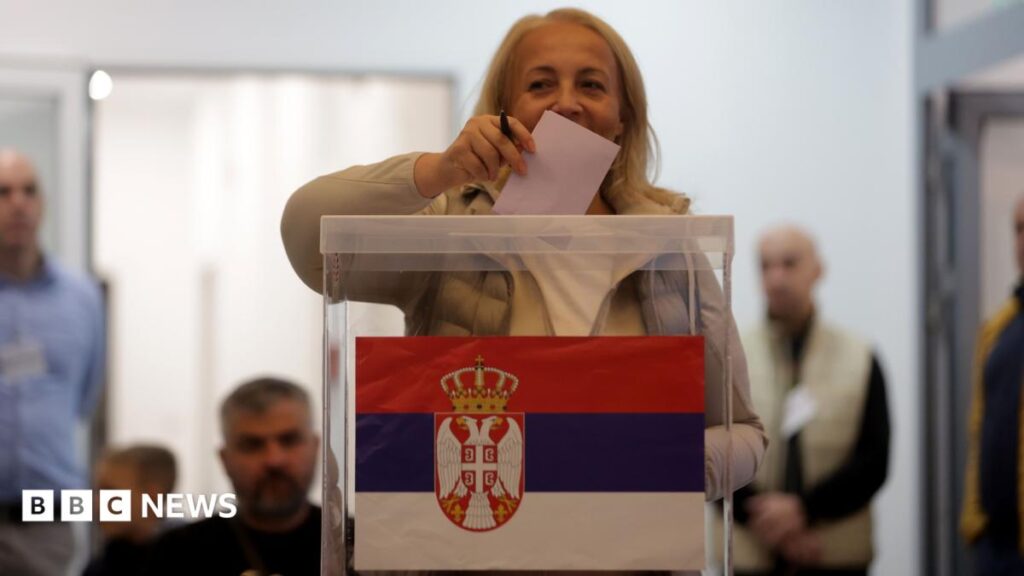
Official preliminary data released by the Republic Electoral Commission shows a turnout of 78 % – the highest since the multi‑party elections of 2000. While the exact vote share for each party will be confirmed next week, early exit polls suggest that the student‑backed coalition, running under the banner “Future Serbia”, could secure a parliamentary foothold for the first time.
Regional stakes and the EU accession roadmap
Serbia’s political direction is a linchpin for the Western Balkans’ stability. A shift away from Vučić could accelerate negotiations with the European Union, which has long used Serbia’s reform agenda as a barometer for enlargement. Conversely, a hard‑line victory for the SNS might deepen scepticism in Brussels about the bloc’s capacity to enforce democratic standards.
Neighbouring countries such as Bosnia‑Herzegovina and North Macedonia watch the Serbian vote closely. A more reform‑oriented government could inspire similar youth‑led movements across the region, potentially reshaping the political calculus in the Balkans. Analysts at the European Council on Foreign Relations note that “the Serbian electorate’s appetite for change may ripple through the entire Western Balkans, redefining the EU’s strategic approach to the area.”
The United States, which maintains a military training presence in Serbia, has also signalled interest. A Washington‑friendly administration in Belgrade could pave the way for increased security cooperation, especially as the region navigates the lingering effects of the Russia‑Ukraine war and energy supply challenges.
Why African students and investors should care
Belgrade has become a hub for African students pursuing degrees in medicine, engineering and the arts, thanks to relatively low tuition fees and Serbia’s open visa policy. According to the Serbian Ministry of Education, more than 4,000 African nationals were enrolled in Serbian universities in the 2023‑24 academic year, a figure that has risen steadily since 2018.
The student movement’s emphasis on academic freedom and transparent funding directly impacts these scholars. A government that loosens its grip on university budgets could improve research grants, expand English‑language programmes, and reduce bureaucratic hurdles that many African students currently face when validating their credentials abroad.
Beyond academia, Serbian firms are increasingly looking to Africa for raw materials and market expansion. Companies like Telekom Srbija have launched pilot projects in Kenya and Nigeria, while Serbian agribusinesses export wheat and dairy to the continent. Political stability and a clearer EU trajectory could attract more foreign direct investment, benefitting both Serbian exporters and African importers seeking reliable partners.
What lies ahead: coalition talks and international reactions
If the “Future Serbia” list fails to achieve an outright majority, the next few weeks will be dominated by coalition negotiations. Potential allies include the centrist Party of Freedom and Justice (SSP) and the green‑oriented “Together” bloc, both of which have expressed willingness to work with younger reformists. A coalition that excludes Vučić’s SNS would likely demand a constitutional amendment to limit presidential powers and schedule early local elections.
International reaction has been cautiously optimistic. The EU’s ambassador to Belgrade, after a brief press conference, said “the high voter engagement signals a healthy democratic impulse that we hope will translate into concrete reforms.” The African Union’s diplomatic mission in Serbia, represented by Ambassador Amina Diop, issued a statement urging “all parties to respect the will of the electorate and safeguard the rights of foreign students and investors.”
Regardless of the final outcome, Serbia’s 2026 election will be remembered as a turning point: a moment when a generation of digitally connected youths challenged an entrenched political order, and a signal to the wider region that democratic renewal is still possible, even in environments long dominated by a single leader.
Quick Answers
What was the voter turnout in Serbia’s 2026 election?
Preliminary figures show a record 78 % turnout, the highest since the 2000 multi‑party elections.
Who is leading the student movement challenging Aleksandar Vučić?
The movement is called Nova Generacija (New Generation) and is coordinated by a coalition of university students and young activists.
How could the election outcome affect African students in Serbia?
A reform‑focused government may improve university funding, expand English‑language programmes, and ease bureaucratic hurdles for African scholars.
Source: www.bbc.co.uk



💬 Comments 0