South Africa 2026 election vote count: record 29.2 million voters, ANC vs DA stakes
Background: a tightly contested election
South Africa’s 2026 general election is shaping up as one of the most consequential in the nation’s post‑apartheid history. The African National Congress (ANC) has seen its support erode over the past two cycles, while the Democratic Alliance (DA) and the newly formed Economic Freedom Fighters (EFF) have made significant inroads, especially among younger, urban voters. The election follows a period of economic stagnation, rising electricity blackouts, and contentious land‑reform debates that have polarized the electorate.
The voter registration drive, overseen by the Independent Electoral Commission (IEC), hit a historic high of 29.2 million eligible voters, surpassing the previous record set in 2019. This surge reflects both a renewed civic engagement after the pandemic and the IEC’s aggressive outreach in rural townships and informal settlements. For the first time, more than half of South Africa’s 60‑million‑strong population is officially on the electoral roll, raising expectations that the results will carry a strong legitimacy mandate.
The counting process and its challenges
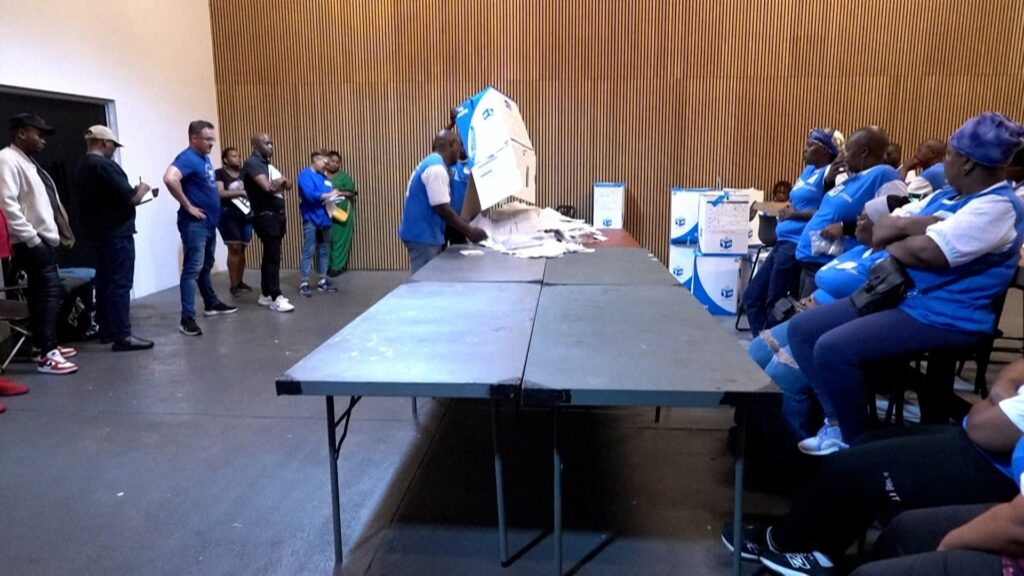
Counting began on the night of 8 November, with results streamed live from the IEC’s central hub in Pretoria. The commission has deployed over 15,000 volunteers and introduced a new electronic tally system intended to speed up the aggregation of results from the country’s 3,000+ polling stations. However, logistical bottlenecks remain, especially in the Eastern Cape and Limpopo, where power outages and internet instability have delayed data uploads.
Observers from the Southern African Development Community (SADC) and local NGOs have warned that any technical glitches could be exploited by political actors to sow doubt about the outcome. The IEC has therefore pledged a transparent audit trail, allowing party agents to inspect ballot boxes and verify electronic tallies. While the process is largely on schedule, the final certification of results is not expected until 15 November, leaving a window for legal challenges.
Why the outcome matters for South Africa and the continent
The stakes extend far beyond the domestic balance of power. South Africa remains the continent’s largest economy, a key driver of the African Continental Free Trade Area (AfCFTA) and a major source of foreign direct investment for the region. A stable, reform‑oriented government could accelerate infrastructure projects that are critical for cross‑border trade, such as the North Sea‑to‑South railway corridor and the expansion of the Port of Durban.
Conversely, a hung parliament or a coalition led by the EFF could shift policy toward more radical land redistribution and nationalisation of key sectors. Such moves would likely trigger capital flight, increase borrowing costs, and could ripple through neighbouring markets that depend on South African financial institutions. Investors in Nigeria, Kenya and Ghana watch the vote count closely, as South Africa’s credit rating often sets a benchmark for sovereign risk assessments across Sub‑Saharan Africa.
Reactions from business, civil society and the diaspora
South Africa’s corporate sector, represented by the Business Unity South Africa (BUSA) lobby, has issued a joint statement urging the IEC to complete the count swiftly and transparently, warning that prolonged uncertainty could jeopardise the country’s $30 billion in pending infrastructure contracts. Meanwhile, labour unions such as COSATU have mobilised supporters to monitor polling stations, citing fears of voter suppression in historically disadvantaged townships.
The African diaspora, particularly the sizable South African community in the United Kingdom and Australia, has taken to social media to demand a clear timeline for the final results. Diaspora remittances, which account for roughly 2 % of South Africa’s GDP, could be affected if political instability leads to a depreciation of the rand. Community leaders are also lobbying their host‑country governments to recognise any potential sanctions or travel advisories that may follow a contested outcome.
What comes next: scenarios and timelines
If the ANC retains a slim majority, analysts expect a continuation of President Cyril Ramaphosa’s moderate reform agenda, with a focus on stabilising the energy sector and negotiating a revised land‑reform bill that balances redistribution with investor confidence. A DA‑led coalition, though unlikely, would probably push for faster liberalisation of the telecoms market and stricter fiscal discipline, appealing to business interests but risking backlash from rural constituencies.
Should the EFF or other smaller parties become king‑makers, South Africa could see a coalition government that prioritises aggressive social spending and a faster rollout of state‑owned enterprises. This scenario would likely trigger a reassessment of credit ratings by agencies such as Moody’s and S&P, potentially raising borrowing costs for the whole Southern African region. In any case, the IEC has promised a post‑election audit period of ten days, after which the final, certified results will be published and the new National Assembly sworn in.
Quick Answers
When will South Africa’s final 2026 election results be announced?
The Independent Electoral Commission expects to certify and release the final results by 15 November 2026.
Which parties are the main contenders in the 2026 South African election?
The African National Congress (ANC), the Democratic Alliance (DA) and the Economic Freedom Fighters (EFF) are the three largest parties contesting the vote.
How could the election outcome affect the African Continental Free Trade Area?
A stable, pro‑business government would likely accelerate AfCFTA‑related infrastructure projects, while a radical coalition could raise regional trade risks and increase borrowing costs.
Source: www.aljazeera.com




💬 Comments 0