South Africa femicide vigil at UCT 2026 protests surge of 1,000 women killed yearly
A crisis that has become the norm
South Africa’s femicide rate has been climbing for more than a decade, with the latest government statistics showing that roughly one woman is murdered every 10 hours. In 2025 the country recorded 1,026 female homicide victims, a figure that eclipses the combined totals of many neighbouring nations. The phenomenon is not limited to isolated murders; it is part of a broader pattern of gender‑based violence that includes intimate‑partner abuse, sexual assault and forced disappearances.
Experts point to a mix of socio‑economic pressures, entrenched patriarchy and a criminal justice system that often fails to prosecute perpetrators. According to the Centre for the Study of Violence and Reconciliation, conviction rates for femicide cases hover below 30 percent, feeding a sense of impunity that emboldens offenders. The crisis has also taken a heavy toll on the mental health of communities, with women reporting heightened fear of everyday activities such as walking to work or using public transport.
The University of Cape Town vigil: what unfolded
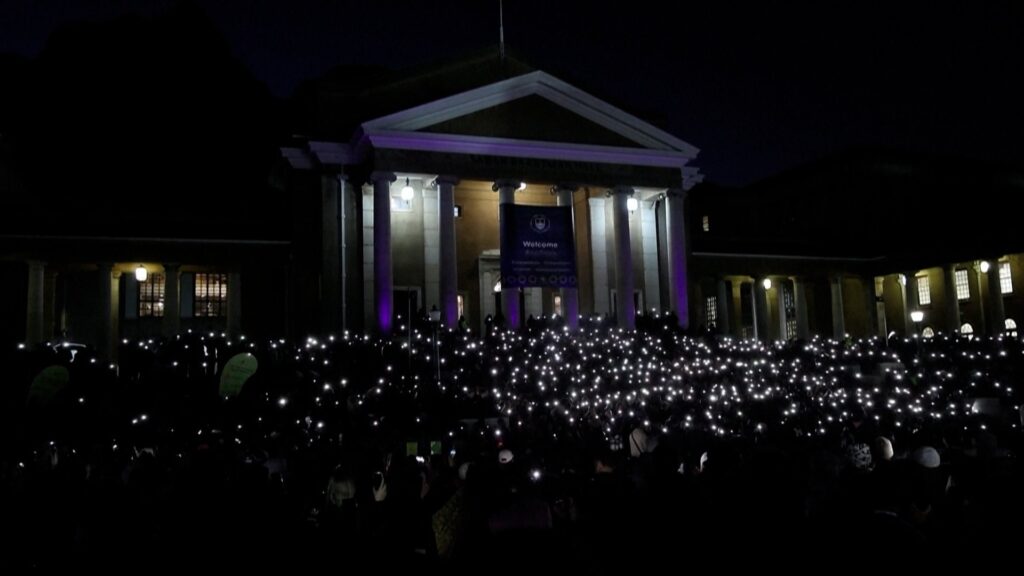
On Friday, 19 September 2026, the campus of the University of Cape Town (UCT) became the focal point of a massive gathering. Hundreds of students, activists, artists and ordinary citizens assembled on the iconic Upper Campus to light candles, read the names of victims and demand urgent action. Organisers, a coalition of campus gender‑rights groups and the national network #EndFemicideNow, had called the vigil a week after the murder of 23‑year‑old student Lindiwe Mthembu, whose case had sparked a wave of social media outrage.
The event was deliberately timed to coincide with the university’s annual graduation ceremony, a symbolic gesture meant to underline that the celebration of academic achievement cannot be separated from the grim reality that many young women face on the same streets. Speakers included Professor Nompumelelo Dlamini of UCT’s Department of Gender Studies, who warned that “the university’s walls are only as safe as the society that surrounds them.”
Why the protest matters beyond campus walls
The UCT vigil is part of a growing national movement that seeks to shift femicide from a statistic to a political priority. While previous protests have been sporadic, this gathering signalled a new level of coordination between academic institutions, civil‑society NGOs and grassroots community leaders. By staging the vigil at a globally recognised university, organisers amplified their message to both local media and international observers, increasing pressure on policymakers who have so far been criticised for slow, reactive measures.
In practical terms, the protest has already sparked a series of policy proposals. The Department of Women, Youth and Persons with Disabilities announced a draft amendment to the Criminal Law (Sexual Offences and Related Matters) Amendment Bill, aiming to tighten sentencing guidelines for gender‑based murders. Moreover, a coalition of private sector partners, including several South African banks, pledged R50 million to fund community‑based safety hubs in high‑risk townships.
Reactions from government, NGOs and the public
President Cyril Ramaphosa’s office released a statement the following day, expressing “deep sorrow” and promising a “comprehensive review of all gender‑based violence interventions.” However, opposition parties and feminist organisations dismissed the response as “political window‑dressing,” noting that similar promises were made after the 2018 #BringBackOurGirls protests with little substantive change.
Non‑governmental organisations such as the Women’s Legal Centre and the South African Human Rights Commission held a joint press conference, demanding the establishment of a national femicide registry and the deployment of rapid‑response forensic teams. Social media reactions were equally polarized: while many South Africans lauded the vigil as a courageous stand, some commentators on right‑leaning platforms framed the event as an attack on traditional family values, arguing that the focus should be on “law‑and‑order” rather than gender politics.
What comes next: legislative, community and continental implications
The immediate next step is the parliamentary debate on the proposed amendment to the sexual offences legislation, scheduled for early 2027. If passed, the law would introduce mandatory minimum sentences for femicide and create a specialised court docket for gender‑based crimes. Civil society groups are already preparing to monitor the implementation, fearing that new laws could be undermined by entrenched police corruption.
Beyond South Africa, the vigil resonates across the continent. Countries such as Kenya, Nigeria and Ghana have reported similar spikes in femicide, and regional bodies like the African Union are expected to reference the UCT protest in upcoming discussions on the Continental Action Plan on Gender‑Based Violence. For diaspora communities, especially South Africans living abroad, the event has reignited calls for transnational advocacy networks that can pressure both home‑country authorities and host‑nation policymakers to recognise gender‑based violence as a cross‑border human‑rights issue.
Quick Answers
What triggered the femicide vigil at the University of Cape Town in September 2026?
The vigil was organised after the murder of UCT student Lindiwe Mthembu and to protest the national surge of over 1,000 women killed annually.
How many women are murdered in South Africa each year?
Official data for 2025 recorded 1,026 female homicide victims, roughly one woman killed every 10 hours.
What policy changes are being discussed after the UCT protest?
Lawmakers are debating a draft amendment to increase minimum sentences for femicide and create a specialised court docket for gender‑based crimes.
Source: www.aljazeera.com




💬 Comments 0