Spain train crash audio leak shows clearance error despite stalled train, 2026 investigation
Background: Spain’s rail network and the February 2026 collision
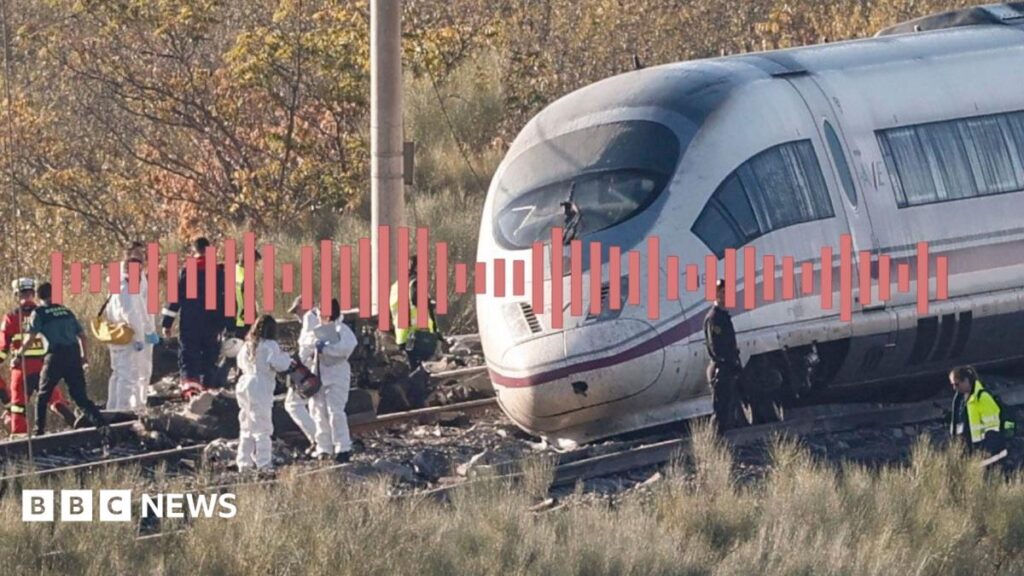
On February 12, 2026, two high‑speed trains collided on the Madrid‑Barcelona line near the town of Lleida, killing 12 people and injuring dozens more. The line, part of Spain’s AVE system, is one of the busiest in Europe, moving over 200,000 passengers a day. The crash sparked immediate calls for answers, as the incident was the deadliest on the country’s modern rail network since the 2003 Alvia derailment.
The first train, a Class 102 AVE unit, had stalled after a technical fault and was waiting on a single‑track section while a second train, a newer Class 104, approached from the opposite direction. Standard operating procedures require the control centre to hold the second train until the stalled unit is cleared. However, the exact sequence of commands remained unclear, prompting a rapid investigation by the Comisión de Investigación de Accidentes Ferroviarios (CIAF).
In the weeks that followed, the CIAF released a preliminary report confirming that the collision was not caused by mechanical failure on the moving train, but by a human error in the dispatch process. The report also noted that the control centre’s communication logs were incomplete, fueling speculation about possible procedural shortcuts or system glitches.
What the leaked audio reveals about the dispatch decision
A recording that surfaced on a social media platform on October 20 shows a conversation between the control centre operator and the driver of the second train. In the exchange, the operator appears to give the green light to proceed, saying “track clear, you may go ahead,” even as the driver of the stalled train is heard reporting a loss of traction and requesting assistance.
The audio captures a brief pause before the operator repeats the clearance, suggesting a moment of doubt that was quickly overridden. Analysts say the tone and timing are consistent with a “push‑through” decision, a practice sometimes used to keep high‑speed services on schedule, but one that bypasses safety buffers built into the signalling system.
Experts from the European Railway Agency (ERA) have pointed out that the recording contradicts the official narrative that the operator was waiting for confirmation that the stalled train had moved. If the audio is authentic, it could indicate a systemic pressure to prioritize punctuality over safety, a concern that regulators have warned about across the EU.
Why the leak matters: safety culture, regulatory oversight and public trust
The leaked audio reignites a debate that has simmered since the 2013 derailment in Valencia, where a similar “schedule‑first” mindset was blamed for a fatal crash. Advocacy groups argue that the Spanish rail system, despite its modern infrastructure, still suffers from a hierarchical culture where operators feel compelled to obey directives without questioning them, even when safety is at stake.
If the control centre’s decision was indeed driven by a desire to avoid delays, it could expose gaps in Spain’s compliance with the European Union’s Safety Management System (SMS) requirements. The SMS mandates that risk assessments be documented and that any deviation from standard procedures be reported and reviewed. A failure to do so could lead to fines from the European Commission and trigger a broader audit of high‑speed operations across member states.
Public confidence has already been shaken, with passenger numbers on the AVE line dropping 4% in the month after the crash, according to data from the Ministry of Transport. Restoring trust will require transparent investigations, possible disciplinary actions, and a clear demonstration that safety overrides commercial pressures.
The African angle: implications for rail projects and diaspora commuters
Spain’s high‑speed network has been a reference model for several African rail initiatives, including Kenya’s Standard Gauge Railway (SGR) and Nigeria’s Lagos‑Ibadan high‑speed corridor, both of which have consulted Spanish engineering firms. A safety lapse in the country that supplies design expertise could prompt African ministries to reassess the risk frameworks embedded in their own contracts.
Diaspora commuters also feel the ripple effect. Over 1.5 million Nigerians and other West Africans travel to Spain each year, many relying on the AVE for rapid connections between airports and city centres. A perceived safety issue could deter travel, affecting tourism revenue that supports both Spanish and African economies. Moreover, investors from African sovereign wealth funds who have stakes in European rail assets may demand stricter governance clauses after the leak.
Finally, the incident underscores a broader trend: African rail authorities are increasingly adopting European signalling standards such as the European Train Control System (ETCS). The audio leak raises the question of whether the technology alone is enough, or if cultural and organisational reforms must accompany technical upgrades to prevent similar tragedies on the continent.
What’s next: investigations, reforms and possible EU action
The CIAF has announced that a full technical and procedural audit will be completed by March 2027, with findings to be presented to the Ministry of Transport and the European Railway Agency. The audit will examine not only the dispatcher’s decision‑making but also the integrity of the digital logs that appeared missing from the initial report.
In parallel, the ERA is expected to launch a cross‑border safety review of all high‑speed lines that use the same signalling software as Spain’s AVE. Sources say the review could result in mandatory updates to operator training modules and the introduction of an independent “safety override” button that allows drivers to halt a train even after receiving clearance, a safeguard that was missing in the 2026 crash.
Political pressure is also mounting. Opposition parties in the Spanish parliament have called for the resignation of the rail ministry’s chief executive, while labor unions are demanding a moratorium on any schedule‑based incentives for dispatch staff. If the investigation confirms that commercial pressure influenced the clearance, Spain could face both domestic reforms and EU‑level penalties, setting a precedent for how safety breaches are handled in the continent’s integrated rail system.
Quick Answers
What caused the Spain train crash on February 12, 2026?
The collision occurred because a control centre operator cleared a second high‑speed train to proceed while a first train was stalled on the same track, a decision captured in a leaked audio recording.
How might the Spain crash affect African rail projects?
African countries that rely on Spanish engineering expertise may tighten safety clauses in contracts, and the incident could prompt a review of training and governance standards for projects using European signalling technology.
When is the full investigation report expected?
The CIAF has said the comprehensive audit will be finished by March 2027, with results to be shared with Spanish authorities and the European Railway Agency.
Source: www.bbc.co.uk




💬 Comments 0