Stephen Hubbard released by Russia after 2‑year detention, Trump says he’s on his way home – 2026
Background: How Stephen Hubbard ended up in Russian custody
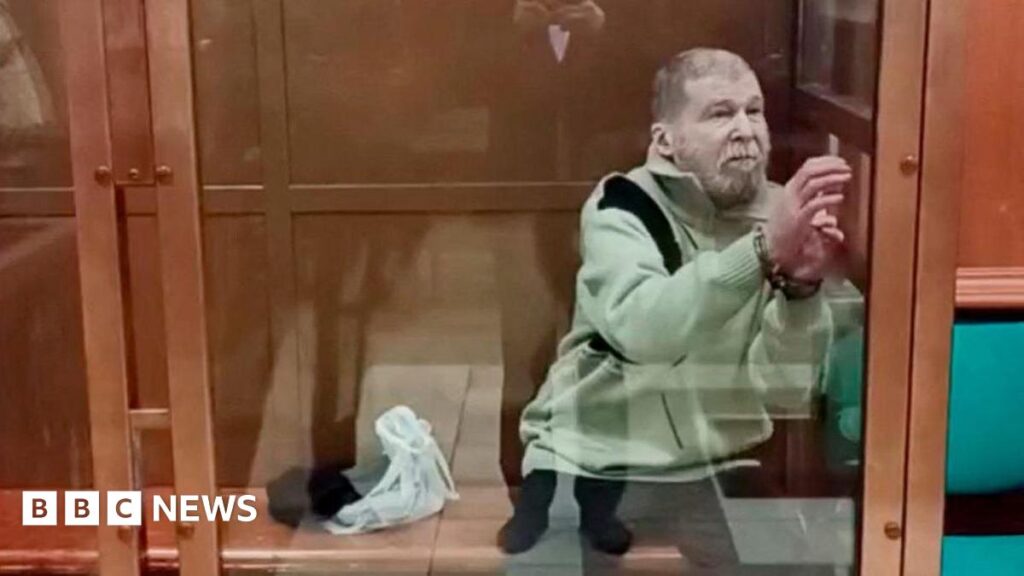
Stephen Hubbard, a 45‑year‑old former high‑school teacher from Ohio, was arrested in Moscow in March 2024 on charges of “espionage” after Russian authorities claimed he had been photographing a military installation. The U.S. State Department consistently called the accusations baseless, noting that Hubbard was in the city on a cultural exchange program organized by a non‑profit that promotes American literature abroad.
His detention quickly became a flashpoint in the already fraught U.S.–Russia relationship, which has been strained by sanctions over the Ukraine conflict and a series of cyber‑espionage accusations. Washington’s diplomatic teams repeatedly sought consular access, but Moscow limited Hubbard’s communication with his family, fueling criticism from human‑rights groups and the American public.
The release: What the president announced and how it happened
On October 20, 2026, President Donald Trump told reporters that Hubbard had been freed by Russian authorities without any prisoner‑swap deal. “He’s on his way home,” Trump said, adding that the administration had “worked very hard” behind the scenes. The White House later released a brief statement confirming that the U.S. had received “formal confirmation from the Russian Ministry of Foreign Affairs” that Hubbard would be allowed to leave the country within 24 hours.
Sources close to the negotiations, speaking to The Washington Post, said that senior officials in the State Department had leveraged a pending sanctions waiver on a Russian energy firm as informal pressure. Kremlin spokesperson Dmitry Peskov, however, denied that any concessions were made, insisting the decision was “based on the lack of evidence against Mr. Hubbard.”
Why the release matters for U.S.–Russia diplomatic dynamics
The episode underscores a subtle shift in how Washington and Moscow manage high‑profile detentions. While previous cases—such as the 2022 release of journalist Evan Gershkovich—required explicit swaps, Hubbard’s freedom appears to have been achieved through a combination of diplomatic pressure and a quiet willingness by Russia to avoid further isolation.
Analysts at the Brookings Institution argue that the outcome could signal a tentative opening for back‑channel talks on broader issues, including the stalled New START treaty. Yet, they caution that one goodwill gesture does not erase the deep mistrust that still defines the bilateral relationship, especially as both sides continue to accuse each other of election interference.
Implications for African travelers, students, and diaspora in Russia
Although Hubbard’s case is not directly linked to Africa, the broader pattern of foreign nationals being detained on vague security grounds has reverberated across the continent. In 2025, two Kenyan journalists were briefly held in St. Petersburg on similar espionage allegations, prompting Kenya’s foreign ministry to issue travel advisories for its citizens in Russia.
The release may ease some of the anxiety felt by African students and professionals who often rely on Russian scholarships for engineering and scientific research. The African Union’s Department of Social Affairs has called for a “clear, transparent framework” that protects African scholars from arbitrary arrests, noting that the continent’s growing academic ties with Russian institutions could be jeopardized if the perception of risk remains high.
What’s next: U.S. policy on detained Americans and broader sanctions strategy
The State Department has signaled that it will review the mechanisms used to secure Hubbard’s release, with a view to institutionalising a rapid‑response team for Americans caught in politically sensitive detentions. A senior official, speaking on condition of anonymity, said the administration is drafting a “detention‑response playbook” that integrates diplomatic, legal and, when appropriate, covert options.
At the same time, Congress is debating a bill that would tie future sanctions relief for Russian energy firms to measurable improvements in the treatment of foreign detainees. If passed, the legislation could make Hubbard’s release a template for future negotiations, linking human‑rights concerns directly to economic levers.
Broader trend: The rise of ‘political detentions’ as leverage in great‑power rivalry
Hubbard’s case fits into a growing global pattern where authoritarian regimes use the arrest of foreign nationals as bargaining chips. Since 2020, more than a dozen Western citizens have been held in countries ranging from Iran to China, often on charges that lack transparent evidence. The practice has prompted a reevaluation of consular protection strategies worldwide.
For African governments, the trend presents a double‑edged sword. On one hand, the increasing use of detentions threatens the safety of African expatriates and investors in those jurisdictions. On the other, it offers an opening for African diplomatic corps to coordinate more closely with Western allies, leveraging collective pressure to secure releases and push for stronger international norms against arbitrary arrests.
Quick Answers
Why was Stephen Hubbard detained in Russia?
He was arrested in March 2024 on alleged espionage charges after Russian authorities claimed he photographed a military site, a claim the U.S. says is unfounded.
Did the United States trade anything for Hubbard’s release?
According to the White House, no formal prisoner swap occurred; officials suggest diplomatic pressure and a pending sanctions waiver may have influenced the decision.
How does Hubbard’s release affect African students studying in Russia?
It may reduce fears of arbitrary detention, but African governments still urge clearer protections for their scholars amid ongoing concerns about political arrests.
Source: www.bbc.co.uk



💬 Comments 0