Sudan army seizes al-Mazroub in North Kordofan, cutting RSF supply line – impact on war dynamics and African diaspora
Background: a war that reshaped Sudan’s political map
The conflict that erupted in April 2023 between the Sudanese Armed Forces (SAF) and the paramilitary Rapid Support Forces (RSF) has turned the country into a battlefield stretching from the capital Khartoum to the far‑flung provinces of Darfur, Kordofan and the Nile Valley. What began as a power struggle over the transition to civilian rule quickly devolved into a war of attrition, with each side seeking to control key transport corridors, oil fields and population centres. The fighting has displaced more than 8 million Sudanese, created a humanitarian crisis that stretches across the Horn of Africa, and forced the United Nations and the African Union to repeatedly call for a ceasefire that has never stuck.
North Kordofan, a province that sits between the Sahelian desert and the Nile basin, has become a strategic prize because it houses the main north‑south road that links the oil‑rich South Kordofan to the central market towns of Khartoum and Omdurman. Control of this corridor enables the RSF to move weapons, fighters and supplies from its strongholds in Darfur to the frontlines in the capital, while also allowing the SAF to threaten RSF logistics by seizing towns along the route. The province’s agricultural output – especially sorghum and millet – also feeds markets in eastern Sudan and across the border into Chad, making any shift in control a potential shock to food security.
The capture of al‑Mazroub: how the SAF took a key RSF bastion
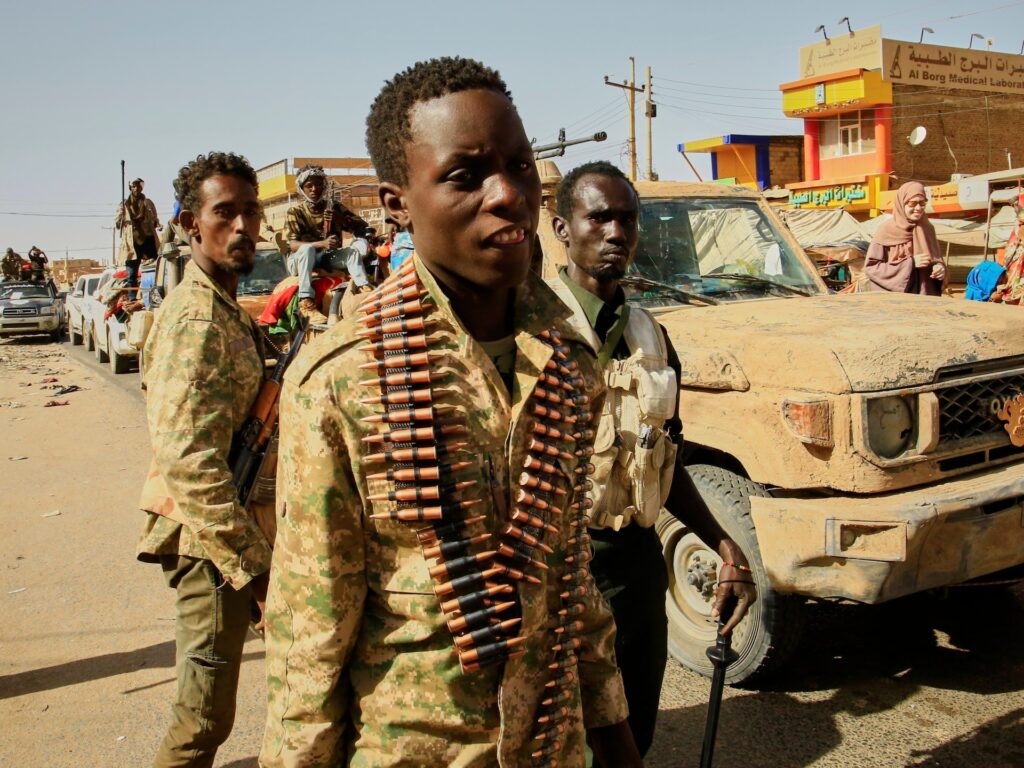
On 30 September 2026, the Sudanese Armed Forces announced that they had retaken al‑Mazroub, a town of roughly 45,000 residents that had been under RSF control since the early days of the war. According to a statement released by the SAF’s public affairs office, the operation involved a coordinated ground assault supported by artillery and a limited air strike from Sudan’s limited fleet of fighter jets. The SAF claimed that the town was secured after “intense fighting” that resulted in the surrender of several RSF commanders and the capture of a depot containing ammunition, fuel and communication equipment.
Local witnesses, speaking to regional reporters, described a night‑time barrage that rattled the town’s mud‑brick houses, followed by a swift advance of SAF armored vehicles through the main road. Residents said that RSF fighters withdrew to the surrounding desert, leaving behind abandoned vehicles and a cache of weapons that the SAF later displayed on television. The SAF’s claim of “minimal civilian casualties” has been difficult to verify, as humanitarian NGOs have been barred from entering the town for several weeks, a restriction that mirrors the broader pattern of limited access that has hampered independent reporting throughout the conflict.
Why al‑Mazroub matters: choking the RSF’s lifeline
Al‑Mazroub sits on the main supply artery that links the RSF’s Darfur bases to its forward positions in Khartoum. By recapturing the town, the SAF has effectively created a “dead‑stop” on the RSF’s north‑south logistics chain, forcing the paramilitary to reroute supplies through longer, more vulnerable desert tracks that are subject to ambushes and sandstorms. Analysts at the International Crisis Group note that this development could increase the RSF’s operational costs by up to 30 percent, stretching its already thin supply lines and potentially slowing its ability to launch coordinated offensives.
The seizure also gives the SAF a foothold to launch further operations into the heart of Kordofan, where oil fields and grain silos are located. Control of al‑Mazroub could allow the SAF to threaten RSF positions in the neighboring town of Al‑Ubayyid, a hub for oil transport that has been a flashpoint since the war began. If the SAF can push further south, it may be able to cut off RSF access to the South Kordofan oil pipeline, a move that would have economic ramifications not only for Sudan’s war‑torn economy but also for regional oil markets that rely on Sudanese crude exports.
Implications for the African diaspora and regional stability
The war in Sudan has long been a concern for African diaspora communities in Europe, North America and the Gulf states, many of whom send remittances that now account for roughly 12 percent of Sudan’s GDP. A shift in the front lines that threatens oil production could reduce the flow of foreign exchange, tightening the financial squeeze on families back home who depend on overseas earnings. Moreover, the capture of al‑Mazroub may trigger a new wave of displacement as RSF fighters and civilians flee towards the border with Chad, where refugee camps are already overburdened.
Humanitarian agencies warn that the loss of a key supply route could complicate the delivery of aid to the millions of internally displaced persons (IDPs) scattered across Kordofan and Darfur. The United Nations Office for the Coordination of Humanitarian Affairs (OCHA) has already flagged a potential shortage of food rations in the region, noting that the north‑south road is a primary conduit for trucks carrying wheat and therapeutic foods from the port of Port Sudan. If the SAF does not secure the corridor quickly, aid convoys could be forced to take longer, riskier routes that increase delivery times and costs.
For the broader Sahel region, the battle underscores how Sudan’s internal conflict can spill over into neighboring states. Chad, South Sudan and Ethiopia have all reported increased border patrol activity as they brace for possible cross‑border attacks or refugee influxes. The African Union’s peace‑keeping mission, currently limited to a small observer team, may face pressure to expand its mandate if the fighting threatens to destabilise the already fragile security architecture of the Horn of Africa.
What comes next: peace talks, possible offensives and the role of external actors
The capture of al‑Mazroub arrives at a delicate moment in the stalled peace process. Negotiations in Jeddah, mediated by Saudi Arabia and the United Arab Emirates, have been hampered by mutual accusations of cease‑fire violations. The SAF’s recent victory could embolden it to demand a more favorable settlement, perhaps insisting on a demilitarised zone that includes the north‑south supply corridor. However, the RSF, still controlling large swathes of Darfur, may refuse any agreement that limits its access to the capital, potentially prolonging the stalemate.
International actors are watching closely. The United States, which lifted some sanctions on Sudan earlier this year in exchange for progress on democratic reforms, may consider re‑imposing targeted measures if the RSF’s capabilities appear to be waning, hoping to force a diplomatic resolution. Meanwhile, Russia’s Wagner Group, which has reportedly supplied mercenaries to both sides in the past, could see an opportunity to deepen its foothold in Sudan’s mineral sector if the SAF gains control over oil‑rich territories.
For Sudanese citizens and the diaspora, the next weeks will be a test of resilience. Communities in the United Kingdom and Canada have organised fundraising drives to support IDPs in Kordofan, while Sudanese entrepreneurs in Lagos are monitoring the situation closely, as any disruption to Sudan’s oil exports could affect the price of refined petroleum products that flow into West African markets. The outcome of the al‑Mazroub operation may therefore reverberate far beyond the town’s dusty streets, shaping the economic and political landscape of the entire continent.
Quick Answers
Why is the town of al‑Mazroub strategic in Sudan’s civil war?
Al‑Mazroub sits on the main north‑south road that links Darfur‑based RSF supply bases to the capital, so controlling it lets the SAF cut RSF logistics and threatens oil transport routes.
How could the SAF’s capture of al‑Mazroub affect Sudanese refugees in neighboring countries?
If RSF fighters retreat toward the Chad border, more refugees may flee, adding pressure to already crowded camps and complicating humanitarian aid deliveries.
What does the al‑Mazroub offensive mean for Sudan’s peace talks?
The SAF’s gain strengthens its bargaining position, potentially pushing for a demilitarised corridor, while the RSF may resist any deal that limits its access to Khartoum.
Source: www.aljazeera.com


💬 Comments 0