Swedish Military Moves to Seize Russian‑Owned Estate Near Muskö Base Over Drone Threats, 2026
Background: Sweden’s security dilemma
Sweden has long walked a tightrope between its historic neutrality and the growing need to align with Western defence structures. The country formally joined NATO in March 2024 after a series of Russian incursions in the Baltic Sea, a decision that reshaped its security calculus and prompted a rapid expansion of military infrastructure along the eastern coast.
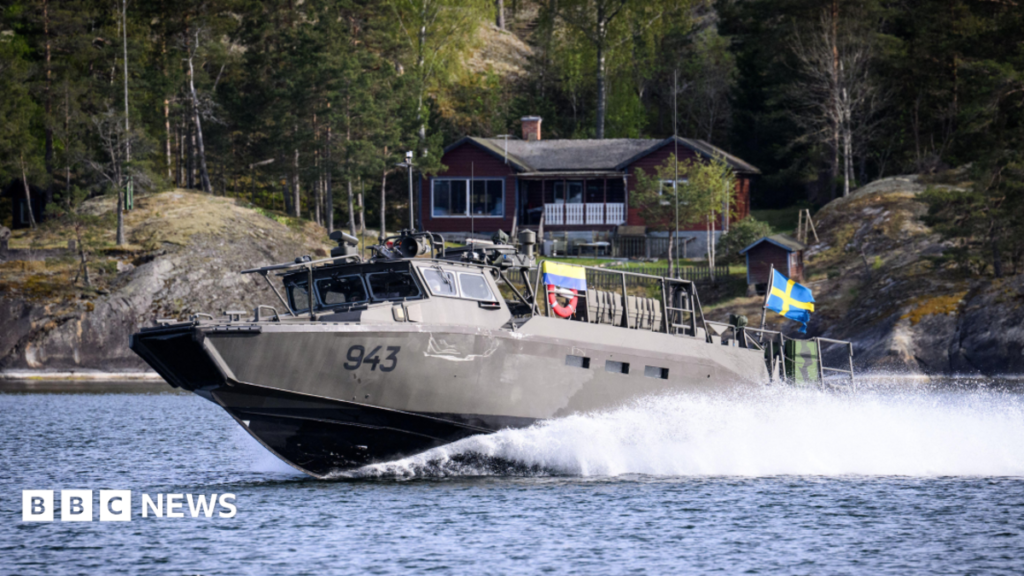
Muskö Naval Base, located on the island of Muskö in the Stockholm archipelago, is one of Sweden’s most strategic maritime facilities. It houses anti‑submarine warfare units, coastal missile batteries and a fleet of fast‑attack craft that monitor the busy shipping lanes connecting the Baltic to the North Sea. The base’s proximity to Russian‑controlled waters makes it a focal point for intelligence‑gathering and, increasingly, for drone‑based surveillance.
In recent months, Swedish radar and electronic‑signal units have reported an uptick in low‑altitude drone activity over the archipelago, a pattern analysts link to Russian “Black Sea‑type” unmanned aerial systems that can operate beyond visual range. The Swedish Armed Forces argue that these drones are not merely hobbyist devices but part of a broader Russian effort to map NATO‑aligned installations ahead of any potential conflict.
The seizure request and its legal basis
On 22 August 2026, the Swedish Defence Materiel Administration submitted a formal request to the Ministry of Defence to take temporary control of a 3.7‑hectare estate owned by a Russian state‑linked holding company. The property sits just 500 metres from the perimeter fence of Muskö and includes an old farmhouse, a small dock and a communications tower that could be repurposed for electronic‑warfare monitoring.
Swedish officials cite the 2025 “National Security Protection Act”, which allows the state to requisition foreign‑owned land if it is deemed a direct threat to national defence. The act was drafted after the 2022‑2023 Baltic Sea incidents, when Russian naval vessels and surface‑to‑air missiles entered Swedish territorial waters without prior notice. The ministry’s legal team argues that the estate’s location makes it a potential foothold for hostile reconnaissance or sabotage.
The request has been forwarded to the Swedish Supreme Administrative Court for an expedited ruling. If granted, the military would place a temporary guard detachment on the site, conduct a security sweep and either hand the land over to a Swedish agency or negotiate a purchase. Russian diplomats have protested the move, calling it “an unlawful expropriation of private property” in a statement to the UN Security Council.
Why the move matters beyond Scandinavia
Sweden’s bid to seize the estate is part of a wider pattern of Western states tightening control over Russian‑linked assets in strategic locations. In the past year, the United States has revoked permits for Russian oil‑service firms operating in the Gulf of Mexico, while the United Kingdom has placed a moratorium on Russian‑owned real‑estate in London’s Docklands. These actions signal a shift from diplomatic sanctions to direct, location‑specific measures aimed at curbing Russia’s intelligence‑gathering capabilities.
For African nations, the development has indirect but tangible repercussions. Swedish defence contractor Saab, a major supplier of radar and combat aircraft to countries such as South Africa, Kenya and Nigeria, has been watching the Muskö case closely. An escalation could affect ongoing procurement talks, especially if Sweden feels compelled to tighten export licences on dual‑use technology that could be repurposed for Russian‑style drone warfare.
Conversely, Russia’s expanding footprint in Africa—through arms deals with Algeria, the Central African Republic and Mali—means that any perception of Russian vulnerability in Europe may embolden African governments to reassess their own security partnerships. Analysts in Nairobi note that a decisive Swedish stance could encourage African states to diversify away from Russian equipment and seek alternatives from EU or Nordic firms, reshaping a market that currently accounts for roughly $2 billion in defence sales annually.
Looking ahead: legal, diplomatic and African implications
The immediate legal battle will hinge on whether the Swedish Supreme Administrative Court accepts the “imminent threat” argument. If the court rules in favour of the military, it could set a precedent for other NATO members to invoke similar statutes against Russian‑owned properties near critical infrastructure. Critics warn that such moves risk normalising property seizures as a tool of geopolitics, potentially inviting reciprocal actions against Western assets abroad.
Diplomatically, the seizure request is likely to deepen the rift between Stockholm and Moscow. Russia has already hinted at “retaliatory measures” against Swedish commercial interests in the Arctic, a region where Swedish mining firms hold significant stakes. The situation may also spill into multilateral forums, with the European Union expected to debate a coordinated policy on Russian real‑estate, a discussion that could affect EU‑African trade agreements currently under negotiation.
For African stakeholders, the key takeaway is the growing importance of aligning defence procurement with geopolitical realities. Nations that continue to rely heavily on Russian hardware may find themselves on the losing side of a new security divide, especially if Western allies begin to impose stricter controls on technology transfer. At the same time, Swedish firms are poised to market themselves as “secure‑by‑design” alternatives, leveraging the Muskö episode as proof of their commitment to safeguarding client assets from hostile espionage.
Quick Answers
Why is Sweden seizing a Russian‑owned estate near Muskö Naval Base?
Sweden claims the land could be used by Russian drones for surveillance or sabotage, invoking its 2025 National Security Protection Act to protect the nearby naval base.
How could this seizure affect African defence markets?
If Sweden moves forward, African countries may shift procurement toward Swedish firms like Saab, reducing reliance on Russian equipment amid growing security concerns.
What legal process will decide the fate of the estate?
The Swedish Supreme Administrative Court will review the defence ministry’s request and determine whether the “imminent threat” justification meets legal standards for temporary seizure.
Source: www.bbc.co.uk




💬 Comments 0