Sword attack at Swedish school kills one, three injured, 18-year-old suspect arrested
Background: Sweden’s recent bout with school violence
Sweden has long prided itself on a low‑crime, open‑society model, yet the country has seen a spate of unsettling incidents in schools over the past few years. From the 2022 stabbing at a Malmö gymnasium to the 2024 knife assault in Uppsala, educators and parents have repeatedly called for tighter security measures. While firearms remain rare in Swedish public life, the use of unconventional weapons such as knives, scissors, and now swords has sparked a fresh debate about how to protect children without turning schools into fortified zones.
The Swedish education system, funded by the state and governed by the Ministry of Education, traditionally emphasizes trust and accessibility. However, a 2023 report by the National Police Board warned that the rise in weapon‑related threats, often linked to mental‑health crises or extremist ideologies, required a reassessment of existing safety protocols. The latest sword attack adds another layer to a growing pattern that policymakers can no longer ignore.
The attack: What unfolded at the school
On the morning of August 20, 2026, a 16‑year‑old student at a secondary school in the Stockholm suburb of Solna brandished a long, double‑edged sword during a break period. Witnesses say the weapon was concealed in a backpack before being drawn in a hallway crowded with students. The attacker struck a 14‑year‑old boy, who later died at the hospital, and wounded three others with slashing injuries that required stitches and, in one case, minor surgery.
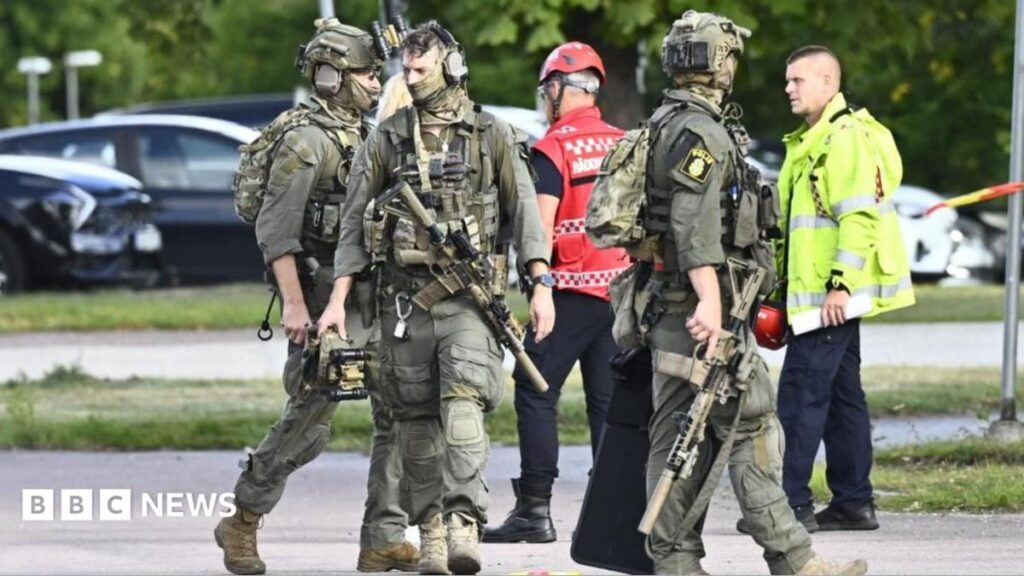
Police arrived within minutes, securing the scene and ordering an evacuation. An 18‑year‑old male, identified by authorities as a former pupil of the same school, was found nearby with a handgun and taken into custody after a brief exchange of gunfire. He was shot in the leg but survived and was subsequently arrested. The suspect is being held on charges of murder, attempted murder, and illegal possession of a weapon.
Why it matters: Security, policy and public sentiment
The incident forces Sweden to confront a paradox: how to preserve its hallmark openness while responding to an alarming rise in violent threats. Lawmakers have already proposed a bill that would allow schools to employ armed security guards on a trial basis, a move that clashes with the country’s tradition of unarmed policing. Critics argue that introducing firearms into educational settings could increase, rather than reduce, the risk of accidental shootings.
Beyond the legislative arena, the attack has reignited public discourse on mental‑health services for youth. A 2025 study by Karolinska Institutet linked a surge in school‑based violence to gaps in early‑intervention counseling, especially for students experiencing social isolation or trauma. Advocates for expanded school counselors see the Solna tragedy as a catalyst to push for additional funding and mandatory mental‑health screenings.
African diaspora perspective: A community under scrutiny
Sweden is home to one of Europe’s largest Somali populations, many of whom arrived as refugees during the 1990s. While the suspect in the sword attack has not been publicly linked to any ethnic group, past incidents involving immigrant youths have often been seized upon by right‑wing parties to fuel anti‑immigrant rhetoric. The African diaspora in Sweden worries that the Solna case could be weaponised in the same way, leading to heightened suspicion toward Somali and other African communities.
Community leaders from the Somali Cultural Centre in Stockholm have already issued statements condemning the violence and calling for a measured response. They stress that scapegoating only deepens marginalisation, which in turn can exacerbate the very social fractures that contribute to youth violence. Several African‑origin NGOs are now coordinating with the Ministry of Education to launch outreach programs that address cultural integration, conflict resolution, and access to mental‑health resources.
Reactions: Government, schools, and civil society
Prime Minister Lina Eriksson addressed the nation the day after the attack, expressing condolences and pledging a “comprehensive review of school safety protocols.” The Ministry of Education announced an immediate audit of security measures at all secondary schools, with a focus on metal‑detector deployment and staff training for emergency response. Meanwhile, the Swedish Teachers’ Union called for increased funding for school counsellors rather than armed guards, arguing that preventative care is more effective than reactive force.
Civil‑society organisations have also stepped in. The Swedish Red Cross offered free first‑aid workshops for students, while the nonprofit Safe Schools Sweden launched an online platform for reporting suspicious behaviour anonymously. In the diaspora sphere, African student associations across Swedish universities organised vigils, highlighting solidarity with the victims and demanding that the investigation remain transparent and free of ethnic bias.
What’s next: Policy shifts and community healing
In the weeks ahead, the Swedish parliament is expected to debate the proposed armed‑guard pilot, with the opposition warning that any such measure must be accompanied by strict oversight and clear exit criteria. Simultaneously, the Ministry of Health has pledged an additional SEK 200 million to expand school‑based mental‑health services, a budget increase that could fund up to 300 new counsellors by 2028.
For the African diaspora, the incident may become a turning point in how they engage with Swedish civil institutions. Community organisations plan to host town‑hall meetings that bring together police, educators, and immigrant families to discuss safety concerns without stigmatizing any group. If handled sensitively, the Solna tragedy could catalyse a broader, more inclusive conversation about violence prevention that benefits all Swedish students, regardless of background.
Quick Answers
What happened during the sword attack at the Swedish school?
A student drew a sword in a Stockholm suburb school, killing one 14‑year‑old and injuring three others before police arrested an 18‑year‑old suspect.
Who was arrested after the attack?
An 18‑year‑old male, a former pupil of the school, was taken into custody after being shot by police during his arrest.
How might the attack affect African communities in Sweden?
The incident could intensify anti‑immigrant rhetoric, prompting African diaspora groups to push for inclusive safety policies and counter‑scapegoating.
Source: www.bbc.co.uk




💬 Comments 0