Trump Announces US ‘AI Force’ and AI Tsar Appointment, 2026, Impacts for African Tech Startups
Background: US AI policy under Trump’s second term
When Donald Trump returned to the White House in 2025, he inherited a fragmented AI strategy that had been pieced together by multiple agencies. Earlier administrations had created advisory councils and modest research budgets, but no single entity owned the overall direction. By the start of 2026, the administration faced mounting pressure from industry leaders, defense officials, and Silicon Valley CEOs to centralise AI governance and accelerate deployment.
The geopolitical context sharpened the urgency. China’s AI‑driven military platforms and Europe’s new digital sovereignty regulations were reshaping the global technology balance. Inside Washington, senior officials warned that without a coordinated push, the United States could lose its edge in critical sectors such as autonomous weapons, generative media, and quantum‑enhanced computing. That backdrop set the stage for Trump’s bold proclamation of an “AI Force.”
The AI Force and AI Tsar: What the announcement entails
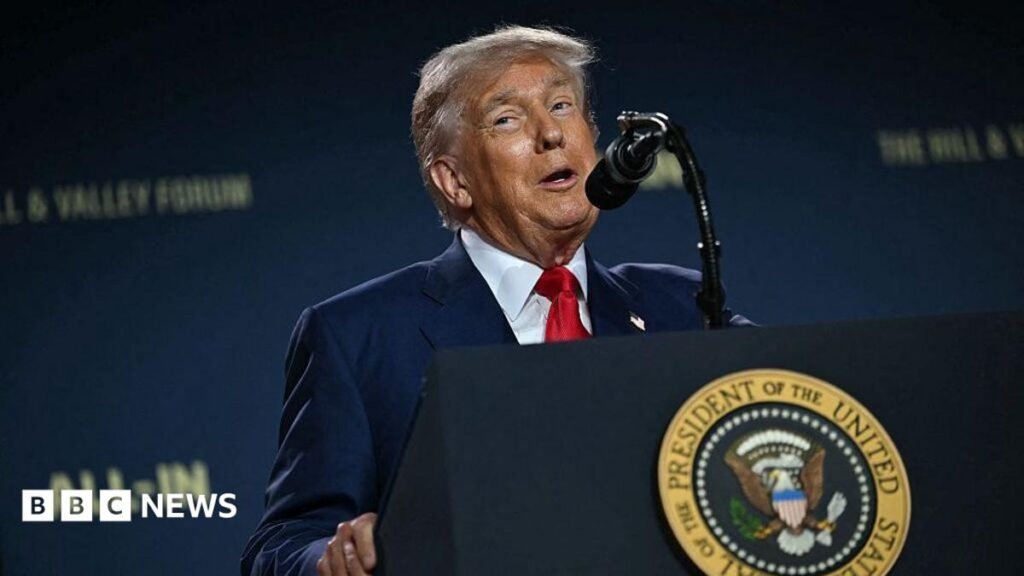
In a televised address on September 19, 2026, President Trump said the United States would create an “AI Force” within the Department of Defense, tasked with fast‑tracking AI projects that have direct national‑security relevance. He also promised to appoint an “Artificial Intelligence Tsar,” a senior official who will sit in the White House Office of Science and Technology Policy and coordinate all civilian AI initiatives across federal agencies.
The AI Force will reportedly draw staff from the Defense Advanced Research Projects Agency (DARPA), the National Security Agency, and the newly formed Office of AI Integration. Its budget is expected to start at $5 billion for the first fiscal year, with a portion earmarked for partnerships with private firms and academic labs. The AI Tsar, according to the White House, will have the authority to issue cross‑agency directives, streamline procurement, and report directly to the president on AI‑related risks and opportunities.
Why it matters for the global AI race and security
Centralising AI under a single force signals a shift from a research‑centric model to an operational one. Experts say this could speed up the deployment of autonomous drones, AI‑enhanced cyber‑defence tools, and real‑time decision‑making systems on the battlefield. According to a senior Pentagon official, the move is designed to close the “deployment gap” that has allowed rivals to field AI‑powered weapons faster than the United States historically has.
The announcement also raises questions about regulatory oversight. Civil liberties groups have warned that an AI‑focused military unit could blur the line between defense and domestic surveillance, especially if the same technologies are repurposed for law‑enforcement use. Internationally, allies such as the United Kingdom and Japan have expressed cautious support, while China’s Ministry of State Security called the plan “destabilising” and vowed to accelerate its own AI military programs.
Implications for Africa’s emerging AI ecosystem
Africa’s tech scene is at a pivotal moment, with Nairobi, Lagos, and Cape Town hosting a surge of AI startups focused on agriculture, health, and fintech. The US AI Force could open doors for African firms to access high‑value contracts, especially in data‑labeling, model‑training, and low‑cost hardware production. Diaspora engineers in the United States have already formed advisory networks that could bridge U.S. defense needs with African talent pools.
However, the partnership model also carries risks of a new form of tech colonialism. If American defence contracts funnel African data or labour into weaponised AI pipelines without transparent benefit‑sharing, local innovators may lose control over their intellectual property. Policy analysts in Johannesburg argue that African governments should negotiate clear terms that protect domestic AI capacity, echoing recent calls for a continent‑wide AI ethics framework endorsed by the African Union.
On the investment front, venture capitalists are watching the US move closely. A report from Partech Africa notes that U.S. defence spending has historically spurred secondary markets for AI chips and cloud services, sectors where African firms are beginning to compete. The AI Force’s $5 billion budget could indirectly boost demand for affordable compute resources, creating a market niche for African data‑centre operators and renewable‑energy‑powered cloud providers.
Reactions and what could happen next
Domestic reaction in the United States is mixed. Tech CEOs such as Satya Nadella praised the clarity of purpose, while some members of Congress warned that consolidating AI authority in a single office could sideline existing oversight mechanisms. In the African diaspora, prominent voices like Nigerian‑American entrepreneur Iyinoluwa Aboyeji called for “inclusive AI diplomacy,” urging the U.S. to involve African innovators in shaping the force’s agenda.
Looking ahead, the next steps will involve legislative approval of the AI Force’s budget, the nomination of the AI Tsar, and the drafting of inter‑agency protocols. If the administration can secure bipartisan support, the AI Force could become operational by early 2027, setting a precedent for how democratic nations organise AI for security. For African stakeholders, the key will be to turn the announcement from a distant policy statement into concrete collaboration that fuels home‑grown AI growth while safeguarding ethical standards.
Quick Answers
What is the US ‘AI Force’ announced by President Trump?
It is a new Defense Department unit that will coordinate AI projects with national‑security impact, backed by an initial $5 billion budget.
Who will lead the AI Force and what is the AI Tsar’s role?
The AI Force will be staffed by experts from DARPA, NSA and other agencies, while the AI Tsar, a senior White House official, will oversee all civilian AI policy across federal agencies.
How could the AI Force affect African AI startups?
It may create procurement opportunities for African firms in data labeling, model training and hardware, but also raises concerns about equitable benefit‑sharing and data sovereignty.
Source: www.bbc.co.uk




💬 Comments 0