Trump halts livestream of Nidal Hasan firing‑squad execution at Fort Hood, 2026 controversy
Background: The Fort Hood tragedy and its lingering legal battle
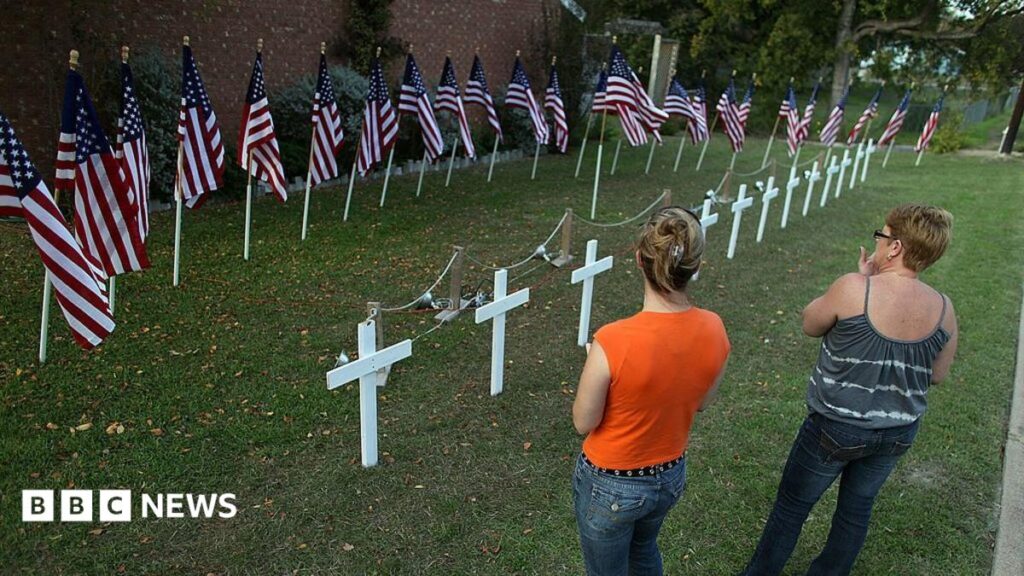
On November 5, 2009, Major Nidal Hasan opened fire at the Fort Hood army base in Texas, killing 13 people and wounding more than 30. The attack, the deadliest on a U.S. military installation since the Vietnam War, shocked the nation and sparked a protracted legal and political fallout.
Hasan, a Muslim American psychiatrist, was tried by a military court and convicted of 13 counts of premeditated murder and 32 other offenses. In 2013 he was sentenced to death, marking the first military death sentence in over six decades. The case has since become a touchstone for debates over terrorism, mental health, and the role of the military justice system.
Over the years, Hasan’s appeals have been largely unsuccessful, but the execution has been delayed repeatedly due to legal challenges, procedural disputes, and the COVID‑19 pandemic. By 2026, the Pentagon announced that the execution would be carried out by firing squad – the method last used in 1961 – and that a livestream would be made available to a limited audience of journalists and scholars.
The decision to livestream the execution was framed by the Defense Department as a transparency measure, intended to demonstrate that the military’s use of capital punishment adheres to strict legal standards. Critics, however, warned that broadcasting a state‑sanctioned killing could desensitize viewers and raise profound ethical questions.
The livestream plan and the backlash it provoked
When the Pentagon released a memo in early September 2026 outlining the technical setup for the livestream, media outlets across the United States and abroad began to debate whether the public should be allowed to witness the final act of a convicted terrorist. Some argued that it would serve as a deterrent, while others warned of a new era of “execution entertainment.”
Civil‑rights groups, including the ACLU and the NAACP, quickly issued statements condemning the plan as a violation of human dignity. They pointed out that the United Nations’ guidelines on the death penalty discourage any form of public spectacle, and they warned that broadcasting the execution could inflame extremist narratives on both the far‑right and far‑left.
In the African diaspora, especially among Black and Muslim communities in the United Kingdom, Canada, and the United States, the livestream sparked a wave of online protest. Hashtags such as #NoLiveExecution and #JusticeNotSpectacle trended on Twitter, with activists linking the issue to broader concerns about state violence and the criminalisation of Muslim identities.
The controversy also resurfaced a long‑standing debate within the United States about the death penalty’s compatibility with modern human‑rights standards. Several states have abolished capital punishment in recent years, and the federal government’s use of the death penalty has been under intense scrutiny after a series of high‑profile botched executions.
Trump’s intervention: political calculus or genuine concern?
Former President Donald Trump, who has been a vocal supporter of capital punishment, announced on October 14, 2026, that he would intervene to stop the livestream. In a televised interview, he claimed that “some people would rather not watch” the execution and suggested that the decision was being driven by “politically correct elites.”
Political analysts see Trump’s move as a calculated attempt to re‑position himself ahead of the 2028 presidential election. By portraying himself as a defender of “American values” against what he framed as media sensationalism, he hopes to rally his base, which remains deeply skeptical of mainstream news outlets.
Sources close to the White House, quoted by The Washington Post, say that Trump’s team contacted senior Pentagon officials on the eve of the scheduled livestream, urging them to cancel the broadcast. The Pentagon complied, citing “operational security” and “respect for the families of victims.”
Critics argue that Trump’s justification – that viewers might be “traumatized” – overlooks the agency of adult audiences and the potential educational value of a transparent legal process. They also note that his statement sidesteps the deeper ethical concerns raised by human‑rights organisations.
Why it matters: media ethics, the death penalty, and U.S. image abroad
The episode highlights a clash between two powerful forces: the state’s desire for transparency in its most extreme punishment, and the media’s responsibility to protect public sensibility. If livestreamed executions become normalized, it could erode the boundary that separates judicial authority from entertainment, reshaping public perception of state violence.
For African and African‑American audiences, the incident resonates with ongoing struggles against systemic violence. The death penalty in the United States disproportionately affects people of colour, and the spectacle of a firing‑squad execution risks reinforcing narratives of racialized state power. Activists point to the United Nations’ call for a global moratorium on capital punishment, noting that the U.S. remains one of the few Western democracies still carrying out executions.
Internationally, the U.S. decision to cancel the livestream after Trump’s pressure may be read as an admission that the plan was politically risky. Countries in Africa that are debating the abolition of the death penalty – such as Nigeria, Kenya, and Ghana – watch the United States closely, often citing U.S. practices as a benchmark for their own reforms.
Economically, the controversy has already affected a niche market of security‑technology firms that were set to provide the livestream infrastructure. Their shares dipped by 4 % after the cancellation, illustrating how political decisions can ripple through specialised sectors that have little direct relevance to most consumers.
What’s next: legal challenges, policy reviews, and diaspora reactions
Legal scholars predict that Hasan’s execution will still proceed, but the method of public dissemination will be revisited. A coalition of civil‑rights groups has filed a lawsuit demanding a court injunction against any future attempts to broadcast executions, arguing that it violates the Eighth Amendment’s prohibition on cruel and unusual punishment.
Within the Pentagon, senior officials have announced an internal review of the “execution‑communication protocol.” The review will examine whether the original decision to livestream complied with Department of Defense guidelines and whether similar plans should be considered in future cases involving high‑profile inmates.
In the diaspora, community organisations are planning a series of webinars to discuss the broader implications of state‑sanctioned killing and media exposure. Leaders of the African Union’s diaspora outreach program have pledged to monitor the U.S. situation and incorporate its lessons into ongoing advocacy for death‑penalty abolition across the continent.
Finally, Trump’s intervention may have political fallout of its own. While his supporters praised the move as a stand against “elitist censorship,” opponents accuse him of exploiting a tragedy for electoral gain. As the 2028 election cycle ramps up, the Fort Hood execution saga will likely be referenced in campaign ads, debates, and policy platforms on criminal justice reform.
Quick Answers
Why did Donald Trump call off the livestream of Nidal Hasan's execution?
Trump said some people would rather not watch the killing and framed the decision as protecting viewers from a graphic spectacle.
What method will be used to execute Nidal Hasan at Fort Hood?
The U.S. military will carry out the execution by firing squad, the first such military execution since 1961.
How might this incident affect death‑penalty debates in African countries?
U.S. handling of the execution influences African activists who cite American practices when lobbying for abolition or reform of capital punishment at home.
Source: www.bbc.co.uk




💬 Comments 0