Trump hosts Xi at 2026 White House dinner, pledges US‑China friendship and its impact on African trade
Setting the stage: a rare public overture
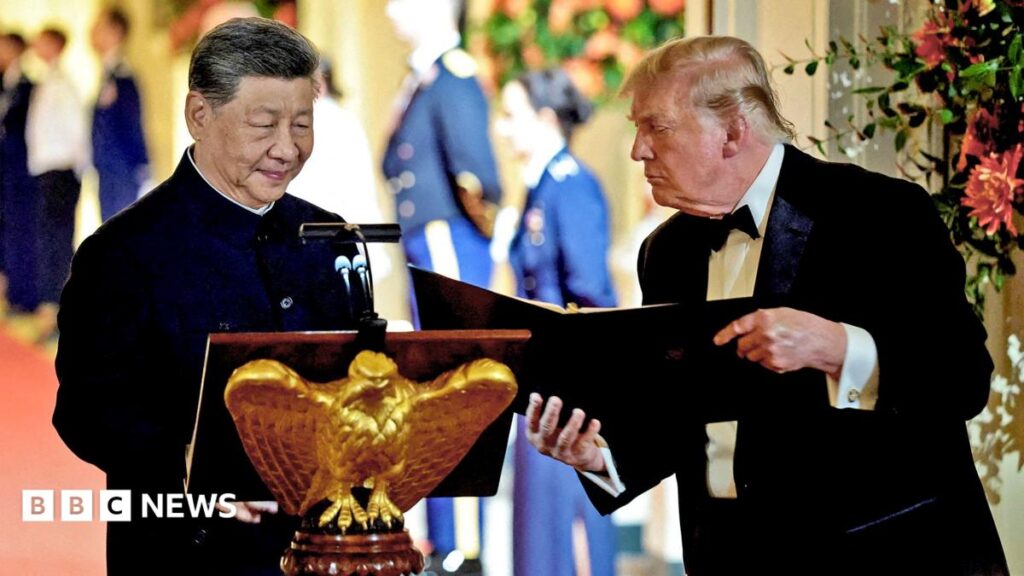
On September 24, 2026, President Donald Trump invited Chinese President Xi Jinping to a state dinner at the White House, a ceremony that has rarely been used to signal a shift in bilateral tone. The event, attended by senior officials from both capitals, was framed by Trump as a celebration of a new era of cooperation, with the president declaring that he and Xi had "never gotten along better."
Xi, speaking to a packed press corps, echoed the sentiment but added a diplomatic caveat: the United States and China must act as "responsible powers together" to address global challenges ranging from climate change to supply‑chain security. The phrasing, while diplomatic, signals an attempt to move past the trade wars and technology bans that have defined the past decade.
Analysts note that the dinner comes at a moment when both nations are confronting domestic pressures—Trump’s reelection campaign and Xi’s need to showcase economic stability after a slowdown in Chinese manufacturing. The public display of camaraderie, therefore, serves as a strategic reset that could reshape policy calculations far beyond Washington and Beijing.
Why "never gotten along better" matters
Trump’s boast about personal rapport is more than a rhetorical flourish; it signals a willingness to soften the confrontational posture that has dominated US‑China relations since 2018. In practical terms, it could pave the way for renewed negotiations on tariffs, semiconductor export controls, and the status of the South China Sea.
The phrase also carries symbolic weight for allies and rivals alike. For countries in the Indo‑Pacific, a thaw may reduce the pressure to choose sides in a perceived great‑power rivalry. For the United Nations and multilateral bodies, a cooperative US‑China front could revive stalled climate accords and pandemic‑response mechanisms that have suffered from gridlock.
Nevertheless, observers caution that personal chemistry does not automatically translate into policy convergence. Both leaders face entrenched bureaucracies and legislative constraints that could blunt any goodwill generated at the dinner table. The real test will be whether concrete agreements emerge in the next few months.
Ripple effects for Africa: trade, investment, and geopolitical balancing
Africa stands at the crossroads of the US‑China détente. The continent accounts for roughly 10% of global mineral exports, a sector where both Washington and Beijing are heavily invested. A cooling of tensions could revive Chinese infrastructure projects stalled by financing disputes, while also encouraging US firms to re‑enter markets that were previously shadowed by Chinese dominance.
In 2025, Chinese loans to African nations reached $45 billion, a figure that has sparked concerns about debt sustainability. If the United States leverages the improved diplomatic climate to offer alternative financing—through the African Development Bank or private‑sector partnerships—African governments could gain bargaining power, potentially securing better terms and diversifying their creditor base.
Beyond finance, the diplomatic tone influences technology transfer and standards. The ongoing race over 5G and AI infrastructure means African telecom operators may soon have to choose between Huawei equipment and US‑approved alternatives. A collaborative US‑China stance could lead to joint standards, reducing the risk of a fragmented market that forces African countries to pick one side and bear higher costs.
Diaspora and cultural exchange: soft power in motion
The state dinner also featured a showcase of Chinese arts and American jazz, a deliberate blend meant to highlight cultural bridges. For the sizable Chinese diaspora in Africa—particularly in Kenya, South Africa, and Nigeria—such symbolism reinforces the notion that cultural ties can survive geopolitical turbulence.
Conversely, African diaspora communities in the United States watch the developments closely, as US policy toward China can affect visa regimes, academic collaborations, and business visas for African entrepreneurs. A friendlier US‑China relationship may ease restrictions on joint research projects, benefitting African scholars who rely on partnerships with Chinese universities for funding and fieldwork.
Media analysts argue that soft‑power gestures, while subtle, have measurable economic effects. A 2023 study by the Brookings Institution found that cultural exchanges increased bilateral trade by up to 2.5% within two years. If the Trump‑Xi dinner translates into more student exchanges and joint film productions, African creators could tap into new distribution channels across both markets.
What comes next? Policy pathways, risks, and opportunities
The immediate next step is a series of bilateral working groups slated for early 2027, covering climate finance, semiconductor supply chains, and maritime security. Sources close to the White House say that the agenda will include a proposal to lift certain tariffs on African copper and cobalt, commodities critical to both US electric‑vehicle ambitions and Chinese battery factories.
However, risks remain. Domestic political opposition in the United States, especially from lawmakers concerned about national security, could stall or water down any concessions. In China, nationalist factions may view overtures as capitulation, pressuring Xi to extract more favorable terms.
For African policymakers, the evolving landscape offers a strategic opening. Nations that can articulate clear, diversified trade policies—leveraging both US market access and Chinese infrastructure expertise—stand to gain. Regional bodies like the African Union are already drafting a joint position paper to present a unified African voice at the upcoming US‑China talks, hoping to secure commitments on debt relief and technology transfer.
Quick Answers
What was the main message of the 2026 US‑China state dinner?
President Trump and President Xi emphasized a new era of cooperation, saying they had "never gotten along better" and urging both nations to act as responsible global powers.
How could improved US‑China relations affect African economies?
A softer stance may revive Chinese infrastructure projects, open US financing alternatives, and reduce the risk of a split technology market, giving African countries more leverage and cheaper access to critical minerals.
When are the next major US‑China bilateral talks scheduled?
Working groups are expected to convene in early 2027, focusing on climate finance, supply‑chain security, and maritime issues.
Source: www.bbc.co.uk

💬 Comments 0